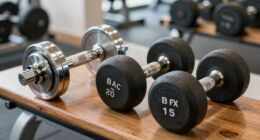

You can easily improvise weights using common household items. Full water bottles or gallon jugs make great resistance tools for exercises like squats and shoulder presses. A filled backpack adds extra weight for push-ups or lunges, while sturdy chairs can serve for tricep dips and step-ups. You can also squeeze bags of rice or beans for grip strength. By thinking outside the box, you can create dynamic workouts that keep things interesting and effective. Discover more creative options ahead!
Key Takeaways
- Use full water bottles or gallon jugs for light to moderate resistance during exercises like squats and shoulder presses.
- Fill a backpack with books or canned goods to create adjustable weight for exercises like lunges and push-ups.
- Utilize sturdy chairs for step-ups, tricep dips, and elevated push-ups to incorporate furniture into your workout routine.
- Squeeze a bag of rice or beans to improve grip and forearm strength, enhancing functional strength development.
- Get creative with common household items to keep workouts fresh, versatile, and cost-effective while maximizing effectiveness.
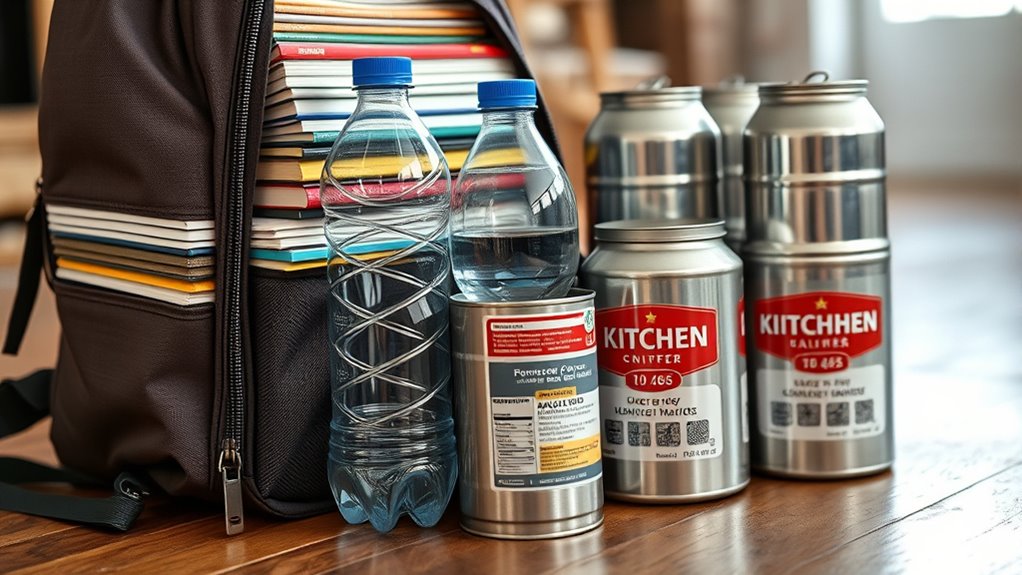
Whether you’re stuck at home or just looking to save some money, improvising weights with household items can be a game-changer for your fitness routine. You don’t need fancy gym equipment to get a great workout; in fact, many everyday items can serve as effective weights. With a little creativity and some DIY fitness spirit, you can easily incorporate these household hacks into your exercise regimen.
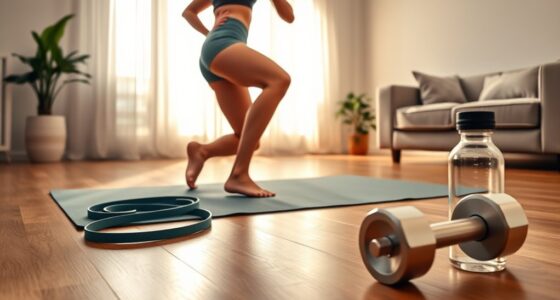
Start by looking around your kitchen. A couple of full water bottles can weigh about 1-2 pounds each, making them perfect for light lifting or resistance exercises. Fill up gallon jugs for more substantial weights—each jug can weigh around 8 pounds. You can use these jugs for squats, shoulder presses, or even as makeshift kettlebells by holding the handle. Just make sure to grip them securely to avoid any spills during your workout.
Look around your kitchen for water bottles and gallon jugs—ideal for light lifting and effective resistance exercises at home.
If you want to add some variety, grab a backpack and fill it with books or canned goods. This not only gives you a heavier weight but also allows you to adjust the load based on your fitness level. Wearing the backpack while performing exercises like squats, lunges, or push-ups can amp up the intensity and challenge your muscles in new ways. You can also use the backpack for added resistance during core workouts, like planks or mountain climbers.
Don’t overlook the power of furniture. A sturdy chair can be used for step-ups, tricep dips, or even elevated push-ups. If you have a couch, you can use it for support while performing various bodyweight exercises. Adding weights or resistance with household items while using your furniture as a workout tool can maximize your fitness efforts without the need for a home gym.
For those who want to work on their grip strength, consider using a bag of rice or beans. You can squeeze them in your hands for a great forearm workout. Alternatively, a towel can be used for resistance training by gripping it tightly and performing exercises like rows or curls. The key is to think outside the box and use what you have. Incorporating these DIY fitness approaches into your routine not only saves you money but also keeps your workouts fresh and fun, especially if you understand the importance of color accuracy in your workout environment for optimal results.
Incorporating these DIY fitness approaches into your routine not only saves you money but also keeps your workouts fresh and fun. So next time you’re feeling unmotivated or stuck at home, remember to look around you—there’s a whole world of household hacks waiting to elevate your fitness game!
Top picks for "improvise weight household"
Open Amazon search results for this keyword.
As an affiliate, we earn on qualifying purchases.
Frequently Asked Questions
Can I Use Water Bottles for Resistance Training?
Yes, you can definitely use water bottles for resistance training! They’re excellent DIY resistance tools that you can fill to your desired weight. Whether you’re lifting them for bicep curls or using them in squats, they serve as great household alternatives to traditional weights. Just make sure to secure the tops tightly to avoid spills. Get creative with your workouts, and you’ll find they provide an effective challenge for your muscles!
What Items Are Best for Balance Exercises?
For balance exercises, you can use household alternatives like a sturdy chair, a wall, or even a cushion. Try standing on one leg while holding onto the chair for support, or practice balancing on a cushion to engage your core. You can also incorporate DIY fitness tools, like a rolled-up towel or a backpack filled with books, to challenge your stability. These items can help you improve your balance effectively without any fancy equipment!
How Do I Ensure Safety While Improvising Weights?
To guarantee safety while improvising weights, start with simple safety precautions. Secure your grip and use proper technique to prevent injuries. Choose sturdy items that won’t break easily, and avoid overloading yourself; start light and gradually increase as you gain confidence. Always maintain a stable stance and focus on form to enhance control. Listen to your body—if something feels off, stop immediately. Prioritize your safety and strength during your workouts!
Are There Any Household Items to Avoid Using?
You should avoid using household items that pose hazards, like glass containers or anything with sharp edges. Materials like fragile ceramics or unstable items, like a half-filled water bottle, can lead to accidents. Also, steer clear of items that can break easily under pressure, like plastic that’s too thin. Always consider the weight distribution and stability of the materials, ensuring they’re suitable for your workout without risking injury. Stay safe while you exercise!
How Can I Track My Progress With Improvised Weights?
To track your progress with improvised weights, you’ll want to become a fitness detective. Start by jotting down every rep, set, and weight you use, no matter how bizarre! Use a fitness tracking app or a simple notebook for your progress measurement. Snap photos of your workouts and compare them over time, so you can see how much stronger you’re getting. Celebrate each milestone, no matter how small—it’s all part of your epic journey!
Conclusion
Improvising weights with household items can be as easy as finding a good recipe in your kitchen. By using common objects like water bottles or backpacks filled with books, you can create effective resistance training tools without spending a dime. Remember, the key is to get creative and adapt what you have around you. So next time you want to work out, look around your home—there’s potential for strength training hiding in plain sight!