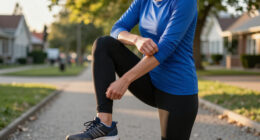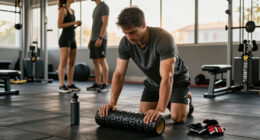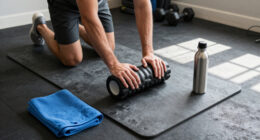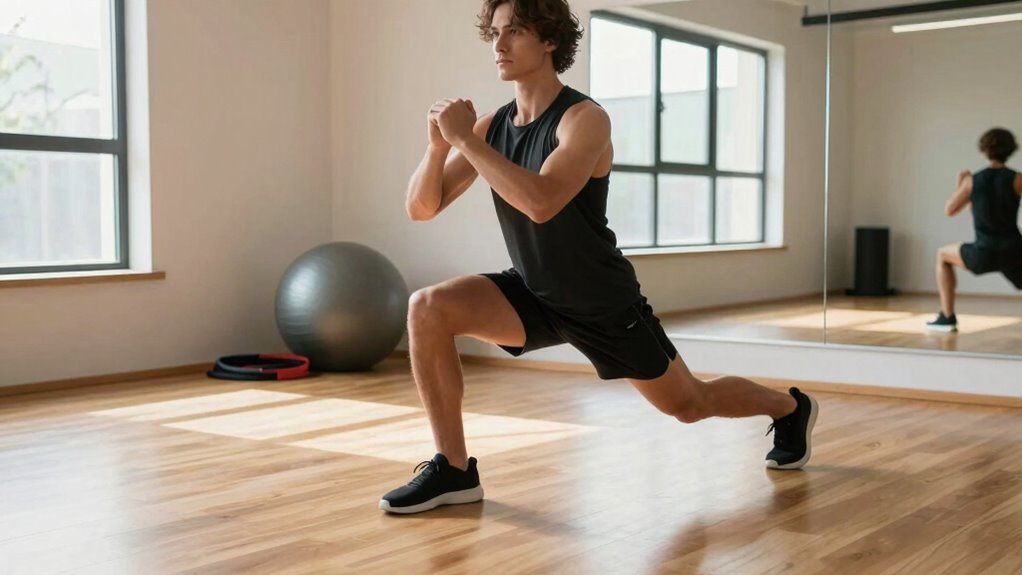
You can effectively train your legs without heavy machines by using bodyweight exercises like squats, lunges, step-ups, and single-leg Romanian deadlifts. Incorporate resistance bands to add tension and target muscles from different angles, such as hip abductors and outer thighs. Mix and match exercises, increase intensity gradually, and focus on proper form. Consistent effort will boost your strength, endurance, and stability—exploring further will reveal even more effective techniques to elevate your workout.

Get workout gear delivered free with Prime
- Fast, free delivery on millions of items
- Prime Video, Amazon Music and more included
- Member-only deals all year
Key Takeaways
- Use bodyweight exercises like squats, lunges, and step-ups to effectively target leg muscles without machines.
- Incorporate resistance bands for added tension during exercises such as lateral walks and leg presses.
- Progress by increasing repetitions, adding pauses, or performing jump variations to challenge muscles further.
- Combine multiple exercises to create a comprehensive routine that improves strength, stability, and endurance.
- Ensure proper form and allow rest days for recovery, promoting safe and consistent leg development.
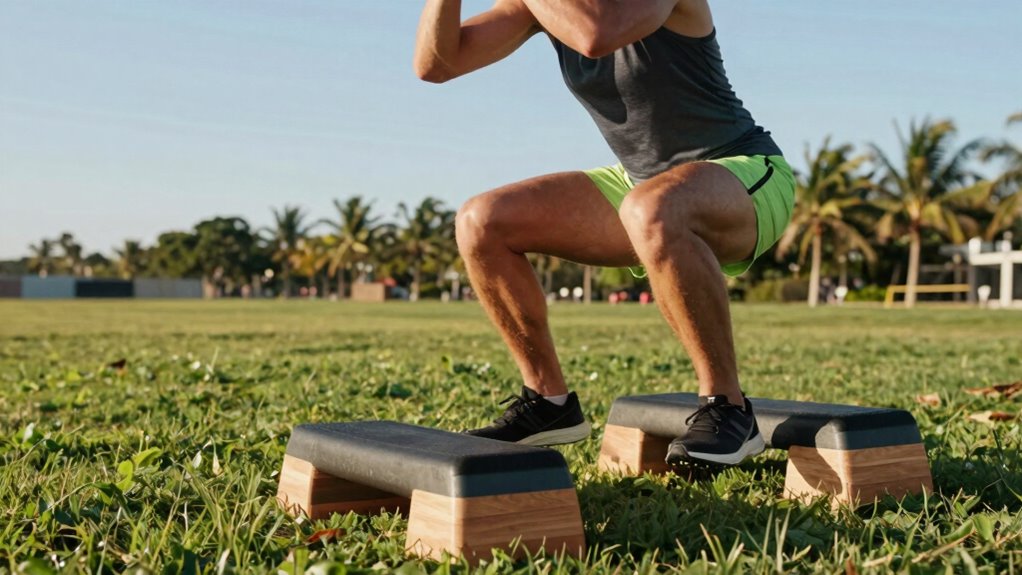
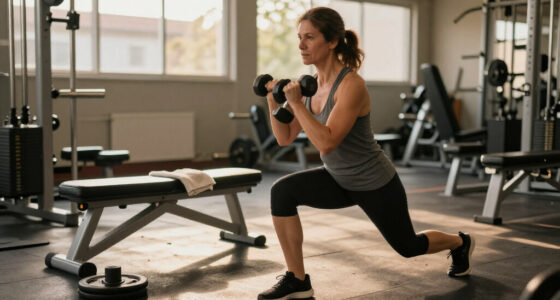
Training your legs without heavy machines is entirely possible and can be highly effective with the right approach. You don’t need bulky equipment to build strength, improve endurance, or sculpt your muscles. Bodyweight exercises are your best starting point—they require no equipment and can be adjusted to match your fitness level. Exercises like squats, lunges, step-ups, and single-leg Romanian deadlifts engage multiple muscles in your legs, hips, and glutes, offering an all-encompassing workout. To intensify these movements, you can slow down your repetitions or increase the number of sets. For example, try holding a squat at the bottom for a few seconds to add a challenge, or perform jump squats to incorporate plyometric power.
Bodyweight exercises like squats, lunges, and step-ups effectively strengthen legs, hips, and glutes without heavy equipment.
Resistance bands are another versatile tool that can amplify your leg workouts without heavy machines. They’re portable, inexpensive, and easy to use. Wrap a resistance band around your thighs during squats or lunges to increase tension on your glutes and thighs. For added resistance, place the band just above your knees to target the hip abductors and outer thighs, helping improve stability and strength. Resistance bands are also effective for exercises like clamshells, monster walks, or seated leg presses, enabling you to target specific muscles more intensely. Incorporating these into your routine helps prevent plateaus and keeps your workout challenging.
You can combine bodyweight exercises with resistance bands for a well-rounded leg training session. For instance, perform a set of bodyweight lunges, then add resistance band side steps or leg presses. This combination maximizes muscle activation and enhances endurance over time. Also, don’t forget to include variations—such as Bulgarian split squats or pistol squats—to challenge your muscles from different angles. These exercises can be as demanding as machine-based workouts and promote stability, balance, and muscle coordination.
Consistency is key, so aim to work your legs two to three times a week, gradually increasing intensity. Focus on proper form to prevent injury and optimize muscle engagement. Rest and recovery are equally important, so allow your muscles time to repair and grow stronger. As you progress, you’ll find that bodyweight exercises and resistance bands can serve as an effective alternative, or even complement, traditional gym workouts. With patience and persistence, you’ll develop stronger, more resilient legs without the need for heavy machinery.
resistance bands for leg workouts
As an affiliate, we earn on qualifying purchases.
As an affiliate, we earn on qualifying purchases.
Frequently Asked Questions
Can I Build Muscle With Only Bodyweight Exercises?
Yes, you can build muscle with only bodyweight exercises by focusing on bodyweight hypertrophy. To maximize muscle activation, incorporate techniques like slow negatives, pause reps, and explosive movements. Use variations like single-leg squats or pistol squats to increase intensity. Progressive overload is key—gradually increase reps, sets, or difficulty. Consistency and proper form will help you see gains, even without heavy machines, by effectively challenging your muscles.
How Often Should I Train My Legs Without Machines?
You should aim to train your legs around two to three times a week, giving your muscles time to recover and grow. Focus on progressive overload by gradually increasing reps or intensity, and keep exercise variety in mind to target different muscles. This approach guarantees consistent progress without overtraining. Listen to your body, and adjust frequency as needed, making sure each session challenges you without risking burnout.
Are Resistance Bands Effective for Leg Workouts?
Resistance bands are highly effective for leg workouts, offering great band resistance that targets muscles well. You can perform a variety of exercises like squats, leg lifts, and glute bridges, which work on leg effectiveness without heavy machines. Bands provide constant tension, helping you build strength and endurance. Plus, they’re portable and versatile, making them a practical choice for training your legs anytime, anywhere.
What Are the Best Cardio Options for Leg Strength?
Oh, the quest for leg strength without gym machines? Jump rope and cycling are your best friends. Jump rope boosts stamina and tones your calves, while cycling builds thigh and glute strength with low-impact cardio. Both options keep your legs moving, making them perfect for a no-machine workout. So grab your jump rope or hop on your bike—your legs will thank you for the fun, effective workout!
How Do I Prevent Knee Pain During Leg Exercises?
To prevent knee pain during leg exercises, focus on knee stabilization by strengthening the muscles around your knees, like your quads and hamstrings. Always do a proper warm-up to increase blood flow and loosen joints. Use correct form and avoid overextending your knees. Incorporate low-impact movements and listen to your body. These steps will help you reduce knee pain and improve your leg workout safety.
bodyweight leg exercise equipment
As an affiliate, we earn on qualifying purchases.
As an affiliate, we earn on qualifying purchases.
Conclusion
By using bodyweight exercises, incorporating resistance bands, and embracing functional movements, you can effectively train your legs without heavy machines. Focus on consistency, challenge yourself with variations, and listen to your body. Push your limits, monitor your progress, and enjoy the journey. Remember, building strong legs doesn’t require fancy equipment—just dedication, creativity, and the willingness to keep moving. Stay committed, stay motivated, and watch your legs grow stronger every day.
As an affiliate, we earn on qualifying purchases.
As an affiliate, we earn on qualifying purchases.
Halloween Picks
halloween
As an affiliate, we earn on qualifying purchases.