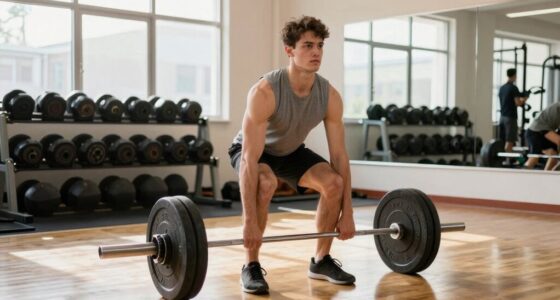
You should consider using a weightlifting belt when you’re lifting near your maximum capacity, typically over 80% of your one-rep max. It provides valuable support and stability, helping to protect your lower back and maintain proper form during heavy lifts. While it’s not necessary for every exercise, relying on it wisely can prevent injuries and boost your confidence with heavier weights. To discover more about the right use and limitations, keep exploring these essentials.
Key Takeaways
- Use a belt when lifting near your 1RM (80%+ of max) for added lumbar support.
- Wear a belt during heavy, compound lifts like squats and deadlifts to reduce injury risk.
- Avoid relying on a belt for every lift; focus on building core strength.
- Ensure proper fit and placement for maximum effectiveness and safety.
- Combine belt use with good technique and core exercises for optimal lifting safety.
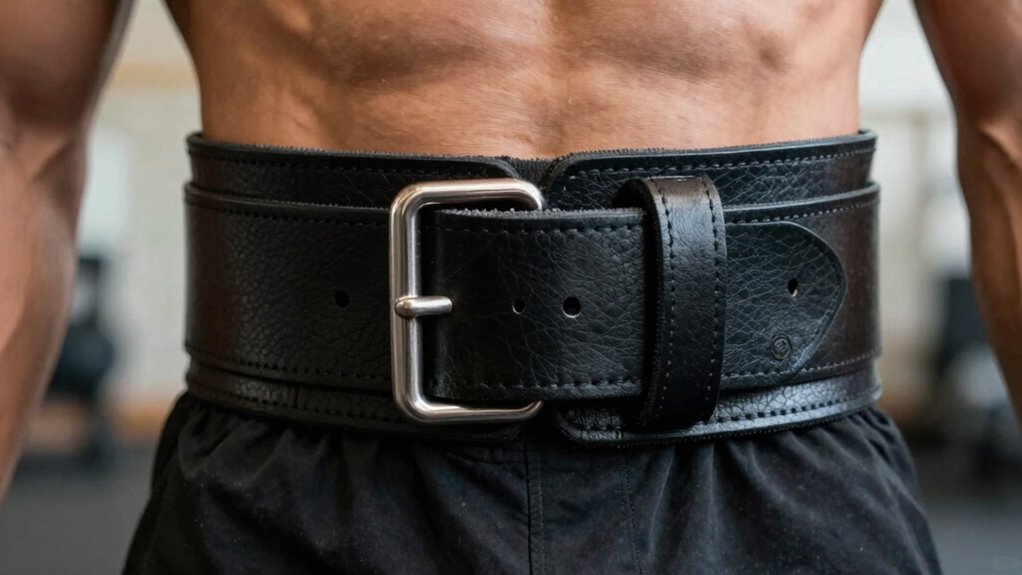
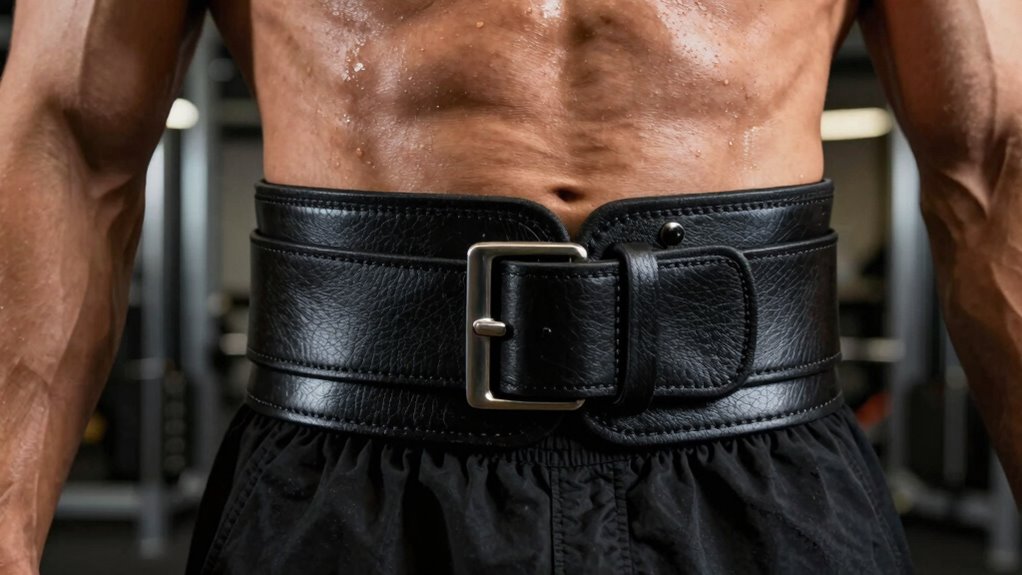
A weightlifting belt is an essential piece of gear designed to provide support and stability during heavy lifts. When you’re pushing your limits with squats, deadlifts, or overhead presses, the belt helps engage your core muscles, which are fundamental for maintaining proper form and protecting your spine. By increasing intra-abdominal pressure, the belt encourages better core stability, giving you a solid foundation to lift heavier weights safely. This added stability is especially important when you’re nearing your maximum lifts, as it reduces the risk of losing control or experiencing injury.
A weightlifting belt provides crucial support and stability for heavy lifts, engaging your core and protecting your spine.
You might wonder if you really need a belt or if you can get by without one. The truth is, a belt isn’t necessary for every lift or every lifter. It’s most beneficial when you’re lifting near your maximum capacity or handling very heavy weights — typically around 80% or more of your one-rep max. At these intensities, the risk of injury increases, especially to your lower back. Wearing a belt during these lifts can help prevent injuries by providing additional support to your lumbar region. It acts as a reminder to engage your core properly and helps you maintain proper posture, which is fundamental for injury prevention. Additionally, proper technique is vital for safe lifting, and a belt can serve as a helpful cue to maintain correct form.
However, it’s important to remember that a belt isn’t a substitute for good technique or core strength. Relying solely on the belt can lead to neglecting the core muscles that are essential for overall stability. To maximize safety, you should develop your core through targeted exercises, which will naturally improve your ability to lift safely without always depending on a belt. Engaging in core strengthening exercises can significantly enhance your lifting capacity and reduce your reliance on supportive gear over time. It’s also beneficial to incorporate proper breathing techniques to stabilize your core effectively during lifts. When you do decide to use one, make sure it fits snugly around your waist and is positioned correctly—just above your hips, not too high on your ribcage.
Using a weightlifting belt also encourages mental focus. When you buckle up, you become more aware of your body positioning and breathing, which are important factors for injury prevention. It’s a tool that enhances your performance, but it’s not a crutch. You should learn to lift with proper form and build your core strength over time. The correct use of support gear can optimize your lifting safety and effectiveness. The belt’s support works best as part of an extensive approach to lifting that emphasizes technique, conditioning, and injury prevention. Incorporating proper safety gear, such as a belt, can help you lift heavier, safer, and smarter. Ultimately, knowing when to wear a belt and how to use it effectively can help you lift heavier, safer, and smarter.

DMoose Fitness Weight Lifting Belt for Squats, Deadlift & Intense Workout – 6" Adjustable Fit Auto Lock Weightlifting Belt for Men & Women – Neoprene Gym Belts for Stability (Black 2.0)
PREMIUM QUALITY FOR LONG-LASTING PERFORMANCE: Crafted from premium neoprene and nylon materials, this gym belt is designed to…
As an affiliate, we earn on qualifying purchases.
As an affiliate, we earn on qualifying purchases.
Frequently Asked Questions
Can I Wear a Weightlifting Belt Every Day?
You can wear a weightlifting belt daily if you’re lifting heavy consistently, but it’s not always necessary or beneficial. Choose a belt made from comfortable, durable materials like leather or nylon, depending on your preference. While some see belts as a fashion trend, they’re primarily for support during intense lifts. Remember, overusing a belt might weaken your core, so use it strategically and not as a daily fashion statement.
Are Weightlifting Belts Suitable for Beginners?
Think of a weightlifting belt as training wheels—you might not need it at first. For beginners, belts can offer support, but only if you focus on proper belt fit and choose the right belt material. Starting out, prioritize learning proper form and technique before relying on a belt. When you do use one, make sure it’s comfortable, fits well, and is made from durable material, so it supports rather than hinders your progress.
How Tight Should a Weightlifting Belt Be?
You should tighten your weightlifting belt until it fits snugly around your waist, providing support without restricting movement or breathing. The belt material, like leather or nylon, influences flexibility and comfort, so select one that suits your needs. A proper belt width, typically 4 inches, ensures even support. It shouldn’t be so tight that it causes discomfort, but tight enough to stabilize your core during lifts.
Do Weightlifting Belts Prevent Injuries?
Think of a weightlifting belt as a sturdy shield for your core. While it doesn’t guarantee injury prevention, it greatly supports core stabilization during heavy lifts. By reinforcing your abdominal muscles, it helps maintain proper form and reduces strain on your spine. So, when lifting with high weights, a belt acts as an essential tool, offering muscle support and helping you stay safe while pushing your limits.
Can a Belt Improve My Lifting Performance?
Yes, a belt can improve your lifting performance by providing extra core engagement and stability. When you wear a belt made from quality material, it helps you brace your core effectively, allowing you to lift heavier weights safely. The right belt material, like leather or nylon, offers durability and support. This added support can boost your confidence and strength, especially during max lifts or heavy sets.

Weight Lifting Belt Back Lumbar Support Strength Training Fitness Workout Home Gym (L, Black)
Weight Lifting Leather belt with soft suede lining
As an affiliate, we earn on qualifying purchases.
As an affiliate, we earn on qualifying purchases.
Conclusion
In the end, knowing when to wear a weightlifting belt can make a real difference in your lifting journey. Studies show that about 70% of powerlifters use belts during heavy lifts, highlighting their importance. If you’re lifting near your maximum or tackling complex movements, a belt offers extra support and stability. Trust your body and your goals—using a belt wisely can help you lift safer and stronger, pushing your limits without risking injury.

MANUEKLEAR 10mm Thick & 4inch Wide Weight Lifting Belt Lever, Lever Belt Weightlifting for Men and Women, Powerlifting Lever Gym Belt for Squat Deadlift Workout (Black, L(34-40inches))
💪 Heavy Duty Adjustable Lever Buckle 🔒: Our powerful heavy duty adjustable lever buckle ensures one-second locking and…
As an affiliate, we earn on qualifying purchases.
As an affiliate, we earn on qualifying purchases.

RitFit Weight Lifting Belt – Great for Squats, Lunges, Deadlift, Thrusters – Men and Women – 6 Inch Black/Camouflage
SUPER SUPPORTIVE & VERSATILE – The 6” extra-wide contoured weight lifting belt offers comprehensive support, stabilizing your back,…
As an affiliate, we earn on qualifying purchases.
As an affiliate, we earn on qualifying purchases.