
To improve your baseball swing at home, focus on key drills like using a batting tee for consistent contact and practicing in front of a mirror to refine your mechanics. Incorporate resistance training with weighted bats to build strength and bat speed. Work on timing drills to enhance muscle memory, and don’t forget to emphasize your follow-through for maximum power. Keep practicing these tips, and you’ll discover even more effective techniques to elevate your game.
Key Takeaways
- Utilize a batting tee to focus on consistent contact and improve mechanics in your backyard or garage.
- Incorporate timing drills in front of a mirror to enhance form and synchronize body movements for smoother swings.
- Use resistance training methods, like weighted bats, to build strength and increase swing speed effectively.
- Emphasize the importance of follow-through to maximize power and improve overall contact quality during swings.
- Gradually increase swing speed during practice while maintaining control to develop better bat speed and hitting distance.
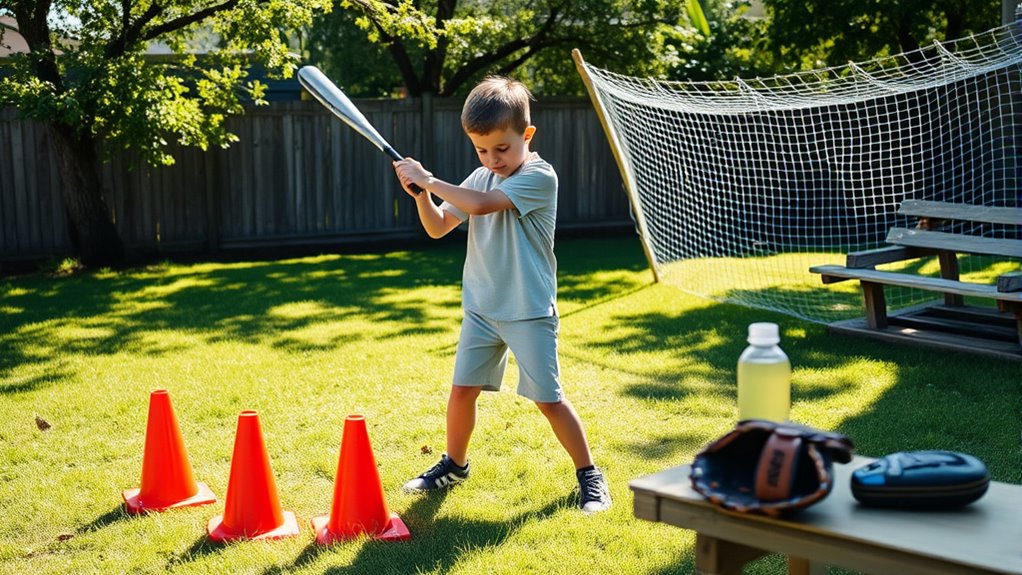
Whether you’re a seasoned player or just starting out, practicing your baseball swing at home can considerably improve your game. One of the key aspects to focus on is bat speed. The faster you can swing the bat, the more power and distance you’ll generate in your hits. Fortunately, there are effective drills you can incorporate into your routine without needing an entire field or team.
A great way to enhance your bat speed is through specific timing drills. These drills help you develop the muscle memory and coordination necessary for an explosive swing. Start by standing in front of a mirror, holding your bat. Focus on your grip and stance, guaranteeing you’re balanced and ready. As you practice your swing, pay attention to the timing of your movements. It’s essential to synchronize your body’s rotation with the movement of your arms and bat. This synchronization will not only improve your bat speed but also create a smoother, more efficient swing.
Enhance your bat speed with timing drills to develop muscle memory and achieve a smoother, more efficient swing.
Another effective drill you can perform at home is the “tee drill.” Set up a batting tee in your backyard or garage. This allows you to practice hitting the ball consistently while focusing on your swing mechanics. Start slow, concentrating on your grip and stance, then gradually increase your swing speed. As you become more comfortable, challenge yourself to hit the ball harder while maintaining your timing. This will not only increase your bat speed but will also help you understand how to control it.
In addition to these drills, consider incorporating resistance training into your routine. Using a weighted bat or resistance bands can markedly boost your bat speed. Swinging a heavier bat will build strength in your arms and core, translating into a faster swing when you return to your regular bat. Just remember to practice with your normal bat after these sessions to guarantee you maintain the proper technique.
Finally, always focus on your follow-through. A strong follow-through is essential for maximizing your swing’s power. Make sure you complete your swing fully, allowing your body to finish the motion naturally. This not only enhances your bat speed but also ensures you’re making solid contact with the ball. Additionally, practicing with specific timing drills will enhance your coordination and timing, crucial for an effective swing.
Frequently Asked Questions
What Equipment Do I Need for Home Swing Practice?
For effective home swing practice, you’ll need a few key pieces of equipment. A batting tee is essential, as it allows you to work on your swing mechanics without the pressure of a moving pitch. You should also consider using a weighted bat to build strength and improve your swing speed. With these tools, you’ll be well-equipped to refine your skills and develop a more powerful, consistent swing.
How Often Should I Practice My Swing at Home?
You should aim to practice your swing at home at least three to four times a week. Create a practice schedule that includes both drills and skill assessments to track your progress. By regularly evaluating your technique, you’ll identify areas for improvement and stay motivated. Consistency is key, so stick to your schedule and make adjustments as needed to guarantee you’re developing your skills effectively. Happy swinging!
Can I Practice Indoors Without Damaging Anything?
Absolutely, you can practice indoors without damaging anything if you take some precautions. Think of your space as a canvas; you want to avoid splattering paint everywhere! Use a soft bat and lightweight balls to minimize the risk of indoor safety issues. Set up a designated practice area with cushions or blankets for damage prevention, and consider using a net if possible. With the right setup, you’ll swing away confidently!
What Common Mistakes Should I Avoid During Practice?
During practice, avoid common mistakes like an inconsistent swing plane and improper hip rotation. If your swing plane’s off, you’ll miss the ball or hit it poorly. Make sure to keep your hips engaged; if they don’t rotate correctly, your power and accuracy will suffer. Focus on maintaining a smooth, level swing and let your hips drive your motion. By correcting these issues, you’ll see better results in your performance.
How Can I Measure My Swing Improvement at Home?
To measure your swing improvement at home, you can use video analysis. Record your swings regularly and compare them over time. Look for changes in your technique and posture. Additionally, invest in a swing speed sensor to track your swing speed. This data helps you see your progress quantitatively. By reviewing your videos and monitoring your swing speed, you’ll gain valuable insights into your improvements and areas that need more work.
Conclusion
Incorporating these drills and tips into your routine can considerably enhance your baseball swing, even from home. For instance, imagine a young player named Jake who dedicated 20 minutes daily to practicing his swing mechanics in his backyard. Within a few weeks, his batting average improved by nearly 30%. By staying consistent and focused on your technique, you can transform your skills and ready yourself for game day, all without stepping onto the field.