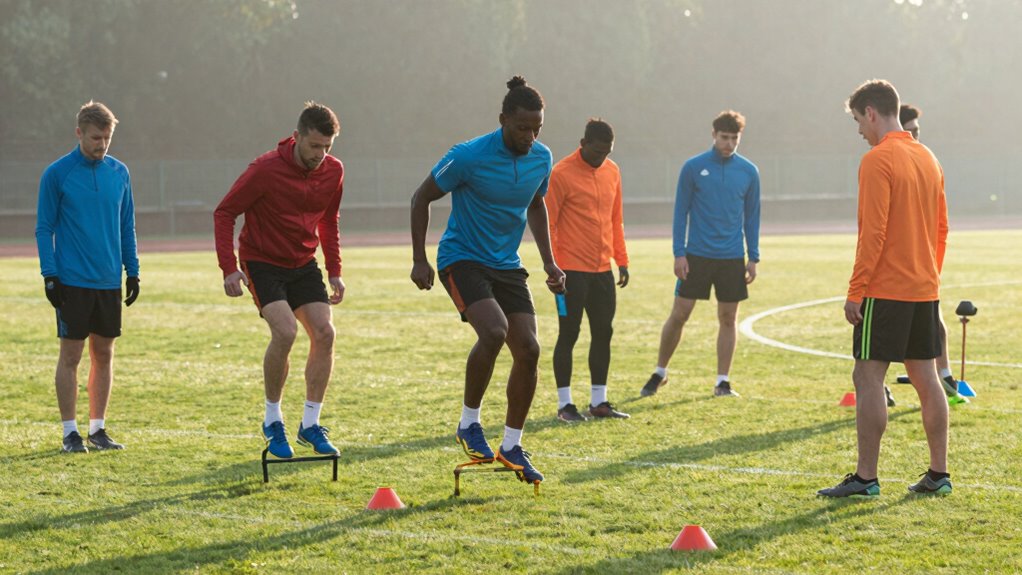

During the off-season, focus on recovery with rest, proper sleep, and nutrition. Incorporate foam rolling, stretching, and massages to help your muscles heal and prevent injuries. Use cross-training like swimming or cycling to boost your cardiovascular health and prevent burnout. Build mental resilience through goal setting, visualization, and mindfulness. Combining these strategies will prepare you physically and mentally for the upcoming season. Keep going to discover more tips to optimize your off-season training.
Key Takeaways
- Incorporate rest, proper nutrition, and recovery techniques like foam rolling and stretching to promote healing and injury prevention.
- Set clear, realistic goals and track progress to maintain motivation and build mental resilience.
- Include cross-training activities such as swimming or yoga to improve cardiovascular fitness and prevent burnout.
- Practice mindfulness and mental recovery techniques to enhance focus, mental toughness, and overall resilience.
- Simulate game conditions in training to prepare physically and mentally for the upcoming season.
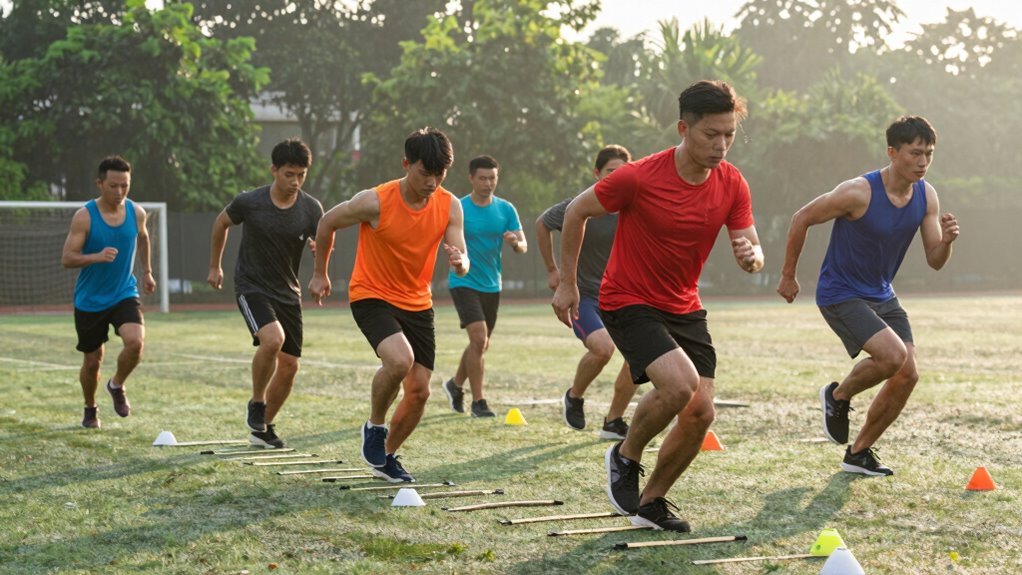
When the season ends, remaining proactive with your training is crucial to maintain and even improve your performance. Off-season is the perfect time to focus on recovery strategies that allow your body to heal and reset, preventing injuries and ensuring you come back stronger. Incorporate rest days, proper sleep, and nutrition into your routine, and consider techniques like foam rolling, stretching, or massages to promote muscle recovery. This period is also ideal for addressing any weaknesses or imbalances you noticed during the season. Strengthening those areas now can enhance your overall athleticism and reduce the risk of injury when the season resumes. Additionally, paying attention to your training environment can optimize your workouts and support recovery efforts.
However, staying motivated and mentally tough during the off-season can be challenging. Your mental toughness is just as vital as your physical training, especially when motivation wanes or setbacks occur. Set clear, realistic goals for the months ahead, whether it’s increasing your endurance, improving specific skills, or building strength. Keeping a training journal can help track your progress and boost your confidence as you see tangible improvements. Maintain a disciplined routine, but also allow flexibility to prevent burnout. Mental toughness develops through consistency and resilience—facing challenges head-on and pushing through discomfort. Use visualization techniques to imagine yourself succeeding, which can reinforce your commitment and boost your mental resilience.
Stay motivated and build mental toughness through goal setting, journaling, and visualization to overcome setbacks and push through discomfort.
In addition to physical workouts, you should diversify your training to include agility drills, speed work, and conditioning. These elements keep your body agile and prepared for the demands of team sports, helping you avoid stagnation. Cross-training with activities like swimming, cycling, or even yoga can improve your cardiovascular health while providing a mental break from routine workouts. This variety keeps training engaging and can help prevent mental fatigue, which often hampers progress during the off-season. Remember, recovery isn’t just physical; mental recovery is equally important. Spending time on mindfulness or meditation can enhance your mental toughness, helping you stay focused and positive through the ups and downs of training. Incorporating appropriate training environments that simulate game conditions can further prepare you mentally and physically for competition. Additionally, understanding drone bees and hive health can serve as a metaphor for how proper teamwork and balance in your training can lead to overall success and resilience.
Ultimately, the off-season is your chance to build a stronger, more resilient athlete. By combining effective recovery strategies with mental toughness exercises, you’ll be better prepared both physically and mentally for the challenges of the upcoming season. Use this time wisely, stay disciplined, and keep pushing forward—your efforts will pay off when game day arrives.

TriggerPoint Grid 1.0 Foam Roller – 13" Multi-Density Massage Roller for Deep Tissue & Muscle Recovery – Relieves Tight, Sore Muscles & Kinks, Improves Mobility & Circulation – Targets Key Body Parts
- Enhances Muscle Recovery: Promotes tissue aeration and blood flow
- Comfortable Foam Construction: Distrodensity Zones for sore and soft tissues
- Customizable Massage Feel: Varying ridges and nodules for targeted relief
As an affiliate, we earn on qualifying purchases.
As an affiliate, we earn on qualifying purchases.
Frequently Asked Questions
How Do I Prevent Injuries During Off-Season Training?
To prevent injuries during off-season training, focus on injury prevention by gradually increasing intensity and volume. Incorporate proper recovery strategies like stretching, foam rolling, and adequate rest to avoid overtraining. Listen to your body and address any pain early. Strengthen muscles and joints with targeted exercises, and make certain you use proper technique. Staying consistent and attentive to your body’s signals helps you maintain fitness while reducing injury risk.
What Equipment Is Essential for Home Training?
For a home workout, essential fitness equipment includes dumbbells, resistance bands, a stability ball, and an exercise mat. These items help you build strength, improve flexibility, and maintain endurance. You might also consider a jump rope or kettlebell for cardio. Having these tools makes your training more effective, allowing you to target different muscle groups and stay consistent without needing a gym.
How Should I Modify Training for Different Sports?
Adjust your training like a tailor fitting a suit, ensuring it matches your sport’s unique needs. Focus on sport-specific drills to target essential skills, and prioritize skill development that directly impacts performance. For example, a soccer player should emphasize agility and ball control, while a basketball athlete works on vertical jump and shooting accuracy. Tailoring your workouts keeps training relevant, effective, and helps you excel when it’s game time.
When Is the Best Time to Start Transitioning Back to Game Season?
You should start shifting back to game season about 4 to 6 weeks before the first game. This timing helps with injury prevention and guarantees your body adapts gradually. Focus on a smooth training changeover by reintroducing sport-specific drills and increasing intensity slowly. Prioritize strength, agility, and endurance exercises during this period to prevent injuries and optimize performance when the season begins.
How Can I Stay Motivated During the Off-Season?
To stay motivated during the off-season, you need to nurture your passion with steady nourishment for both body and mind. Focus on smart nutrition strategies that fuel your progress and build mental resilience, helping you see the bigger picture. Celebrate small victories, set achievable goals, and remember why you started. By maintaining this balanced approach, you’ll find renewed energy and purpose, turning motivation into a natural part of your journey.

Resistance Bands for Working Out, Physical Therapy, Exercise, Pilates, Yoga
- Multiple Resistance Levels: Five color-coded resistance options
- Versatile Exercise Use: Suitable for workout, therapy, Pilates, Yoga
- High-Quality Material: TPE, latex-free, durable, skin-friendly
As an affiliate, we earn on qualifying purchases.
As an affiliate, we earn on qualifying purchases.
Conclusion
As you accelerate into the off-season, remember to stay motivated, manage your movement, and maximize your mastery. Consistent conditioning keeps your core sharp, while strategic rest rejuvenates your resilience. By blending balance with boldness, you build a better, stronger you. So, stay spirited, stay specific, and savor the success that comes from smart, steady training. Keep pushing, stay positive, and prepare to perform at your peak when the season starts again!

Peloton Exercise Bike, Indoor Stationery Cross Training Bike for Home
- Personalized Workout Plans: Customized routines and progress tracking
- All-Access Membership: Unlocks live, on-demand classes and features
- HD Swivel Touchscreen: 360° movement for versatile training
As an affiliate, we earn on qualifying purchases.
As an affiliate, we earn on qualifying purchases.

The Mindful Athlete: Secrets to Peak Performance
As an affiliate, we earn on qualifying purchases.
As an affiliate, we earn on qualifying purchases.