
To practice basketball dribbling at home, start with hand-eye coordination exercises like bouncing a basketball while standing still, and switch it up by dribbling with both hands. Set up cones for speed drills and navigate through them quickly. Incorporate figure-eight dribbling to boost agility and ball control. Work on your footwork with lateral shuffles, simulating game scenarios. Track your progress and practice in different environments to prepare for actual games. There’s more to explore, so keep going!
Key Takeaways
- Set up a simple obstacle course using cones or household items to practice dribbling while maintaining speed and control.
- Focus on figure-eight dribbling around your legs to enhance ball handling and agility.
- Alternate dribbling with both hands to improve comfort and control, especially with your non-dominant hand.
- Incorporate lateral movements and crossovers to simulate real-game scenarios and boost footwork skills.
- Track your progress by setting specific dribbling goals and practicing under different lighting conditions to adapt to various environments.

Have you ever wondered how to improve your basketball dribbling skills without hitting the court? You can actually make significant strides in your ball handling right from the comfort of your home. By incorporating simple drills and exercises into your routine, you’ll develop better control and agility, which are *essential* when it comes to performing under pressure during games.
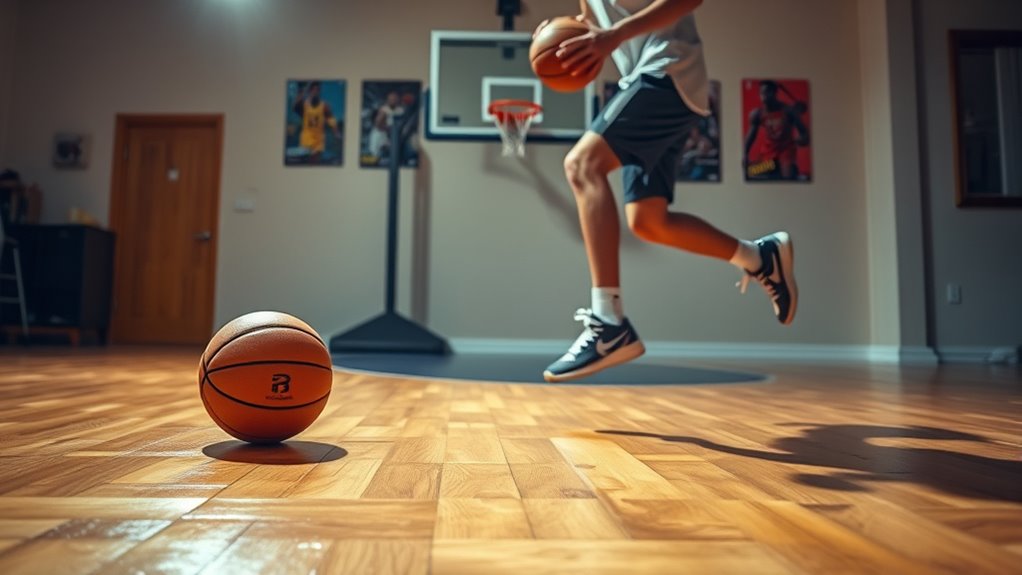
Start by focusing on your hand-eye coordination. You can do this by simply bouncing a basketball while standing in place. Alternate between your dominant and non-dominant hands, ensuring you maintain control of the ball. This exercise not only helps with ball handling but also encourages you to become more comfortable using both hands. You might be surprised how quickly your weaker hand improves with consistent practice.
Focus on hand-eye coordination by bouncing a basketball with both hands; it boosts your control and enhances your weaker hand.
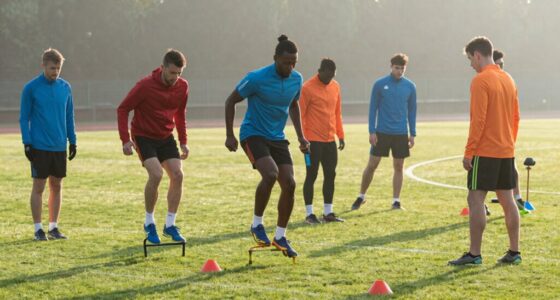
Next, consider adding some speed drills to your routine. These drills are perfect for developing quickness and responsiveness. For example, you can set up a series of objects like cones or even household items to create an obstacle course. As you dribble the ball through this course, focus on maintaining your speed while keeping the ball low. The more you practice, the more naturally this will come to you in a game situation.
Another effective drill is the “figure-eight” drill, where you dribble the ball around your legs in a figure-eight pattern. This movement not only enhances your ball handling but also works on your agility. Start slowly to get the hang of it, and then gradually increase your speed. You’ll find that this exercise helps you to navigate through defenders more effectively.
Don’t forget about your footwork! While practicing your dribbling, incorporate shuffles or crossovers to simulate game-like scenarios. For instance, you can dribble while moving laterally across your living room or yard. This will not only improve your handling skills but also boost your overall athleticism.
Finally, always keep track of your progress. Set specific goals for your dribbling sessions and try to beat your own records. Whether it’s the number of consecutive dribbles you can make without losing control or the time it takes to complete your obstacle course, measuring your improvement keeps you motivated. Additionally, ensuring you practice under varying lighting conditions can simulate different game environments and help you adjust your performance accordingly.

Basketball Training Equipment, Practice Training Mat, Dribble Trainer
【Complete & Valuable Basketball Training Set】This is the most complete Basketball set on the market. It includes Basketball…
As an affiliate, we earn on qualifying purchases.
As an affiliate, we earn on qualifying purchases.
Frequently Asked Questions
What Type of Basketball Is Best for Home Dribbling Practice?
For home dribbling practice, a rubber basketball is your best bet. It’s designed for indoor courts, providing the right grip and bounce. This type of ball helps you develop your skills without worrying about damage to your floors. Plus, its durability means you can practice consistently. Make sure you’ve got enough space to move around freely, and you’ll be set to improve your dribbling in no time!
How Much Space Do I Need for Practicing Dribbling?
You only need about 10 feet of indoor space or a standard outdoor court to practice dribbling effectively. Surprisingly, studies show that players who practice in smaller areas improve their ball control by 30%! Whether you’re in your garage or at a park, having enough space lets you focus on your technique without distractions. So grab your ball, find that spot, and start honing your skills—your future self will thank you!
Can I Practice Dribbling With a Smaller Ball?
Yes, you can practice dribbling with a smaller ball! Using a smaller ball can actually improve your ball control and hand coordination. It forces your hands to become more precise and agile. As you dribble, focus on keeping the ball low and close to the ground to enhance your technique. Just make sure to gradually shift back to a standard basketball once you feel confident with your skills.
Is It Necessary to Wear Basketball Shoes While Practicing at Home?
It’s not absolutely necessary to wear basketball shoes while practicing at home, but it’s definitely a good idea. Basketball shoes provide better grip and support, which helps prevent injuries. If you’re using indoor footwear, make sure it’s comfortable and offers cushioning. This way, you can focus on your dribbling without distractions. Ultimately, choosing the right shoes can enhance your practice experience and keep you safe while you improve your skills.
How Often Should I Practice Dribbling at Home?
You should practice dribbling at least four to five times a week. Imagine a player like you, training consistently, dedicating 30 minutes daily to ball handling drills. This commitment not only sharpens your skills but also builds muscle memory. By incorporating various drills, like crossovers and behind-the-back moves, you’ll see improvement. Consistency is key; the more you practice, the more natural your dribbling will feel during games. So, get to it and stay committed!

GHB 7 Inch Soccer Cones 12 Pack Disc Soccer Sport Cones Training Field Marker Agility Cones for Basketball, Coaching, Practice Equipment Includes Drills Guide (7" 12Pcs Orange)
Soft Material Easy Rebound: These soccer cones are made of soft polyethylene vinyl,enduring and long-lasting,won't break and brittle…
As an affiliate, we earn on qualifying purchases.
As an affiliate, we earn on qualifying purchases.
Conclusion
By practicing your dribbling at home, you’re not just honing your skills; you’re setting yourself up for success on the court. Did you know that a player who practices for just 30 minutes a day can improve their dribbling speed by up to 20% in a month? Imagine gliding past defenders with ease, leaving them in the dust. So grab that basketball, hit the floor, and let your dribbling transform your game!

GHB Pro Agility Ladder Agility Training Ladder Speed 12 Rung 20ft with Carrying Bag
20 Feet 12 Rungs Agility Ladder:The agility ladder comes with 12 sturdy plastic rungs, and the overall length…
As an affiliate, we earn on qualifying purchases.
As an affiliate, we earn on qualifying purchases.
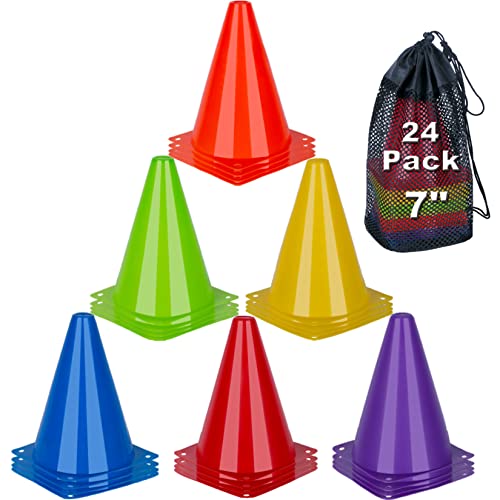
7 Inch Soccer Cones, 24 Pack Cones Sports Training Agility Field Marker Plastic Cones for Skating Basketball Football Practice Drills, Indoor Outdoor Activity Events Games Obstacle Course – 6 Colors
Durable material: These training cones are constructed of low-density polyethylene vinyl material, which is very sturdy and won’t…
As an affiliate, we earn on qualifying purchases.
As an affiliate, we earn on qualifying purchases.