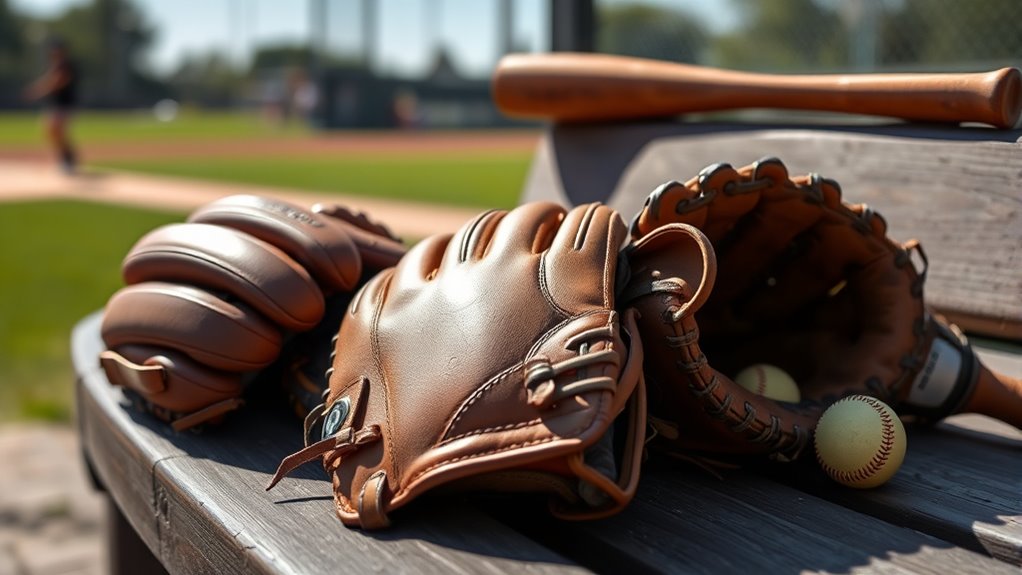

Choosing the right baseball glove for your position can substantially boost your performance. If you’re a pitcher, you’ll want a flexible glove for better ball control. Infielders should opt for smaller gloves for quick transfers, while outfielders benefit from larger designs for extended reach. First basemen need wide-mouthed mitts for scooping throws, and catchers require specialized mitts for fast pitches. Make sure to find the perfect fit to enhance comfort and performance. There’s more to discover about maintaining and caring for your glove!
Key Takeaways
- Choose gloves based on your position: pitchers need flexibility, while infielders require smaller gloves for quick transfers.
- Outfielders benefit from larger gloves for extended reach, and first basemen need mitts with flat pockets for scooping throws.
- Ensure a proper fit: gloves should be snug but allow for finger movement, with adjustable wrist straps for comfort.
- Regularly maintain your glove by cleaning, conditioning, and storing it properly to extend its lifespan and performance.
- Invest in quality gloves and care to optimize your confidence and performance on the field.
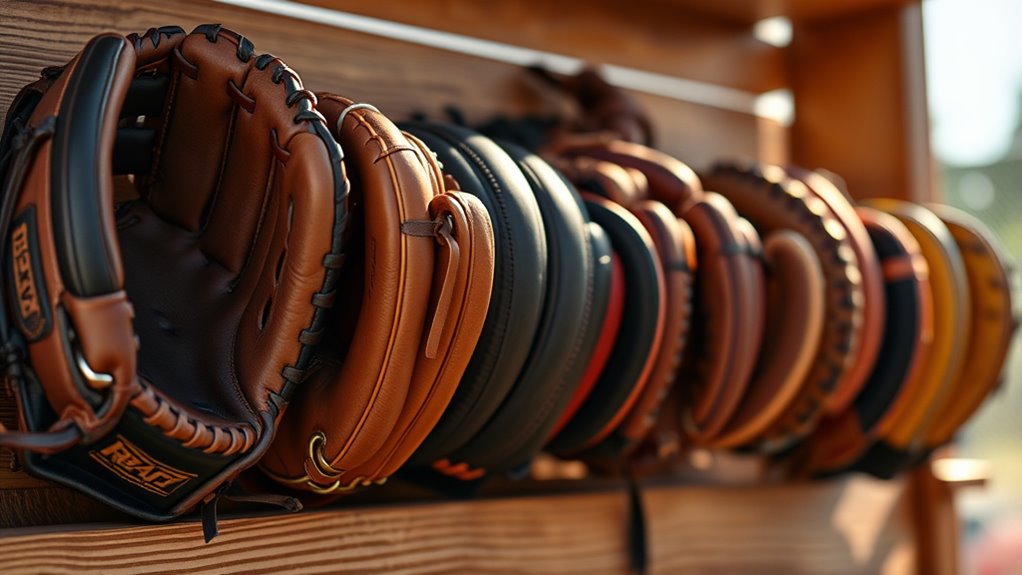
When you’re gearing up for the baseball season, choosing the right glove can make all the difference in your performance on the field. It’s not just about picking the most expensive one or the latest model; it’s about finding a glove that fits your position and feels comfortable on your hand. The right glove can enhance your catching ability and give you more confidence when you’re out there playing.
Start by considering your position. If you’re a pitcher, you’ll want a glove that’s a bit more flexible, allowing you to manipulate the ball easily. For infielders, a smaller glove helps with quick transfers, while outfielders often prefer larger gloves for better reach. First basemen need mitts with a flat, wide pocket to scoop up throws, and catchers require specialized mitts designed for taking fast pitches. Understanding these specifics can help you narrow down your options and make the right choice.
Consider your position to choose the right glove: flexibility for pitchers, smaller sizes for infielders, and larger gloves for outfielders.
Once you’ve identified your position’s needs, focus on fitting techniques. A glove should fit snugly but not too tight; you need enough room to move your fingers freely while still having control. Try on different gloves, and pay attention to how they feel when you flex your hand. Make sure the wrist strap is adjustable for a secure fit, as this will enhance your glove’s stability during play. Don’t hesitate to ask for help from a knowledgeable salesperson; they can guide you in finding the best fit for your needs.
After purchasing your glove, glove maintenance is essential to ensure it lasts through the season. Regularly clean your glove with a damp cloth to remove dirt and debris, and avoid exposing it to extreme temperatures. Conditioning it with a specialized glove oil or cream keeps the leather supple and prevents cracking. Store your glove properly when you’re not using it—keep it in a cool, dry place and consider using a ball to maintain its shape. Additionally, understanding color accuracy can help you choose a glove that enhances your overall performance and feel.
Investing time in glove maintenance will pay dividends when you’re on the field. A well-cared-for glove not only performs better but also lasts longer, giving you more value for your investment. By understanding your position, utilizing proper fitting techniques, and committing to glove upkeep, you’ll ensure that your glove enhances your game, elevating your performance all season long.

Rawlings | PLAYER PREFERRED Glove | Baseball/Softball | Right Hand Throw | 12.5" – Basket Web
12 1/2 INCH ADULT GLOVE | Perfect for recreational baseball and slowpitch softball
As an affiliate, we earn on qualifying purchases.
As an affiliate, we earn on qualifying purchases.
Frequently Asked Questions
How Do I Break in a New Baseball Glove?
To break in a new baseball glove, start by applying a small amount of glove conditioner to soften the leather. Then, play catch regularly to help mold the glove to your hand. You can also fold the glove and use rubber bands to keep it closed overnight. For glove sizing, make sure it fits snugly but comfortably. These beginner tips will speed up the process, making your glove game-ready in no time!
What Materials Are Best for Baseball Gloves?
For baseball gloves, leather is often the best choice due to its durability and natural flexibility. High-quality full-grain leather offers excellent glove durability, while steerhide provides a balance of strength and flexibility. If you prefer lighter options, synthetic materials can work, too, but they may lack the same longevity. Ultimately, selecting a glove that combines the right material flexibility with durability will enhance your performance on the field.
How Do I Clean and Maintain My Glove?
Just like a gardener tending to their plants, you need to nurture your glove to keep it in top shape. Start glove cleaning by gently wiping it down with a damp cloth to remove dirt. For glove conditioning, apply a small amount of leather conditioner, rubbing it in with your fingers. Let it sit for a bit, then buff it out. Regular care will guarantee your glove stays strong and ready for action!
Can I Use a Glove for Multiple Positions?
Yes, you can definitely use a glove for multiple positions. Glove versatility is key, especially if you’re playing different roles on the field. Multi-position gloves are designed to accommodate various needs, balancing comfort and performance. However, keep in mind that some positions may require specific glove features for peak play. Make sure your glove fits well and feels comfortable, so you can perform at your best, no matter where you’re positioned.
What Size Glove Is Best for Youth Players?
When it comes to youth players, a glove that fits like a well-loved shoe is key. Generally, youth glove sizes range from 9 to 12 inches, depending on their age and hand size. To guarantee a perfect fit, measure their dominant hand and choose a glove that allows them to comfortably open and close it. Remember, a snug fit boosts confidence and performance on the field, making the game feel like a joyful dance.

Wilson A450™ 11” Youth Infield Baseball Glove – Right Hand Throw, Red/White
Wilson A450 11” Youth Infield Baseball Glove – Right Hand Throw, Red/White
As an affiliate, we earn on qualifying purchases.
As an affiliate, we earn on qualifying purchases.
Conclusion
So, when it comes to picking the right glove, don’t just grab the flashiest one or the one that matches your socks. You wouldn’t wear clown shoes to a marathon, right? Think about your position and the unique demands it brings. After all, you wouldn’t want to be the outfielder trying to catch fly balls with a first baseman’s mitt—unless your goal is to become the laughingstock of the league. Choose wisely, or prepare for some serious ribbing!

Rawlings | SANDLOT Baseball Glove | Right Hand Throw | 12.75" – Pro H-Web
12.75 in. OUTFIELD, PRO H WEB – great for use in both baseball and softball
As an affiliate, we earn on qualifying purchases.
As an affiliate, we earn on qualifying purchases.

Mizuno GXS90F5 Franchise FP | Catchers Mitt Fastpitch Glove | 34" | Center Pocket Design | H Web
Designed for the fastpitch Player
As an affiliate, we earn on qualifying purchases.
As an affiliate, we earn on qualifying purchases.