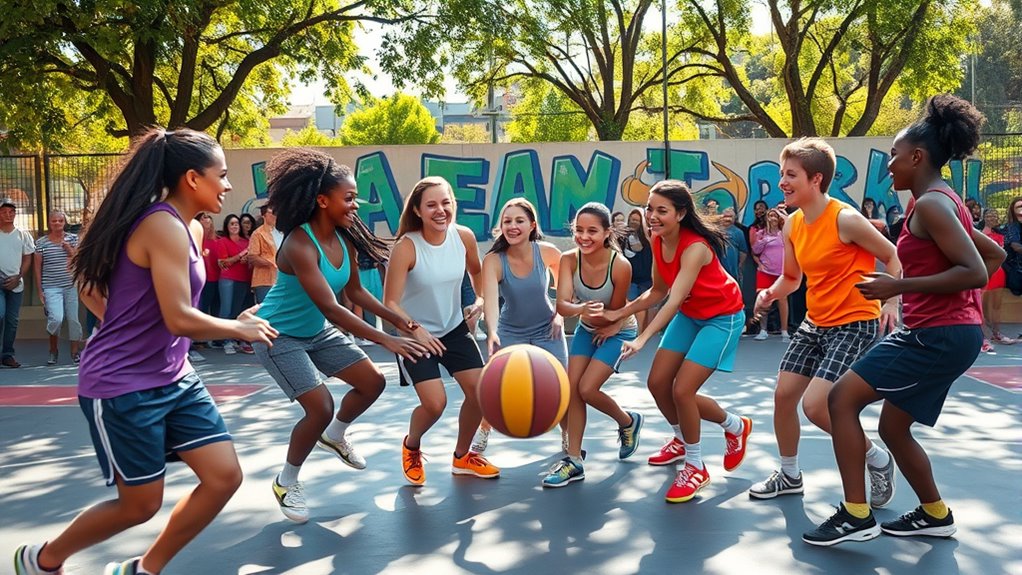

Participating in sports helps you build teamwork skills crucial for success on and off the field. You’ll learn to collaborate, communicate, and support your teammates, enhancing not only your athletic abilities but your personal growth too. Set clear goals with your team to foster unity, and respect each other’s strengths and weaknesses. Remember, every challenge and victory is an opportunity to grow. Keep exploring to discover more tips that’ll take your teamwork skills to the next level!
Key Takeaways
- Engage in team sports to develop collaboration, communication, and trust among teammates, enhancing overall teamwork skills.
- Set clear, collective goals to encourage unified efforts and reduce individual competition within the team.
- Provide and receive constructive feedback to foster open communication and improve team dynamics.
- Emphasize respect for teammates, opponents, and coaches to build a supportive environment and enhance team cohesion.
- Reflect on both victories and losses as learning opportunities, applying insights to strengthen teamwork in future situations.

Whether you’re on the field or cheering from the sidelines, participating in sports can considerably enhance your teamwork skills. Engaging in any sport teaches you how to work with others toward a common goal. The essence of teamwork lies in communication, trust, and collaboration, all of which are essential for success in both sports and life. If you want to build these skills effectively, you need to embrace the various coaching strategies that emphasize collaboration and mutual respect.
One effective coaching strategy is setting clear goals for your team. When everyone knows what they’re working towards, it fosters a sense of unity. You’ll learn to identify your strengths and weaknesses, allowing you to support your teammates in areas where they excel or need improvement. In this way, you’re not just playing for yourself; you’re contributing to the collective effort. Remember, it’s not about individual stars shining the brightest; it’s about how well you can shine together.
Setting clear goals unites the team, helping everyone recognize strengths and weaknesses for collective success rather than individual glory.
In addition to goal-setting, practicing sportsmanship principles is vital. These principles remind you that respect for teammates, opponents, and coaches is paramount. When you uphold these values, you create an environment where everyone feels valued and encouraged to contribute. You’ll quickly find that when you respect others, they’re more likely to respect you in return. This mutual respect lays the foundation for effective teamwork, as it builds trust and open communication.
As you practice with your team, pay attention to how you communicate. Are you giving feedback in a constructive way? Are you listening to your teammates’ ideas? Good communication can make or break a team’s dynamics. If you focus on being clear and positive in your interactions, you’ll find that you not only improve your skills but also boost your teammates’ morale. When everyone feels heard and appreciated, it strengthens the bonds that make a team successful.
In sports, every game teaches you something valuable about teamwork. Whether it’s overcoming a loss or celebrating a hard-fought victory, each experience shapes your understanding of collaboration. By embracing coaching strategies and sportsmanship principles, you’re not just becoming a better athlete; you’re also growing as a person. So, whether you’re on the field or cheering from the sidelines, remember that every moment spent in sports is an opportunity to strengthen your teamwork skills. Incorporating interactive games can further enhance team bonding and engagement, making practices more enjoyable and effective.
Frequently Asked Questions
What Sports Are Best for Developing Teamwork Skills?
If you want to develop teamwork skills, consider engaging in team sports like soccer, basketball, or volleyball. These sports require you to communicate, strategize, and work together towards a common goal. Cooperative games, such as capture the flag or relay races, also help foster collaboration and trust among teammates. By participating in these activities, you’ll not only improve your athletic abilities but also learn valuable skills that are essential for effective teamwork in any setting.
How Can I Improve Communication With Teammates?
To improve communication with your teammates, focus on effective listening and clear messaging. When teammates speak, give them your full attention and show that you value their input. Use concise language to express your thoughts, avoiding jargon that might confuse others. Encourage open discussions during practice, and don’t hesitate to ask for clarification when needed. By fostering an environment of trust and understanding, you’ll strengthen your team’s communication and overall performance.
What if I Struggle With My Team Dynamics?
If your team feels like a ship lost at sea, don’t worry; you can steer it back on course. Start by focusing on trust building—share your thoughts openly and encourage others to do the same. Take the lead by fostering a positive atmosphere, where everyone feels valued. Remember, leadership development isn’t just about you; it’s about uplifting the entire crew. With patience and effort, you can harmonize your team dynamics and sail smoothly together.
Are Individual Sports Beneficial for Teamwork Skills?
Yes, individual sports can be beneficial for teamwork skills. While you may train solo and focus on your own goals, you’ll still interact with teammates during competitions and practices. These experiences teach you how to communicate, support others, and collaborate effectively. You can learn from each other’s strengths and weaknesses, making it easier to build trust and camaraderie. So, even in individual sports, teamwork skills can flourish when you engage with your peers.
How Can I Handle Conflicts Within My Team?
“Where there’s a will, there’s a way.” To handle conflicts within your team, start with trust-building exercises that foster open communication. Use conflict resolution strategies like active listening and finding common ground. Encourage team members to express their feelings without judgment, which helps reduce tension. Remember, it’s essential to address issues quickly and constructively to maintain a positive atmosphere. With teamwork, you can turn conflicts into opportunities for growth and understanding.
Conclusion
In the grand game of life, teamwork is the ultimate play. By embracing sports, you not only sharpen your athletic skills but also forge bonds that last a lifetime. Remember, every pass, every cheer, and every challenge you face together builds your ability to collaborate and communicate. So immerse yourself, support your teammates, and let the lessons learned on the field translate into every aspect of your life. Together, you can achieve greatness—one game at a time.