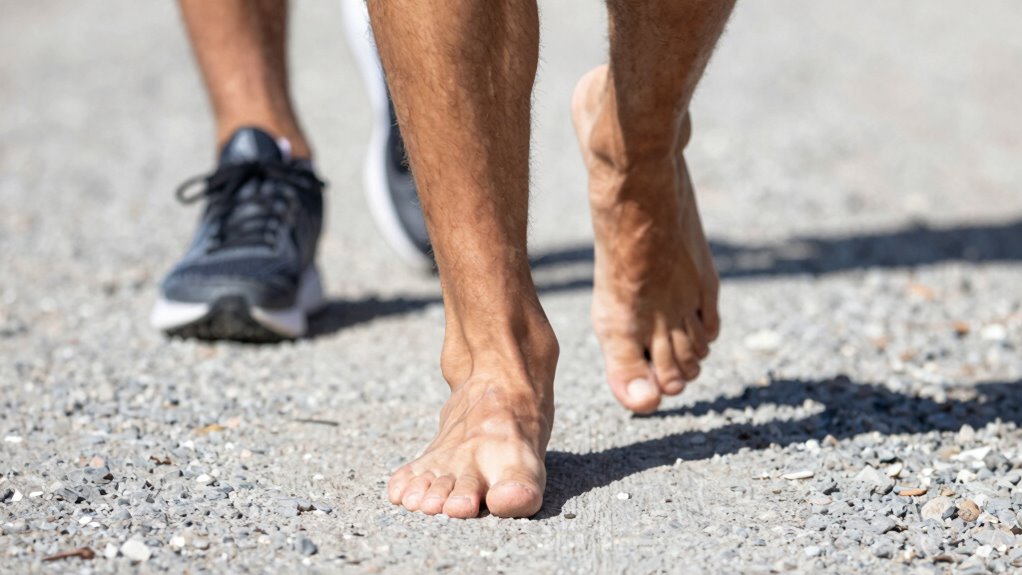

Switching to barefoot running can improve your running economy, lower impact forces, and strengthen foot muscles, but it’s vital to shift gradually to avoid injuries like soreness or bruising. If you adopt proper technique—landing under your hips and keeping a high cadence—you might run more naturally and efficiently. However, individual needs vary, and consulting a professional can help guarantee a safe change. Keep exploring to discover how to adapt safely and maximize benefits.
Key Takeaways
- Barefoot running encourages natural foot movement, potentially improving running economy and reducing impact forces.
- Transitioning gradually and on soft surfaces minimizes injury risk when switching from traditional shoes.
- Proper technique, including high cadence and midfoot strike, is crucial for safe barefoot running.
- Individual needs and goals influence whether barefoot running is suitable; consult professionals for personalized advice.
- While barefoot running offers benefits, it may not be appropriate for everyone, especially without proper adaptation.
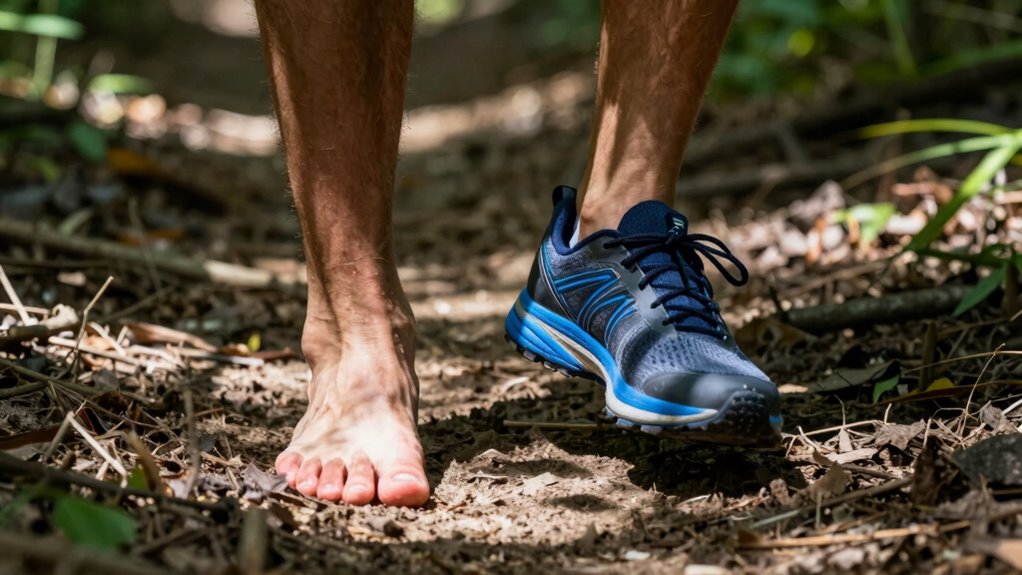
Have you ever wondered whether barefoot running is better than wearing traditional shoes? It’s a question many runners ask themselves as they search for ways to improve performance and reduce injuries. One of the key considerations is how barefoot running affects your running economy—that is, how efficiently your body uses energy during a run. Barefoot runners often find that they develop a more natural stride, which can lead to better running economy because they tend to land more softly and use less energy with each step. When you run without shoes, you might become more aware of your gait, encouraging a midfoot or forefoot strike that minimizes impact forces. This shift can make running feel more effortless over time, especially once your body adapts to the different mechanics.
Barefoot running can improve efficiency by promoting a natural stride and softer landings, reducing energy expenditure.
In addition to potentially improving running economy, barefoot running is frequently linked to injury prevention. By eliminating the cushion and support of traditional shoes, you may strengthen the muscles, tendons, and ligaments in your feet and lower legs. This increased muscle activation can help you develop a more resilient foot structure, reducing the chance of common injuries like plantar fasciitis, shin splints, or stress fractures. Moreover, barefoot running encourages a more natural gait, which can prevent overstriding—a common cause of injury—by promoting shorter, quicker steps. When your stride is optimized, it reduces the impact load transmitted through your legs, potentially decreasing the risk of overuse injuries.
However, transitioning to barefoot running isn’t without risks. If you jump into it too quickly, you might experience soreness, bruised soles, or even more serious injuries. Your muscles and bones need time to adapt to the new stresses, so a gradual transition is essential. You should start with short distances on soft surfaces like grass or dirt before moving onto harder surfaces such as pavement. Wearing minimalist shoes during this transition can also help ease your feet into the change while still offering some protection. Remember, barefoot running emphasizes proper technique—keeping your cadence high, landing under your hips, and avoiding overstriding—so focus on form to maximize benefits and minimize injury risks.
In the end, whether barefoot running is right for you depends on your individual needs, running goals, and how your body responds to the change. While it can enhance running economy and promote injury prevention, it requires patience and proper technique. If you’re considering making the switch, listen to your body, take it slow, and consult with a professional if needed. That way, you can determine if barefoot running aligns with your fitness journey and helps you run stronger and safer.
As an affiliate, we earn on qualifying purchases.
Frequently Asked Questions
How Do I Transition Safely to Barefoot Running?
You should shift safely to barefoot running by gradually increasing your barefoot running time, allowing your feet to adapt to new footwear innovations and running biomechanics. Start with short, easy runs on soft surfaces, then slowly extend your distance. Listen to your body and avoid overloading your muscles and tendons. Incorporate foot exercises to strengthen your feet, and consider consulting a professional to make certain proper technique and reduce injury risk.
Are There Medical Conditions That Prevent Barefoot Running?
Yes, certain medical conditions can prevent barefoot running. If you have foot deformities like bunions or hammertoes, barefoot running might worsen your condition. Similarly, neurological conditions such as peripheral neuropathy can impair sensation and balance, increasing your risk of injury without proper footwear. It’s best to consult your healthcare provider before trying barefoot running if you have any foot deformities or neurological issues, ensuring it’s safe for your specific situation.
How Does Barefoot Running Affect Long-Term Foot Health?
Barefoot running can boost your foot health by promoting arch development and muscle strengthening, but it’s a double-edged sword. While your arches may become more robust and your muscles more resilient, you risk overuse injuries or stress fractures if you’re unprepared. Think of it as building a natural foundation—strengthening your feet over time can lead to healthier long-term foot function, but patience and proper adaptation are key.
Can Barefoot Running Improve Running Performance?
Yes, barefoot running can improve your running performance by encouraging a natural foot strike and enhancing muscle engagement. Without the cushioning of traditional shoes, you tend to land more softly and on the midfoot or forefoot, reducing impact forces. This increased muscle engagement strengthens your calves, arches, and legs over time, potentially boosting endurance and speed. However, shift gradually to avoid injury and maximize benefits.
What Are the Best Surfaces for Barefoot Running?
You’ll find that gentle, grassy paths and soft, sandy beaches are ideal terrains for barefoot running, offering a natural cushion for your feet. Terrain variety matters, so start on smooth, forgiving surfaces before exploring rougher grounds. These footwear alternatives help you connect with nature while reducing impact. Avoid hard concrete or asphalt initially, as they can be tough on your feet. Gradually, you’ll enjoy the sensation of freedom with proper surface choices.
As an affiliate, we earn on qualifying purchases.
Conclusion
Ultimately, whether you choose barefoot running or traditional shoes depends on your personal comfort and goals. Both have their pros and cons, so it’s worth trying out different options to see what works best for you. Don’t be afraid to step out of your comfort zone—sometimes, you have to take a leap of faith to find what truly fits. Remember, the proof is in the pudding, so give it a shot and see where your feet take you.
As an affiliate, we earn on qualifying purchases.
As an affiliate, we earn on qualifying purchases.