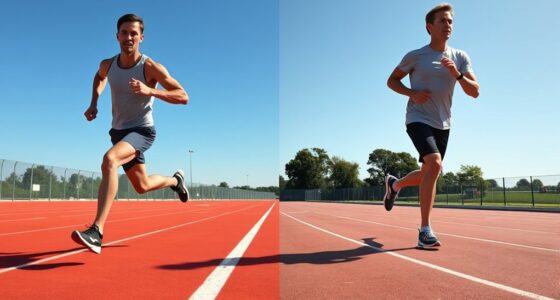
When choosing between barefoot running and traditional shoes, consider your running style and goals. Barefoot running can improve your natural biomechanics and strengthen foot muscles, but it requires a gradual shift to avoid injury. On the other hand, traditional shoes offer cushioning and support, but may mask important aspects of your running form. Evaluate your needs carefully, and discover what suits you best—there’s more to explore on making the right choice for your running journey.
Key Takeaways
- Traditional running shoes provide cushioning and support, reducing impact while promoting endurance during long-distance runs.
- Barefoot running enhances natural biomechanics, strengthens foot muscles, and improves balance and agility.
- A gradual transition to barefoot running is essential to prevent injuries, starting with short distances on soft surfaces.
- Over-reliance on traditional shoes may weaken foot muscles and mask biomechanical issues that need addressing.
- Prioritize proper running form and technique, regardless of footwear choice, to minimize injury risk and support training goals.

As you lace up your running shoes or decide to go barefoot, it’s essential to take into account the impact each choice has on your body and performance. The debate between traditional running shoes and barefoot running has gained traction in recent years, especially among marathon training enthusiasts. Each option presents unique benefits and drawbacks that can markedly influence your running experience and overall fitness.
When you strap on your usual running shoes, you benefit from cushioning and support that helps absorb impact. This can be particularly helpful during long runs as you build endurance for your marathon training. However, excessive cushioning might also lead to a false sense of security, causing you to overlook your running form. If you’re not careful, relying too much on shoes could lead to injuries like shin splints, plantar fasciitis, or knee pain.
On the other hand, barefoot running advocates argue that ditching the shoes can enhance your foot’s natural biomechanics. Running without shoes encourages your feet to work harder, strengthening the muscles and tendons that support your arches. This could lead to improved balance and agility, which are essential for efficient running. However, transitioning to barefoot running requires a gradual approach. If you jump in too quickly, you might increase your risk of injuries, which is counterproductive to your marathon training goals.
Barefoot running can enhance biomechanics and strengthen foot muscles, but a gradual transition is crucial to avoid injuries.
Injury prevention should be at the forefront of your mind when choosing between barefoot running and traditional shoes. If you decide to go barefoot, start with short distances on softer surfaces, gradually increasing as your body adapts. Pay close attention to how your feet and legs respond; soreness is normal, but sharp pain is a warning sign. By building up your strength and endurance, you can help minimize the risk of injuries.
If you choose to stick with traditional running shoes, consider selecting a pair that fits well and offers adequate support for your running style. Regularly assess your shoes for wear and tear, as old shoes can contribute to injuries. Regardless of your choice, remember that the right technique and form are essential for preventing injuries.
Ultimately, whether you opt for barefoot running or traditional shoes, listen to your body. Pay attention to how each choice impacts your performance and adjust accordingly. By prioritizing injury prevention and mindful training, you can enjoy your runs, stay healthy, and achieve your marathon goals.
minimalist barefoot running shoes
As an affiliate, we earn on qualifying purchases.
As an affiliate, we earn on qualifying purchases.
Frequently Asked Questions
Can Barefoot Running Improve My Overall Balance and Coordination?
Yes, barefoot running can improve your overall balance and coordination. By running without shoes, you activate your foot muscles more effectively, which strengthens them over time. This increased foot muscle activation enhances your proprioception, or awareness of your body’s position in space. As you adapt to the natural terrain, you’ll likely notice a boost in your stability and coordination, making it easier to navigate various surfaces and preventing injuries along the way.
Are There Specific Foot Types Better Suited for Barefoot Running?
Yes, certain foot types are better suited for barefoot running. If you have a high arch, you might find it challenging without proper arch support, as your foot may lack the natural flexibility needed for barefoot techniques. Conversely, those with a low arch or flat feet often adapt more easily, benefiting from the natural ground contact that enhances balance and coordination. It’s important to listen to your body and shift gradually to avoid injury.
How Long Does It Take to Transition to Barefoot Running?
Switching to barefoot running typically takes several weeks to a few months, depending on your current fitness level and running experience. You’ll want to follow a training timeline that gradually increases your barefoot running time. Start with short distances and allow your feet to adapt; this adaptation period is essential to prevent injuries. Listen to your body, and don’t rush the process—building strength and technique takes time, but it’s worth it in the end.
What Surfaces Are Safest for Barefoot Running?
Barefoot running on smooth surfaces feels like gliding over a gentle stream. The safest surfaces for you are well-maintained trail surfaces, like packed dirt or grass, which provide cushioning and grip. Indoor flooring, such as gym mats or hardwood, can also be good options, as they’re typically free of debris. Avoid rough or uneven ground until you’re more accustomed to barefoot running. Your feet will thank you as you build strength and confidence!
Is Barefoot Running Suitable for People With Previous Foot Injuries?
Barefoot running isn’t generally suitable for you if you’ve had previous foot injuries. Your foot arch might not support the added stress without the cushioning of traditional shoes, increasing your injury risk. It is crucial to consult a healthcare professional before making this change. They can help assess your foot’s condition and guide you on whether it’s safe to try barefoot running or if you should stick to supportive footwear.
cushioned running shoes for long distance
As an affiliate, we earn on qualifying purchases.
As an affiliate, we earn on qualifying purchases.
Conclusion
In the end, whether you choose barefoot running or traditional shoes, it comes down to what feels right for you. Like a dance, each step should resonate with your body’s rhythm and comfort. Embrace the journey, experiment with both styles, and listen to your body’s whispers. Ultimately, your running experience should be a harmonious blend of freedom and support, leading you to the finish line with confidence and joy. So, which path will you take?
foot strengthening exercises for runners
As an affiliate, we earn on qualifying purchases.
As an affiliate, we earn on qualifying purchases.
running shoe support and cushioning
As an affiliate, we earn on qualifying purchases.
As an affiliate, we earn on qualifying purchases.