

To choose the right running shoes, first identify your foot type—low, normal, or high arch—as this influences support and cushioning needs. Observe your running style, like heel or forefoot striking, to find shoes that support your gait. Look for features like good cushioning, proper fit, and breathability. Try shoes later in the day and test them with a walk or jog for comfort. Keep an eye on wear and replace your shoes regularly for ongoing support and injury prevention.
Key Takeaways
- Determine your foot arch type (low, normal, high) to select appropriate arch support and cushioning.
- Identify your running style (heel, midfoot, or forefoot striker) for suitable shoe features.
- Prioritize proper fit by testing shoes later in the day and ensuring sufficient toe room and heel snugness.
- Consider the terrain and distance to choose shoes with appropriate cushioning and stability.
- Regularly inspect and replace worn-out shoes to maintain support, comfort, and injury prevention.
Understanding Your Foot Type
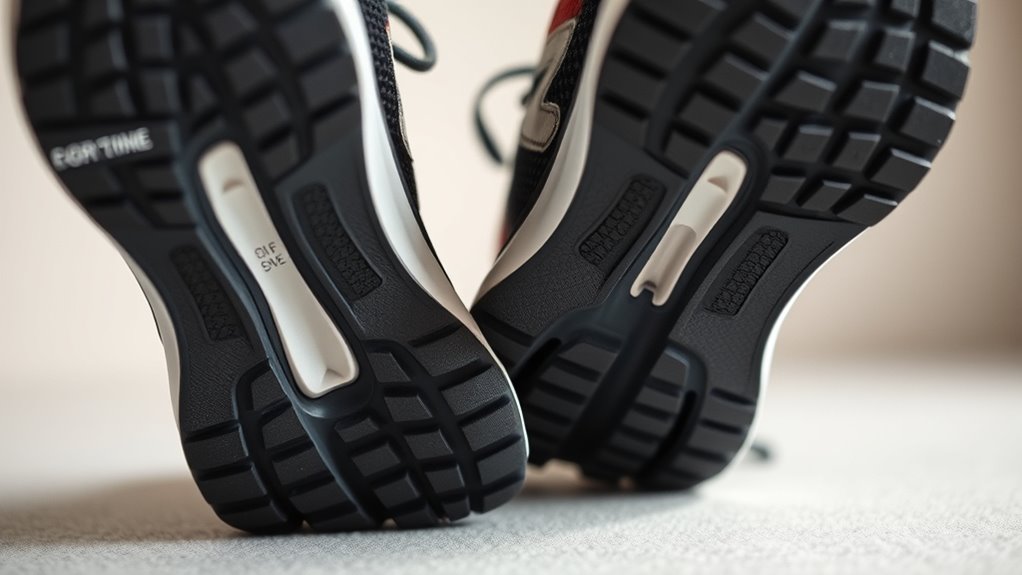
Have you ever wondered why some shoes feel more comfortable than others? It all comes down to understanding your foot type, especially your arch. Your arch type influences how your foot absorbs shock and distributes weight. There are three main arch types: low, normal, and high. Knowing your arch helps you choose shoes with the right arch support, which is essential for comfort and preventing injuries. For instance, if you have a low arch, you’ll benefit from shoes with extra support to stabilize your foot. High arches, on the other hand, often need cushioning to absorb impact. By identifying your arch type, you can select running shoes that provide ideal support and enhance your running experience.
Identifying Your Running Style and Needs

Your foot type is just one part of finding the perfect running shoes; understanding your running style and needs is equally important. To identify your running style, observe how your foot moves when you run—are you a heel striker, a midfoot striker, or a forefoot striker? Your foot arch plays a role here: high arches often require more cushioning to absorb impact, while flat feet may benefit from stability shoes. Consider your typical running terrain and distance, as these factors influence shoe cushioning needs. If you run on hard surfaces frequently, more cushioning can reduce joint stress. Recognizing your running style helps you choose shoes that support your natural gait, prevent injury, and enhance comfort during every stride. Additionally, understanding running biomechanics can provide deeper insight into optimal shoe selection and injury prevention. Being aware of your biomechanical patterns can further refine your choice of running footwear, especially when considering foot strike patterns, and staying informed about advances such as AI-driven discoveries can help you make more informed decisions about your gear.
Key Features to Look for in Running Shoes

When selecting running shoes, focusing on key features makes certain you get the right fit and support for your needs. Important features include:
- Shoe cushioning to absorb shock and reduce impact on your joints. Natural ingredients in some shoe insoles can further improve comfort and support.
- Arch support that matches your foot’s curve, preventing discomfort and injuries.
- Proper fit around the heel and midfoot to prevent slipping and blisters. Additionally, the design of the sole can influence overall stability during your runs.
- Breathable material to keep your feet cool and dry during runs.
- Considering the technology used in the shoe can also enhance comfort and performance during your runs. Staying informed about latest footwear innovations can help you choose shoes that keep you ahead in comfort and durability. Incorporating advancements in material science can further optimize shoe performance and longevity.
Prioritize shoes that offer adequate cushioning without feeling overly bulky. Ensure the arch support aligns with your foot’s shape—whether you need more or less support. A snug, comfortable fit helps you stay stable and prevents blisters. By paying attention to these features, you’ll find running shoes that enhance your comfort and performance.
Tips for Trying on and Selecting the Perfect Fit

Finding the right fit starts with trying on shoes later in the day when your feet are more swollen and reflect their usual size during runs. When testing shoes, focus on proper shoe lacing techniques to ensure a snug, comfortable fit without slipping or tightness. Loosen the laces slightly to slide your foot in easily, then tighten gradually, paying attention to the midfoot and ankle. Consider shoe material options; flexible mesh offers breathability, while thicker materials provide durability. Walk or jog in the shoes to feel how they support your foot’s natural movement. Make sure there’s about a thumb’s width of space at the toe box and that the heel snugly fits without slipping. These steps help you find a shoe that’s both comfortable and supportive for your runs. Additionally, choosing shoes with energy-efficient materials can contribute to more sustainable footwear choices.
Maintaining and Replacing Your Running Shoes

To keep your running shoes in ideal condition, regular maintenance is essential. Over time, shoe cushioning and arch support diminish, affecting comfort and performance. Here’s what you should do:
- Check the outsole for wear, especially in high-impact areas.
- Examine the midsole for compression or flattening, which indicates loss of cushioning.
- Inspect the arch support; if it feels less supportive, it’s time for replacement.
- Clean your shoes regularly to remove dirt and debris that can accelerate deterioration.
- Be aware that vacuum features such as effective suction and durability are important for cleaning and maintaining your shoes properly.
- Monitoring shoe lifespan helps determine when replacement is necessary to prevent injuries and maintain optimal performance.
- Understanding the material durability of your shoes can help you better assess when they need replacing to ensure continued support and comfort, especially as essential oils for foot care can be used to maintain healthy feet during wear.
- Incorporating proper storage techniques can also prolong the life of your running shoes by preventing unnecessary wear when not in use.
Frequently Asked Questions
How Often Should I Replace My Running Shoes?
You should replace your running shoes every 300 to 500 miles to maintain ideal shoe longevity and support. Keep an eye on signs like worn-out soles, decreased cushioning, or discomfort, which indicate it’s time for a replacement. Regularly tracking your mileage and inspecting your shoes helps prevent injuries. Remember, timely replacement ensures your running form stays good and your feet stay comfortable throughout your workouts.
Can I Use Trail Running Shoes for Road Running?
Yes, you can use trail running shoes for road running, but keep in mind the differences between trail vs. road shoes. Trail shoes often have more durable soles designed for rough terrain, which can wear out faster on pavement. While they provide extra grip and protection, their shoe durability might lead to less comfort and quicker wear when used exclusively on the road. For regular road running, dedicated road shoes are usually better.
What if My Feet Hurt After Running in New Shoes?
If your feet hurt after running in new shoes, don’t ignore it. You might need better blister prevention strategies or more foot arch support. Switch to thinner socks, apply blister pads, or give your feet time to adjust. Check if your shoes match your arch type and replace insoles if necessary. Listening to your body helps prevent pain and keeps you running comfortably.
Are Expensive Shoes Necessarily Better for Beginners?
No, expensive shoes aren’t necessarily better for beginners. You should focus on brand reputation and material durability instead. Look for reputable brands known for quality craftsmanship, ensuring the shoes last longer and provide proper support. Cheaper shoes can work well if they’re made from durable materials and fit comfortably. Remember, the best running shoes match your foot shape and running style, regardless of price.
How Do I Know if My Shoes Are Too Old?
Your shoes are like a trusty partner, but even they have a breaking point. If your shoes are over their shoe lifespan or show signs of wear—like worn-out soles, frayed uppers, or reduced cushioning—they’re telling you it’s time for new ones. Check for discomfort or unusual aches after runs, too. When these signs appear, it’s a clear sign your shoes are too old and need replacing to keep your runs safe and comfortable.
Conclusion
Choosing the right running shoes might feel like steering a maze, but with a little patience, you’ll find your perfect match. Think of it as giving your feet a cozy hug they deserve, making every run feel smoother and more enjoyable. Remember, a good fit isn’t just about comfort—it’s about setting yourself up for success and fun. Trust your instincts, and soon enough, you’ll be lacing up with confidence and a smile.