When choosing running clothes for different weather, think about layering and fabric choices. For cold weather, start with a moisture-wicking base layer and add insulation, topped with a waterproof outer layer. In hot conditions, opt for lightweight, breathable fabrics and light colors to reflect the sun. For rain, choose moisture-wicking gear and breathable waterproof jackets. Being prepared for any weather keeps you comfortable and safe. Discover more tips to refine your running gear strategy.

Get workout gear delivered free — and shop member deals
- Fast, free delivery on millions of items
- Access to Prime Big Deal Days deals on October 6–7
- Prime Video, Amazon Music and more included
Key Takeaways
- For cold weather, layer with moisture-wicking base, insulating mid-layers, and a waterproof outer layer for optimal warmth and protection.
- In hot and sunny conditions, choose lightweight, breathable fabrics and light colors to promote sweat evaporation and reflect sunlight.
- For rainy weather, select moisture-wicking materials, breathable waterproof jackets, and waterproof shoes to stay dry and comfortable.
- Always check the weather forecast and be prepared to adjust clothing choices based on changing conditions for safety and comfort.
- Invest in quality and versatile running gear that can be adapted to different weather scenarios for enhanced performance and long-term value.
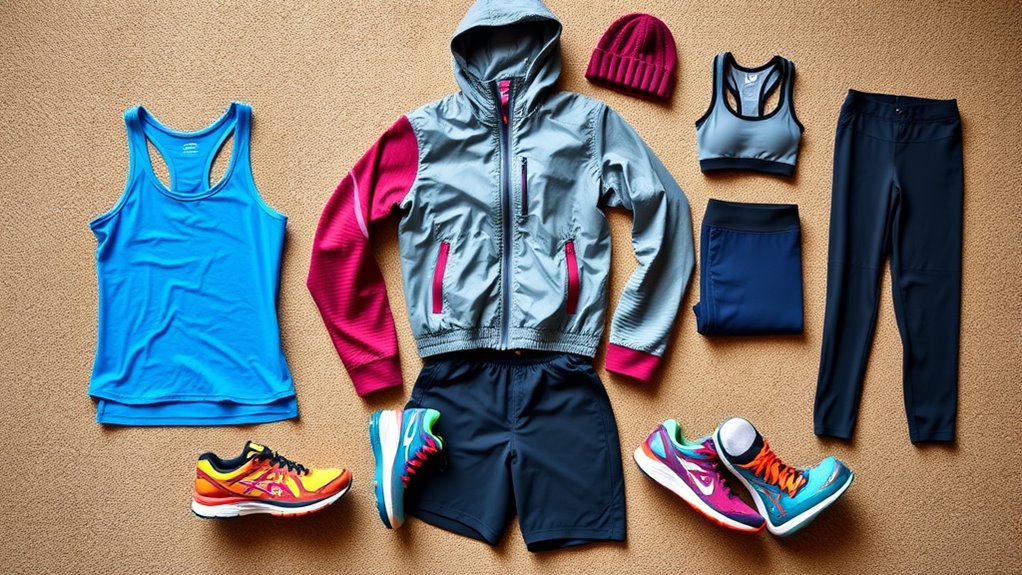
When you head out for a run, the weather can make or break your experience, so it’s essential to choose the right gear. Selecting the right clothes involves understanding how to adapt to different conditions and employing effective layering strategies. Whether it’s chilly, rainy, or hot, the way you dress can substantially impact your performance and comfort.
The right gear can transform your run, ensuring comfort and performance in any weather condition.
For cold weather, you’ll want to focus on layers. Start with a moisture-wicking base layer that sits close to your skin. This fabric pulls sweat away from your body, keeping you dry and warm as you run. Don’t forget to add an insulating layer, like a fleece or a lightweight jacket, which traps heat without adding too much bulk. Finally, a waterproof or windproof outer layer can protect you from the elements, allowing you to focus on your run rather than the weather. Remember, it’s better to have more layers that you can adjust than to be caught shivering in a single, heavy garment.
On the flip side, when it’s hot and sunny, your layering strategy shifts to lightweight, breathable fabrics. Look for tops and shorts made from moisture-wicking materials that allow sweat to evaporate, keeping you cool as you run. Light colors are also preferable, as they reflect sunlight rather than absorb it. A good hat and sunglasses can further shield you from the sun’s rays, helping prevent overheating.
If you’re facing rain, your choice of gear becomes vital. You’ll still want moisture-wicking fabrics next to your skin, but you should prioritize a waterproof jacket to keep you dry. Look for jackets that are breathable, too, so you won’t end up drenched in sweat beneath your rain gear. Waterproof shoes can also make a difference, providing traction and preventing cold, wet feet.
Finally, always keep an eye on the forecast before heading out. Changing weather can sneak up on you, so be prepared and adjust your wardrobe accordingly. Investing in quality running gear that applies to various weather conditions pays off in the long run. With the right clothes and layering strategies, you’ll find that you can take on any weather while enjoying your runs to the fullest. Embrace the elements, and let your clothing empower you to stay active, no matter what Mother Nature throws your way. Additionally, consider the indoor air quality of your home, as pure air can significantly enhance your overall well-being and performance during outdoor activities.
moisture-wicking running base layer
As an affiliate, we earn on qualifying purchases.
As an affiliate, we earn on qualifying purchases.
Frequently Asked Questions
How Do I Wash and Care for My Running Clothes?
To wash and care for your running clothes, always check the care label first. Use cold water with a gentle cycle to preserve the fabric’s moisture-wicking properties. Avoid fabric softeners, as they can coat the fibers and reduce breathability. After washing, hang your clothes to dry instead of using a dryer, which can cause shrinkage. Regularly inspect for wear and tear to make certain your gear stays in top shape for your runs.
What Fabrics Are Best for Moisture-Wicking?
For moisture-wicking, look for fabrics like polyester, nylon, or merino wool. These materials excel in fabric breathability and moisture management, keeping you dry during your runs. Polyester and nylon pull sweat away from your skin, while merino wool regulates temperature and offers natural odor resistance. When you choose the right fabric, you’ll feel more comfortable and focused on your performance, no matter how hard you push yourself.
How Often Should I Replace My Running Gear?
Running gear doesn’t last forever, and it’s important to give your trusty companions a retirement party when they start to show signs of wear. You should aim to replace your running gear every 300-500 miles, depending on the type and usage. Keep an eye on gear longevity; if your shoes feel flat or your clothes lose their moisture-wicking magic, it’s time to stick to the replacing schedule and invest in new favorites.
Can I Wear Cotton for Running in Any Weather?
You can wear cotton for running, but it’s not perfect in most weather conditions. Cotton’s durability is decent, but it absorbs moisture, leaving you wet and uncomfortable during workouts. Instead, you’ll find synthetic materials offer better comfort by wicking away sweat and drying quickly. For ideal performance, especially in varying weather, consider investing in synthetic fabrics that keep you dry and comfortable while running. It makes a significant difference in your experience!
Are There Specific Brands Recommended for Running Apparel?
Are you looking for the best brands for running apparel? You can’t go wrong with brands like Nike, Adidas, and Under Armour, known for their high-quality performance gear. They offer a variety of options that cater to different preferences and budgets. Other great options include Lululemon for comfort and Asics for durability. Finding the right brand can make a big difference in your running experience, so pick one that suits your style!
As an affiliate, we earn on qualifying purchases.
Conclusion
No matter the weather, the right running clothes can make all the difference. Just like the legendary Rocky Balboa faced his challenges head-on, you too can conquer the elements. Whether it’s a chilly morning or a sweltering afternoon, equip yourself with breathable fabrics, moisture-wicking layers, and proper insulation. Remember, it’s not just about the miles—you’re crafting your own epic journey. So gear up, step out, and embrace the run, come rain or shine!
breathable waterproof running shoes
As an affiliate, we earn on qualifying purchases.
As an affiliate, we earn on qualifying purchases.
As an affiliate, we earn on qualifying purchases.
Fall Picks
fall essentials
As an affiliate, we earn on qualifying purchases.