Foam rolling helps you recover faster, reduces soreness, and keeps your muscles flexible, which can prevent injuries like runner’s knee or plantar fasciitis. To do it effectively, place the roller under your target muscle, gently roll back and forth, and focus on tender spots for 20-30 seconds. Regular use can improve your running mechanics and overall body awareness, helping you stay injury-free in the long run. Keep exploring to discover even more tips.

Get workout gear delivered free with Prime
- Fast, free delivery on millions of items
- Prime Video, Amazon Music and more included
- Member-only deals all year
Key Takeaways
- Foam rolling improves muscle recovery, reduces soreness, and prevents overuse injuries like runner’s knee and plantar fasciitis.
- Proper technique involves gentle, controlled rolling over muscles, holding tender spots for 20-30 seconds.
- Regular foam rolling enhances flexibility, muscle resilience, and speeds up recovery after intense running sessions.
- It boosts proprioception and running mechanics by increasing body awareness and correcting muscle imbalances.
- Incorporating foam rolling promotes holistic athletic health and supports long-term injury prevention.
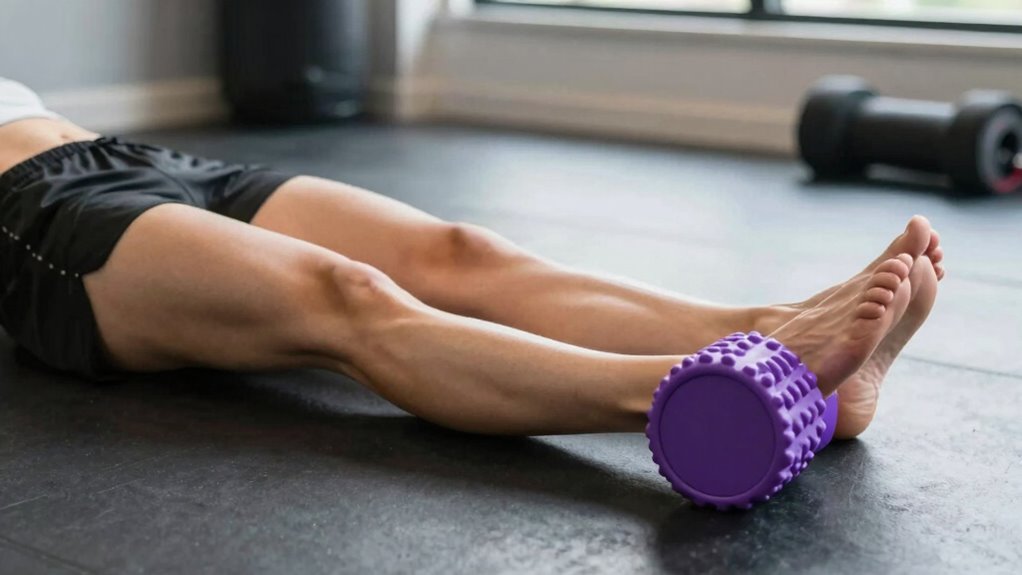
If you’re a runner looking to improve recovery and prevent injuries, foam rolling can be a game-changer. It’s a simple yet effective way to enhance muscle recovery and keep your body in top shape. When you incorporate foam rolling into your routine, you break up adhesions and knots in your muscles, which promotes better blood flow and nutrient delivery. This process helps your muscles recover faster after intense runs, reducing soreness and stiffness. Plus, regularly using a foam roller can help you identify tight spots early before they turn into more serious injuries. By addressing these areas proactively, you lower your risk of overuse injuries such as IT band syndrome, plantar fasciitis, or runner’s knee.
Using a foam roller is straightforward, but technique matters. Start by placing the foam roller under the target muscle group—like your calves, quads, hamstrings, or glutes—and gently roll back and forth. You want to apply enough pressure to feel some discomfort, but not so much that it causes pain. When you hit a tender spot, pause and hold for 20 to 30 seconds to help release the tension. Consistency is key; doing this for about 10 minutes after each run can significantly boost your muscle recovery. Over time, you’ll notice your muscles feeling looser, more flexible, and less prone to tightness that can lead to injury. Incorporating proper recovery techniques like foam rolling is increasingly recognized as part of a holistic approach to athletic health.
Foam rolling also encourages better proprioception, helping you become more aware of your body’s movements and imbalances. This awareness can improve your running mechanics, leading to more efficient strides and less strain on vulnerable areas. As you become more familiar with your body’s response to foam rolling, you can target specific muscles that tend to tighten up during your training cycles. For instance, if you notice your calves or hips are often tight, dedicating extra time to those areas can prevent issues before they develop into injury. Additionally, understanding the role of cultural shifts in fitness trends can motivate you to incorporate recovery techniques like foam rolling into your routine, aligning with the modern emphasis on holistic health. Recognizing these fitness trends can help you stay motivated and committed to your recovery routine. Regularly integrating recovery practices like foam rolling is also a reflection of natural healing approaches gaining popularity among athletes.
As an affiliate, we earn on qualifying purchases.
Frequently Asked Questions
How Often Should I Foam Roll Before Running?
You should foam roll before running about 10 to 15 minutes beforehand. This foam rolling recovery helps loosen tight muscles and improve muscle flexibility, making your run smoother and reducing injury risk. Focus on areas like your quads, hamstrings, and calves. Consistent foam rolling can enhance your performance over time. Just be gentle, listen to your body, and avoid rolling over painful spots.
Can Foam Rolling Prevent Injuries in Runners?
Yes, foam rolling can help prevent injuries in runners. By improving muscle flexibility, it reduces muscle tightness and imbalances that often lead to strains or overuse injuries. Regular foam rolling keeps your muscles supple and ready for activity, which enhances recovery and decreases the risk of injury. Incorporate it into your routine consistently, especially before runs, to support injury prevention and maintain peak performance.
Is Foam Rolling Suitable for All Running Ages and Levels?
Yes, foam rolling suits runners of all ages and skill levels, but age considerations and individual needs matter. Younger runners might focus on recovery, while older athletes should prioritize gentle techniques to avoid strain. Beginners will benefit from basic rolling, whereas advanced runners can target specific areas. Always listen to your body, and consult a professional if you’re unsure. Proper technique guarantees safety and maximizes benefits, no matter your age or experience.
What’s the Best Time of Day to Foam Roll?
The best time of day to foam roll depends on your goals. For morning flexibility, foam rolling when you wake up helps loosen muscles and improve mobility. If you’re looking for evening recovery, rolling after your run or workout helps reduce muscle soreness and enhances relaxation. Listen to your body and choose a time that fits your schedule, ensuring consistent benefits whether in the morning or evening.
Are There Any Risks or Contraindications for Foam Rolling?
Yes, there are some risks and contraindications with foam rolling. If you have severe muscle soreness, injuries, or joint issues, foam rolling might worsen your condition. It’s important to avoid rolling over swollen, bruised, or inflamed areas. You should also be cautious if you have nerve damage or blood clots. Proper technique helps improve joint flexibility safely, but if in doubt, consult a healthcare professional before starting foam rolling.
massage foam roller for muscle recovery
As an affiliate, we earn on qualifying purchases.
As an affiliate, we earn on qualifying purchases.
Conclusion
Think of foam rolling as tuning your body’s engine—you’ll run smoother and faster with less friction. Incorporate it into your routine, and you’ll notice how your muscles stay loose and responsive, like a well-oiled machine. Don’t wait for soreness to strike; stay proactive and keep your body ready to hit the pavement. With consistent foam rolling, you’ll access your full running potential, turning every run into a seamless, effortless glide.
As an affiliate, we earn on qualifying purchases.
foam roller for calves and quads
As an affiliate, we earn on qualifying purchases.
As an affiliate, we earn on qualifying purchases.
Fall Picks
fall essentials
As an affiliate, we earn on qualifying purchases.