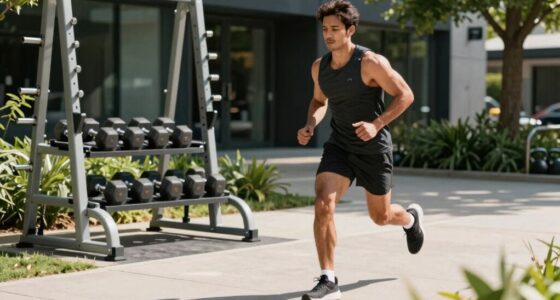

To improve your 5K time, focus on consistent pacing during training to stay at your target speed. Incorporate interval workouts to boost speed and stamina, and include long runs to build endurance. Cross-train with low-impact activities like cycling or swimming to enhance cardiovascular fitness and prevent injuries. Strength training helps improve stride efficiency, while balanced recovery guarantees you avoid burnout. Keep fine-tuning your pace and intensity—more tips await to help you race faster.
Key Takeaways
- Incorporate consistent pacing during training to build race-day familiarity and avoid early fatigue.
- Use interval workouts to enhance speed, stamina, and pace control under race conditions.
- Include cross training to improve cardiovascular fitness and reduce injury risk through low-impact activities.
- Strengthen core and leg muscles to boost running efficiency and prevent injuries.
- Prioritize recovery with rest days and flexibility exercises to maintain performance and prevent burnout.

If you want to improve your 5K time, consistent and targeted training is key. One of the most effective ways to do this is by focusing on pacing strategies. Knowing how to pace yourself guarantees you don’t start too fast and burn out early, or go too slow and leave time on the table. Practice running at your goal pace during training runs, so your body becomes familiar with that speed. Incorporate interval workouts where you alternate between fast and recovery paces, helping you develop the ability to maintain a steady, competitive pace throughout the race. Additionally, paying attention to your pacing strategies during long runs can improve your endurance and help you learn how to conserve energy for the final stretch. Tracking your splits gives you valuable feedback, allowing you to adjust your pace to optimize performance.
Cross training methods are another essential component in boosting your 5K times. They help you build strength, improve cardiovascular fitness, and prevent injury by reducing the repetitive impact of running. Incorporate activities like cycling, swimming, or rowing into your training routine. These low-impact exercises give your joints a break while still enhancing your aerobic capacity. Strength training also plays a pivotal role—focusing on core stability, leg strength, and overall muscular endurance will translate into more powerful running strides and better efficiency. Incorporate exercises like squats, lunges, and planks to support your running muscles and improve your form.
Consistency in training is indispensable, but equally important is balancing your running workouts with cross training methods. They can also help you develop training resilience by diversifying your exercise routine and reducing the risk of burnout. This balanced approach prevents overuse injuries and keeps you motivated by adding variety. For example, set aside two days a week for cross training, and use those sessions to complement your running workouts. As you progress, gradually increase the intensity and duration of your cross training to match your evolving fitness level. Remember, recovery days are indispensable—use them to rest or do light activities like stretching or yoga, which promote flexibility and aid in muscle recovery.

Garmin Forerunner 55, GPS Running Watch with Daily Suggested Workouts, Up to 2 Weeks of Battery Life, Black – 010-02562-00
- Heart Rate Monitoring: Wrist-based heart rate tracking
- GPS Tracking: Tracks distance, speed, and route
- Bluetooth Connectivity: Wireless connection for data transfer
As an affiliate, we earn on qualifying purchases.
As an affiliate, we earn on qualifying purchases.
Frequently Asked Questions
How Often Should I Replace My Running Shoes for Optimal Performance?
You should replace your running shoes every 300 to 500 miles to maintain ideal performance. As you accumulate miles, shoe cushioning diminishes, reducing shock absorption and increasing injury risk. Pay attention to running durability—if your shoes feel less comfortable or show visible wear, it’s time for a new pair. Regularly changing your shoes guarantees your cushioning stays effective, helping you run efficiently and avoid unnecessary strain or discomfort.
What Is the Best Diet to Support 5K Training?
The best diet to support your 5K training involves proper nutrition planning and hydration strategies. Focus on a balanced intake of carbs for energy, lean proteins for recovery, and healthy fats. Stay hydrated by drinking water consistently throughout the day and during runs. Incorporate fruits and vegetables for essential nutrients, and avoid heavy, processed foods before training. This approach keeps your energy levels stable and helps you perform your best.
How Do I Stay Motivated During Long Training Periods?
You stay motivated during long training periods by mixing up your running routines and setting small, achievable goals. Keep your motivation techniques fresh—try running with a buddy, listening to inspiring music, or visualizing your race day success. When fatigue hits, remind yourself of why you started. The key is to push through the tough moments, knowing each step brings you closer to your goal. Stay focused, and don’t lose sight of your progress.
Should I Incorporate Cross-Training Into My Running Routine?
Yes, incorporating cross-training into your running routine can boost your performance. Strength training helps build muscle, making you more powerful and reducing injury risk, while flexibility exercises improve your range of motion and prevent strains. By mixing in activities like cycling, swimming, or yoga, you give your running muscles a break and enhance overall stamina. This balanced approach keeps your training fresh, reduces burnout, and ultimately helps you run faster.
How Can I Prevent Common Injuries While Training?
You can prevent common injuries by paying attention to your running form and incorporating warm-up routines. Focus on maintaining proper posture, landing softly, and avoiding overstriding. Always start with dynamic stretches and light jogging to warm up your muscles, reducing strain. Listening to your body and gradually increasing intensity also helps prevent overuse injuries. Consistent attention to these details keeps you injury-free and improves your overall running performance.

POWER GUIDANCE Speed Training Equipment/Overload Running Resistance & Release, Agility and Speed Equipment for Sprint Running and Football, Basketball, Soccer,Softball
- Enhances Explosive Speed: Builds muscle fibers for faster acceleration
- Comfortable and Durable: High-strength nylon, ergonomic foam, and alloy buckle
- Versatile Training Options: Supports multiple movement directions and exercises
As an affiliate, we earn on qualifying purchases.
As an affiliate, we earn on qualifying purchases.
Conclusion
By following these training tips, you’ll transform into a 5K legend faster than you can say “personal best.” Imagine smashing your previous record so spectacularly that even your reflection in the mirror gives you a standing ovation. With dedication, consistency, and a bit of sweat, you’ll be outrunning everyone and leaving your old times in the dust. Get ready to make history on the track—your new 5K record awaits, and it’s about to get crushed!

Rahhint Compression Running Socks 3 Pairs, Cushion Crew Socks, Anti-Blister Moisture Wicking Athletic Hiking Basketball Socks
- Material: Premium CoolMax fiber for moisture-wicking
- Breathability: Mesh knitting for increased airflow
- Intended Use: Suitable for running, cycling, sports, daily wear
As an affiliate, we earn on qualifying purchases.
As an affiliate, we earn on qualifying purchases.

New Balance Unisex Child Rave V2 Lace-up Running Shoe, Black/White, 5 Big Kid US
- No-sew upper for sleek fit: No-sew construction for a sleek fit and feel
- Mesh and synthetic materials: Mesh and synthetic upper for breathability
- Lightweight EVA midsole: Lightweight injection-molded EVA foam midsole
As an affiliate, we earn on qualifying purchases.
As an affiliate, we earn on qualifying purchases.