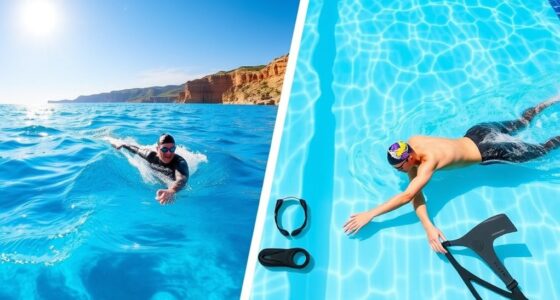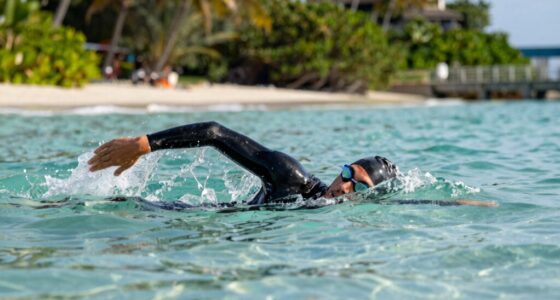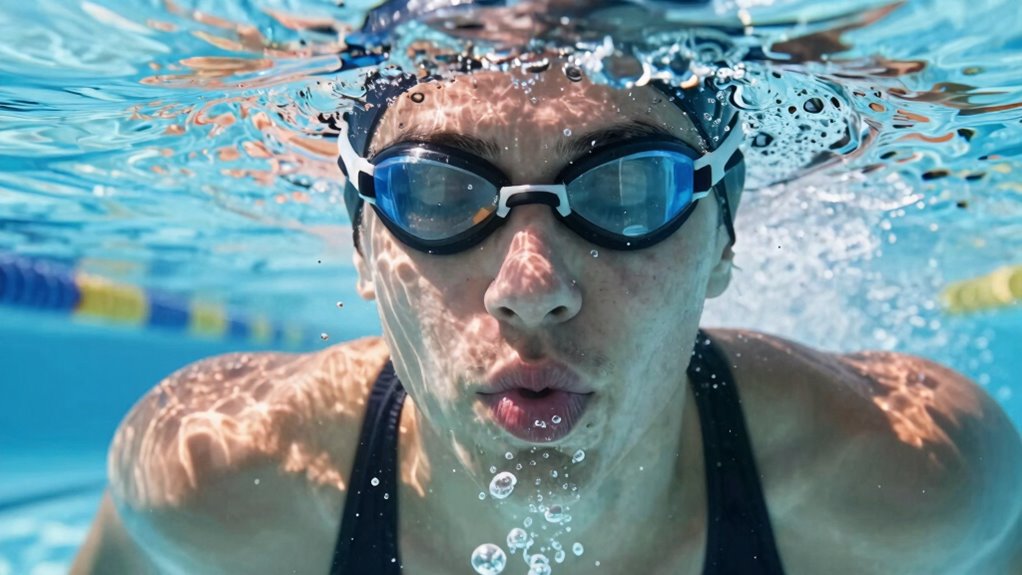

To improve your swimming breathing technique, focus on maintaining a steady rhythm that matches your strokes, such as every 3 or 5 strokes. Practice bilateral breathing and use drills like counting your strokes or using a snorkel to fine-tune your pattern. Keep your exhalations long and controlled underwater, and make inhalations quick and deliberate. Consistent practice helps your breathing feel natural, boosting efficiency and confidence—keep going, and you’ll discover even more ways to master your breath in water.

Get workout gear delivered free with Prime
- Fast, free delivery on millions of items
- Prime Video, Amazon Music and more included
- Member-only deals all year
Key Takeaways
- Practice bilateral breathing to develop even, balanced inhalation on both sides.
- Use drills with a snorkel to focus solely on breathing pattern and control.
- Maintain a consistent breathing rhythm aligned with your stroke to promote relaxation and efficiency.
- Focus on long, slow exhalations underwater to maximize lung capacity and reduce panic.
- Count strokes or use cues to regulate breathing intervals and build endurance gradually.
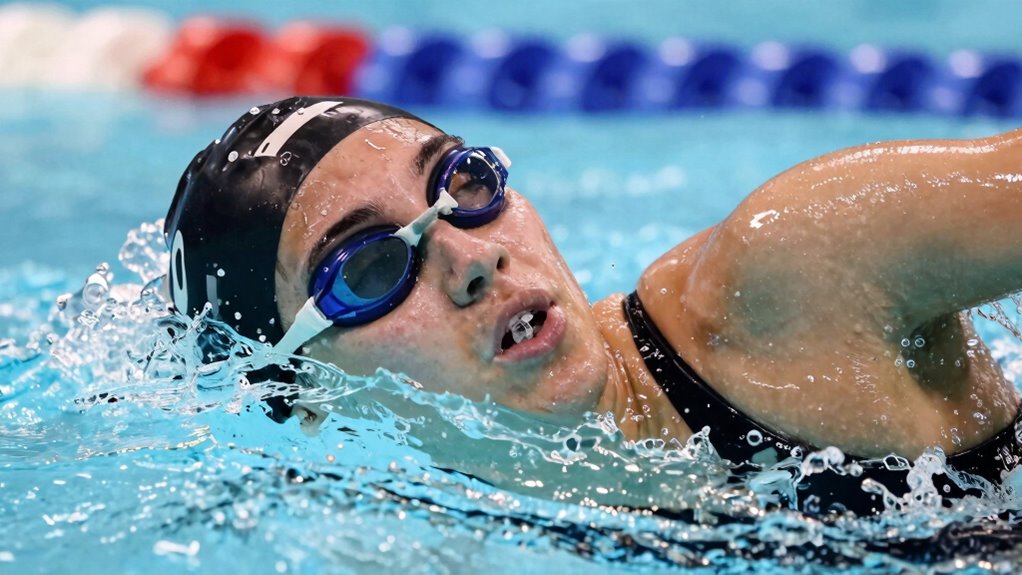
Ever wondered how improving your breathing technique can boost your swimming performance? Mastering your breathing rhythm and breath control is essential if you want to swim more efficiently and with less fatigue. When you focus on your breathing rhythm, you create a steady, predictable pattern that helps you stay relaxed and conserve energy during your swim. Instead of gasping for air or holding your breath randomly, establish a rhythm that aligns with your stroke. For example, in freestyle, you might breathe every three or five strokes, ensuring your inhalations and exhalations are smooth and consistent. This rhythmic pattern helps your body anticipate when you’ll breathe next, reducing panic and unnecessary movements that slow you down.
Breath control goes hand in hand with your breathing rhythm. It’s about managing how much air you take in and how long you hold it before exhaling. When you develop good breath control, you prevent shallow or hurried breaths that can cause fatigue or disrupt your stroke. Practice inhaling deeply through your mouth or nose, filling your lungs efficiently, but avoid over-oxygenating. Exhale steadily and completely underwater, which allows you to maximize each breath and reduce the frequency of breaths needed. This not only saves energy but also keeps your body more buoyant and balanced in the water. As you build stronger breath control, you’ll notice that you can maintain your rhythm longer, swim more smoothly, and recover faster between strokes.
To improve your breathing rhythm and breath control, start with simple drills focused on breathing patterns. For example, practice bilateral breathing in freestyle, where you breathe alternately to both sides. Count your strokes, and consciously regulate your breaths so they fall at regular intervals. Use a snorkel during drills if needed, to focus solely on your breathing without worrying about your head position. As you become more comfortable, gradually increase your distance, paying attention to how your breathing feels. Keep your exhalations long and slow underwater, and your inhalations quick and controlled. This way, your lungs stay well-ventilated without rushing or losing composure.
Consistent practice is key. The more you work on your breathing rhythm and breath control, the more natural it will become. Over time, you’ll notice your strokes become more efficient, your stamina improves, and swimming feels easier. Remember, good breathing isn’t just about taking in air; it’s about managing your breath wisely so it supports your overall performance. When you master these skills, you’ll swim with greater confidence and endurance, making every lap smoother and more enjoyable.
swimming snorkel for breathing drills
As an affiliate, we earn on qualifying purchases.
As an affiliate, we earn on qualifying purchases.
Frequently Asked Questions
How Can I Prevent Water From Entering My Nose While Breathing?
To prevent water from entering your nose while breathing, try using nasal plugs—they create a seal that blocks water. Additionally, practice breathing exercises on land to strengthen your control and comfort with nasal breathing. When swimming, focus on exhaling steadily through your nose and mouth to keep water out. Over time, these techniques will help you breathe more confidently and comfortably underwater.
What Is the Best Breathing Pattern for Long-Distance Swimming?
Adopting a steady breathing rhythm is your best bet for long-distance swimming. You want to synchronize your breaths with your strokes, typically every 3-5 strokes, to maintain oxygen efficiency. Focus on relaxed, consistent inhalations and exhalations, turning your head just enough to breathe without disrupting your flow. This balanced pattern helps conserve energy and keeps your oxygen levels steady, making your swim smoother and more sustainable over long distances.
How Do I Correct Uneven Breathing During Freestyle?
To correct uneven breathing during freestyle, focus on maintaining a steady breathing rhythm and staying relaxed. Practice bilateral breathing to promote balance and symmetry. Incorporate relaxation techniques, such as deep, slow breaths and mindful breathing, to reduce tension that causes unevenness. Consistent drills that emphasize smooth, controlled inhales and exhales will help you develop a more even breathing pattern, ultimately enhancing your efficiency and comfort in the water.
Can Breathing Technique Improve My Overall Swimming Speed?
Like a well-tuned engine, your breathing technique can boost your swimming speed. By focusing on breath control and establishing a steady breathing rhythm, you conserve energy and maintain momentum. When you breathe efficiently, you reduce drag and increase your stroke efficiency. Improving these aspects allows you to swim faster with less fatigue, turning your strokes into a smooth, powerful flow—much like a symphony where every note counts toward harmony and speed.
How Do I Train My Lungs to Increase Capacity?
To increase your lung capacity, focus on lung expansion exercises and breath control training. Practice deep breathing, expanding your chest fully with each inhale, and hold your breath briefly to strengthen your lungs. Incorporate diaphragmatic breathing and interval training to push your limits gradually. Consistent practice helps improve lung capacity over time, making your breathing more efficient in the water and boosting your swimming endurance.
swimming training breathing fins
As an affiliate, we earn on qualifying purchases.
As an affiliate, we earn on qualifying purchases.
Conclusion
By refining your breathing technique, you’re opening the floodgates to smoother, more confident swimming. Think of each breath as a gentle ripple that spreads through your entire stroke, turning a chaotic splash into a harmonious flow. With practice, your breath becomes the steady drumbeat guiding your movements, transforming your swim into a graceful dance beneath the water’s surface. Embrace these tips, and watch as your confidence and efficiency rise like a sunlit wave, carrying you forward with ease.
As an affiliate, we earn on qualifying purchases.
swimming breathing pattern training aid
As an affiliate, we earn on qualifying purchases.
As an affiliate, we earn on qualifying purchases.
Fall Picks
fall essentials
As an affiliate, we earn on qualifying purchases.