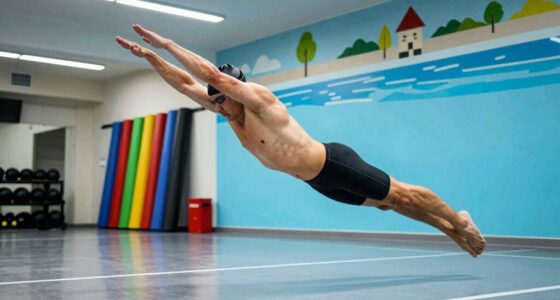
To train for your first triathlon swim, practice in open water early to get comfortable with sighting and navigation around obstacles. Incorporate breathing drills to develop a steady, relaxed rhythm and improve endurance. Simulate race conditions by swimming with a wetsuit and practicing in groups to handle crowds and contact. Focus on building confidence through varied, challenging sessions and developing mental resilience. Keep progressing gradually, and you’ll gain the skills and confidence needed for race day success.

Get workout gear delivered free with Prime
- Fast, free delivery on millions of items
- Prime Video, Amazon Music and more included
- Member-only deals all year
Key Takeaways
- Practice open water swimming early, focusing on sighting, navigation, and adapting to unpredictable conditions.
- Incorporate rhythmic breathing and bilateral breathing drills to improve efficiency and relaxation.
- Simulate race conditions in the pool with group swims, wetsuit practice, and crowded start scenarios.
- Gradually increase distance and intensity to build endurance and confidence in your swimming ability.
- Develop mental resilience through varied conditions and race simulations to stay focused and calm during the swim.
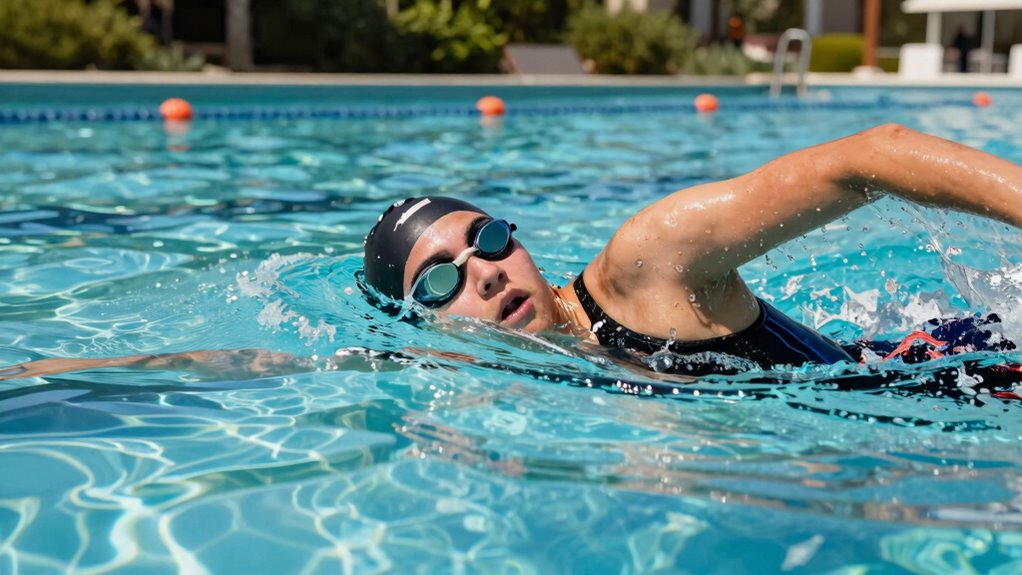
Training for a triathlon swim can be challenging, but with the right approach, you’ll build confidence and improve your performance. One of the most important aspects is mastering open water techniques. Unlike pool swimming, open water presents unpredictable conditions like waves, currents, and limited visibility. To prepare, start practicing in lakes, rivers, or ocean settings as soon as possible. Focus on sighting techniques—lifting your head slightly to spot your course without breaking your rhythm—and orienteering around buoys or natural obstacles. Getting comfortable in open water reduces panic and helps you stay calm when the race day arrives.
Master open water techniques to stay calm and confident on race day.
Breathing exercises play a key role in your training, especially for open water swimming. Proper breathing helps you stay relaxed, conserve energy, and maintain a steady rhythm. Incorporate breathing drills into your routine, such as rhythmic breathing—breathing every three or five strokes—to develop consistency. Practice bilateral breathing, where you breathe alternately on both sides, to improve your balance and adapt to changing water conditions. During your workouts, focus on exhaling fully underwater so that your inhalations are quick and efficient. This reduces the risk of feeling breathless and allows you to keep a calm, controlled stroke. Additionally, understanding open water navigation techniques can significantly enhance your confidence in unfamiliar conditions. Developing your swimming endurance is equally important to sustain a strong pace throughout the entire race. Incorporating technique drills can also help refine your form and efficiency in the water. Building mental resilience is essential for maintaining focus and composure during challenging segments of the swim.
In addition to open water techniques and breathing exercises, it’s essential to simulate race conditions in your training. If you only swim in a pool, try to mimic open water by practicing sighting and adjusting your pace. Wear wetsuits during some sessions to get used to the feeling of extra buoyancy and restriction. You should also practice swimming in groups to simulate the crowded start, which can be intimidating if you’re not prepared. Learning how to orienteer close to other swimmers without panic or contact is essential for a smooth race experience. Incorporating specific drills targeted at your weaknesses can help you become more confident and efficient in real race scenarios.
When you develop your training plan, include specific drills that focus on your weaknesses. For example, if you tend to lose momentum during breath changes, incorporate drills that improve your breathing rhythm. If open water navigation feels awkward, dedicate time to sight and steer drills. Consistency is key—gradually increase your distance and intensity to build endurance without risking injury or burnout. Remember to prioritize recovery and listen to your body, especially when practicing in challenging conditions.
As an affiliate, we earn on qualifying purchases.
Frequently Asked Questions
What Gear Is Essential for Triathlon Swim Training?
You need a few essential gear items for triathlon swim training. A comfortable, snug swim cap helps reduce drag and protect your hair. Goggles are crucial for clear vision and eye comfort during your swim. Make sure your goggles fit well to prevent leaks. Additionally, consider a wetsuit if training in colder water, but for most beginners, a good pair of goggles and a swim cap are enough to start building confidence.
How Do I Improve My Breathing Technique?
Imagine your breath as a steady drumbeat guiding your swim. To improve your breathing technique, practice rhythmic breathing during drills, syncing your inhale and exhale with your strokes. Focus on smooth, consistent breaths that flow like waves, avoiding abrupt pauses. Over time, these breathing drills will strengthen your lung capacity and create a calming rhythm, helping you stay relaxed and efficient in the water, like a gentle tide.
What Should I Eat Before Swimming Workouts?
For your swimming workouts, focus on nutrition tips that fuel your muscles without causing discomfort. Have a light pre swim snack, like a banana or a small energy bar, about 30-60 minutes beforehand. Avoid heavy or greasy foods, as they can cause stomach issues during your swim. Staying hydrated is essential too. Proper pre-workout nutrition helps you maintain energy, improve performance, and recover faster after each session.
How Do I Stay Motivated During Training?
To stay motivated during training, use mental strategies like visualization and positive self-talk to keep your focus. Set clear, achievable goals that give you a sense of progress and purpose. Break your workouts into smaller milestones, celebrate each success, and remind yourself of your reasons for completing the triathlon. Consistently reviewing your goals and visualizing your success will help maintain your motivation through tough sessions.
How Can I Prevent Common Swim Injuries?
To prevent common swim injuries, focus on injury prevention through proper stretching before and after each session. Incorporate shoulder and core stretches to maintain flexibility and reduce strain. Pay attention to your technique, avoid overtraining, and listen to your body’s signals. Using correct swim form and gradually increasing intensity helps prevent injuries, ensuring you stay healthy and ready for your triathlon. Proper stretching is key to long-term injury prevention.
As an affiliate, we earn on qualifying purchases.
Conclusion
As you immerse yourself in your triathlon journey, remember that each stroke you master is a brushstroke on your canvas of achievement. Embrace the water’s challenge, and let your confidence ripple outward like waves crashing upon the shore. With dedication and steady progress, you’ll transform apprehension into empowerment. When race day arrives, you’ll stand ready, your body and mind perfectly synchronized—ready to conquer the swim and make your dreams flow seamlessly into reality.
As an affiliate, we earn on qualifying purchases.
As an affiliate, we earn on qualifying purchases.
Fall Picks
fall essentials
As an affiliate, we earn on qualifying purchases.