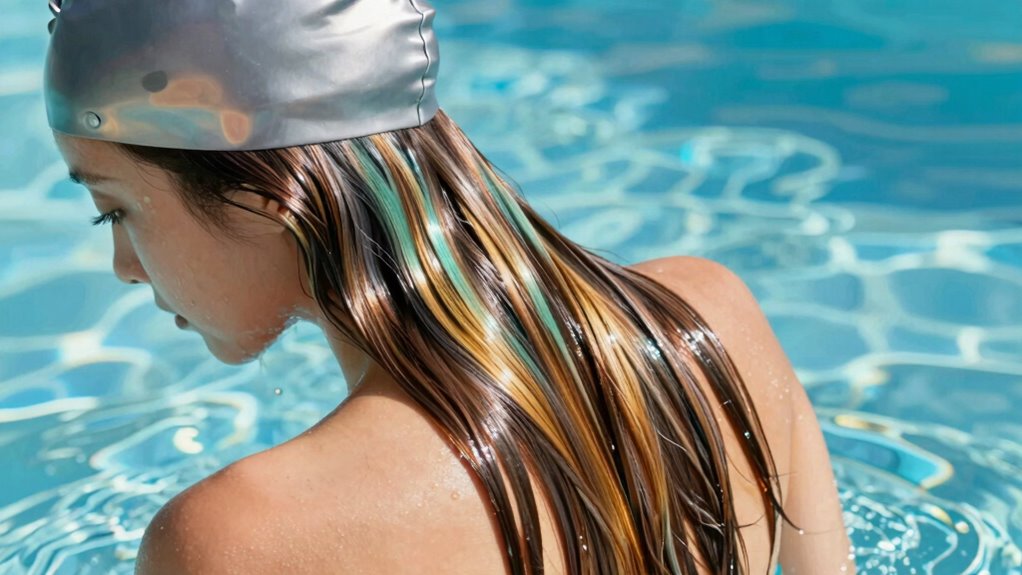
To protect your hair from chlorine damage, start by applying a leave-in conditioner or protective oil before swimming. Rinse your hair thoroughly with clean water immediately after leaving the pool, and use deep conditioning treatments regularly to restore moisture. Wearing a swim cap can also create a barrier against chlorine. Choosing the right products for your hair type and porosity, along with regular trims, helps keep your hair healthy. Keep going to learn more effective strategies to preserve your hair’s health and shine.
Key Takeaways
- Rinse hair thoroughly with clean water immediately after swimming to remove chlorine residues.
- Apply a leave-in conditioner or protective oil before swimming to create a barrier against chlorine.
- Use deep conditioning treatments regularly to restore moisture and strengthen hair.
- Wear a swim cap to physically shield hair from direct chlorine exposure.
- Choose chlorine-friendly or hydrating hair products suited to your hair porosity for added protection.
Have you ever wondered how chlorine affects your hair? When you swim in chlorinated pools, your hair is exposed to chemicals that can cause significant damage over time. Chlorine absorption occurs when the chemical penetrates the hair shaft, stripping away natural oils and weakening the strands. This process leads to dryness, dullness, and increased fragility. If you’re not careful, your hair can become brittle and prone to breakage, especially with frequent swimming sessions. To protect your hair from this damage, understanding and practicing proper hair porosity management is essential. Hair porosity refers to how well your hair absorbs and retains moisture, which directly influences how susceptible it is to chlorine damage. High-porosity hair tends to absorb more chemicals and moisture quickly, but it also loses moisture just as fast, making it more vulnerable. Low-porosity hair, on the other hand, resists absorption, which can sometimes protect it from chlorine but also makes it harder for your hair to retain moisture, leading to dryness if not properly managed.
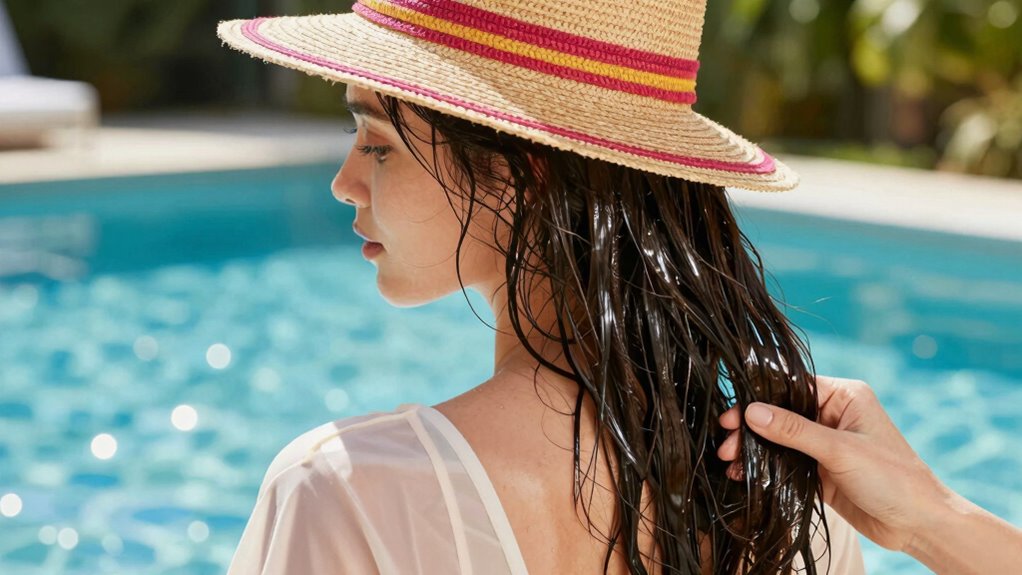
Managing your hair’s porosity can help reduce the harmful effects of chlorine. One effective way is to apply a leave-in conditioner or a protective oil before swimming. These create a barrier that minimizes chlorine absorption, keeping your hair moisture-rich and less prone to damage. Additionally, rinsing your hair thoroughly with clean water immediately after leaving the pool helps wash away chlorine residues before they penetrate deeply into the hair shaft. Deep conditioning treatments are equally important—they help restore moisture and strengthen hair strands that may have been compromised by chlorine exposure. Using a clarifying shampoo once a week can also remove chlorine buildup, preventing it from accumulating and causing further harm. Furthermore, selecting appropriate hair care products designed for swimmers or those with hydrating properties can significantly enhance your protection efforts. Incorporating products that address indoor air quality can also help maintain healthier hair by reducing environmental stressors that contribute to dryness and damage. Staying aware of chemical interactions between pool chemicals and hair can further empower you to choose the most effective protective strategies.
Another vital aspect of protection is choosing the right hair care products tailored to your hair type and porosity level. Look for shampoos and conditioners formulated for swimmers or those with hydrating properties. Regularly trimming split ends also reduces the risk of breakage caused by weakened, chlorine-damaged hair. Wearing a swim cap provides an additional physical barrier that limits exposure altogether. Being mindful of how different pool water chemistry affects your hair can help you adapt your routine for optimal protection. Recognizing the effects of chlorine on hair can further guide you in adopting the most suitable protective measures. Remember, consistent care is key; the more proactive you are in managing chlorine exposure and hair porosity, the better you’ll maintain healthy, shiny hair despite frequent swimming. By understanding how chlorine interacts with your hair and taking steps to protect it, you can enjoy your time in the pool without sacrificing the health and beauty of your hair.
leave-in conditioner for swimming
As an affiliate, we earn on qualifying purchases.
As an affiliate, we earn on qualifying purchases.
Frequently Asked Questions
Can Swimming Caps Fully Prevent Chlorine Damage?
Swimming caps can considerably reduce chlorine absorption, but they can’t fully prevent damage. A well-fitting cap helps keep water out and minimizes exposure, yet some chlorine still seeps in through gaps or around the edges. To better protect your hair, choose a snug, high-quality cap and consider applying a leave-in conditioner beforehand. Combining these steps will give you the best chance at shielding your hair from chlorine damage.
How Often Should I Wash My Hair After Swimming?
Think of your hair as a delicate garden, needing care after each swim. You should wash your hair immediately after swimming to prevent chlorine exposure effects from lingering and causing damage. Regularly washing your hair helps remove chlorine residues that can weaken strands over time. For proper swimming pool maintenance, rinse thoroughly with clean water and use a gentle shampoo. Doing this consistently keeps your hair healthy and resilient against chlorine’s harsh effects.
Are Natural Oils Effective in Protecting Hair From Chlorine?
Natural oils are quite effective in protecting your hair from chlorine by creating a protective hair barrier. When you apply oils like coconut or argan before swimming, they help repel chlorine and reduce damage. These oils penetrate the hair shaft, providing moisture and strengthening strands. Keep in mind, reapplying oils after swimming enhances their protective effect, ensuring your hair stays healthier and less prone to dryness and breakage caused by chlorine exposure.
Does Hair Type Affect Chlorine Damage Susceptibility?
Imagine your hair as a delicate garden—some plants thrive while others wilt. Your hair type, especially hair porosity, influences how susceptible you are to chlorine damage. High-porosity hair, often from chemical treatments, absorbs more chlorine, risking damage. Low-porosity hair resists, but still needs protection. Knowing your hair’s porosity helps you choose the right barriers, like pre-swimming treatments, to shield your hair from chlorine’s harsh effects.
Can Regular Conditioner Protect Hair From Chlorine?
Yes, regular conditioner can help protect your hair from chlorine, especially if you have high porosity hair that absorbs more chemicals. Applying conditioner before swimming creates a barrier that reduces chlorine penetration. If you’ve had chemical treatments, your hair may be more vulnerable, so using a deep conditioner or leave-in treatment enhances protection. Keep in mind, though, that specialized swim conditioners offer even better defense against chlorine damage.
protective hair oil for chlorine
As an affiliate, we earn on qualifying purchases.
As an affiliate, we earn on qualifying purchases.
Conclusion
Think you need to avoid chlorine completely? Not necessarily. Some experts believe a thin layer of coconut oil before swimming can create a protective barrier, but recent studies suggest it might also trap chlorinated water against your scalp. So, while oiling your hair is helpful, rinsing thoroughly afterward and using a clarifying shampoo might be just as effective. Protect your hair smartly—sometimes, simple steps make the biggest difference!
As an affiliate, we earn on qualifying purchases.
deep conditioning treatment for damaged hair
As an affiliate, we earn on qualifying purchases.
As an affiliate, we earn on qualifying purchases.