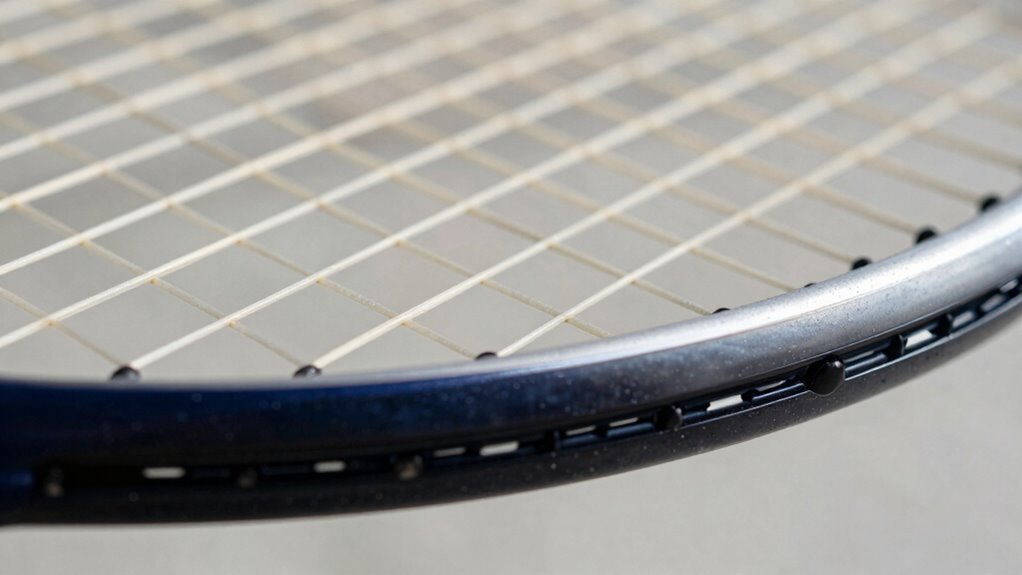

Adjusting your tennis racket’s string tension is key to improving your game. Higher tension gives you more control and precision, while lower tension adds power and comfort. Tension also affects spin, ball feel, and durability—too tight can cause strings to break faster, and too loose may reduce accuracy. Pattern and string gauge influence how tension impacts performance. To fine-tune your game, understanding these factors helps you find the best tension for your style—more details await to guide your setup.

Get workout gear delivered free — and shop member deals
- Fast, free delivery on millions of items
- Access to Prime Big Deal Days deals on October 6–7
- Prime Video, Amazon Music and more included
Key Takeaways
- Higher tension offers better control, while lower tension increases power and ball feel.
- Adjusting tension helps optimize racket performance based on playing style and conditions.
- String pattern influences how tension affects spin, control, and durability.
- Regular tension checks prevent breakage and enhance shot consistency.
- String gauge and pattern interact with tension to impact durability and overall performance.
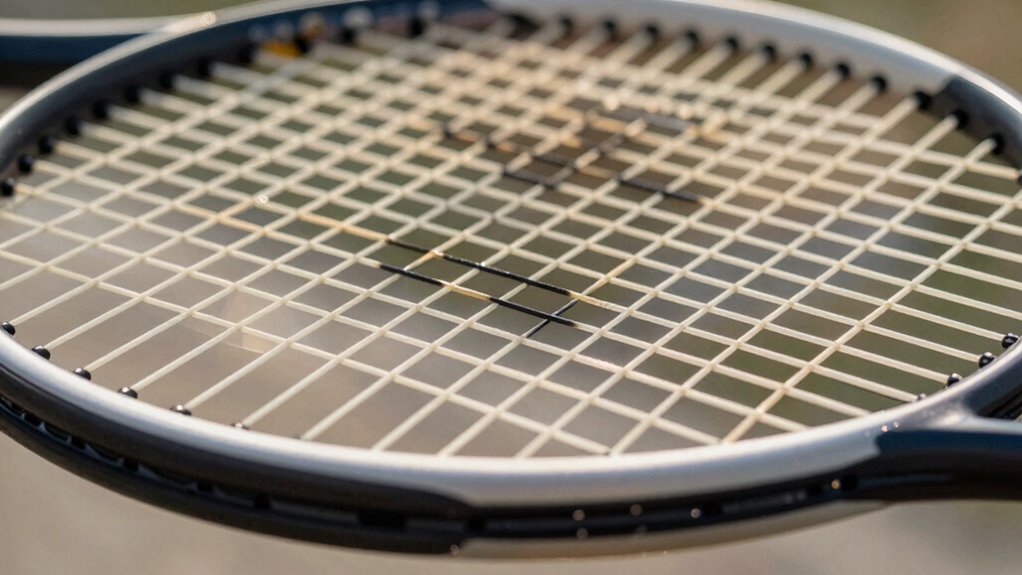
Tennis racket string tension plays a vital role in your game, affecting everything from power and control to ball feel. When you’re choosing the right tension, you’re essentially fine-tuning how your racket interacts with the ball. Higher tension typically gives you more control because the strings are tighter, reducing string movement on contact. Conversely, lower tension allows for more power since the strings are looser and can absorb more impact, propelling the ball further. But tension isn’t the only factor influencing your performance; string durability and string pattern also come into play.
String durability refers to how well your strings hold up over time. If you play frequently or hit with a lot of spin, your strings may wear out faster, and tension loss can occur. When strings lose tension, your shots may become less predictable, lacking the control you expect. The choice of string tension affects durability as well—higher tension can sometimes lead to quicker string breakage because the strings are under more stress, especially if you’re using thinner gauge strings. On the other hand, lower tension can extend string life to some extent, but it might sacrifice some control and precision. Finding a balance between tension and durability is key; you want your strings to last without sacrificing too much performance each time you step on the court.
Your string pattern, which refers to how many main and cross strings your racket has, also influences tension’s impact. An open string pattern, with fewer strings, tends to generate more spin and power, but these strings may wear out faster and require more frequent adjustments of tension. A dense pattern, with more strings, offers better durability and control but may generate less spin and power. When you’re considering tension in relation to your string pattern, think about how much spin and durability you need. A looser tension in an open pattern can enhance spin, but it might cause the strings to move more, affecting durability. Additionally, understanding how string tension interacts with other variables like string durability and pattern can help you optimize your setup for your specific playing style. Regularly checking and adjusting tension ensures your strings perform at their best, and maintaining proper string tension can also help prevent premature breakage and improve your overall game consistency. Being aware of tension maintenance and how it influences your setup can contribute significantly to your performance.
tennis racket string tension gauge
As an affiliate, we earn on qualifying purchases.
As an affiliate, we earn on qualifying purchases.
Frequently Asked Questions
How Often Should I Restring My Tennis Racket?
You should restring your tennis racket every 40 to 60 hours of play, depending on string durability and racket comfort. If your strings start to lose tension or feel less responsive, it’s time to restring. Regular restringing guarantees your racket maintains peak performance, provides better control, and reduces the risk of string breakage. Keep an eye on how your strings feel during play to determine the best frequency for restringing.
Does String Tension Affect Injury Risk?
String tension is like the tension in a tightrope—if it’s too high or low, it can increase your injury risk. When your racket’s tension isn’t ideal, it can lead to muscle strain and joint stress during play. Higher tension offers more control but less cushion, possibly causing strain. Lower tension provides more power but can lead to instability, increasing joint stress. Adjust your tension to balance performance and safety.
Can String Tension Improve My Serve Speed?
Yes, adjusting your string tension can help improve your serve speed, especially if you focus on consistency. Higher tension offers more control, which can boost precision and power, while lower tension provides more ball pocketing and speed. Ultimately, it depends on your player preference and how consistent your string tension is. Experimenting with different tensions allows you to find the most suitable balance for maximizing your serve speed.
What’s the Best Tension for Beginner Players?
For beginners, the best string tension balances control and power, usually around 50-55 pounds. Imagine durable strings that can handle your rookie swings without losing tension—this consistency boosts confidence and shot accuracy. While lower tension offers more power, it might sacrifice durability, and higher tension provides control but less comfort. Starting here helps you develop your game, ensuring your strings stay consistent and reliable as you improve.
How Does Weather Influence String Tension?
Weather considerably influences string tension because temperature effects cause strings to expand or contract. When it’s hot, the string material loosens, decreasing tension, which can reduce control. Conversely, in cold weather, strings contract, increasing tension and potentially making your shots feel tighter. You should regularly check and adjust your string tension based on weather conditions to maintain ideal playability, especially if you play outdoors frequently.
As an affiliate, we earn on qualifying purchases.
Conclusion
Now that you understand the ins and outs of tennis racket string tension, you’re better equipped to fine-tune your game. Remember, finding the right tension is a bit of a balancing act—you don’t want to throw the baby out with the bathwater. With a little experimentation, you’ll strike the perfect chord and serve up your best performance yet. Keep at it, and soon, the court will be your oyster.
As an affiliate, we earn on qualifying purchases.
durable tennis strings for control and power
As an affiliate, we earn on qualifying purchases.
As an affiliate, we earn on qualifying purchases.
Fall Picks
fall essentials
As an affiliate, we earn on qualifying purchases.