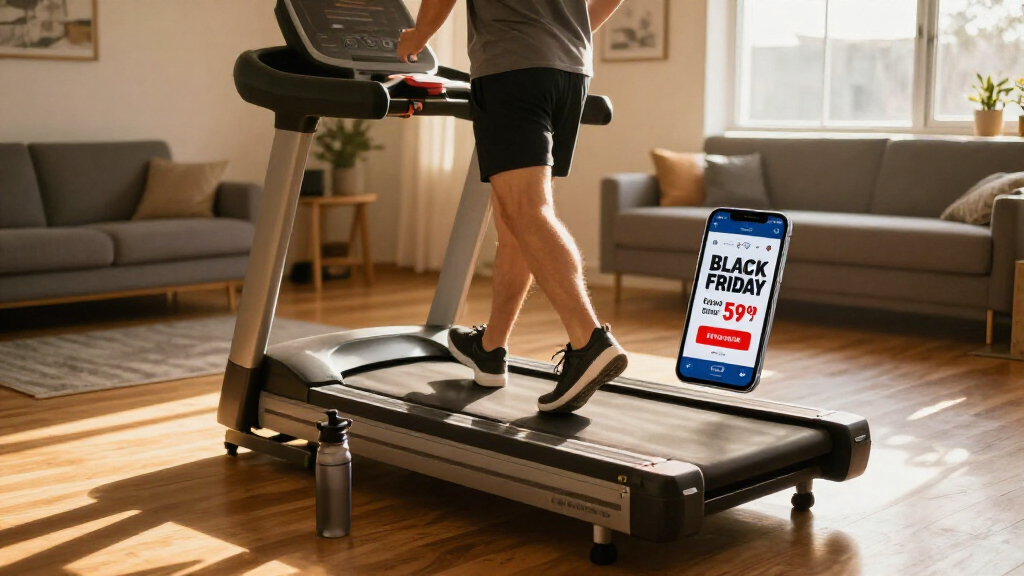
Black Friday offers a rare opportunity to secure high-quality home treadmills at reduced prices, but the variety can be overwhelming. My top recommendation for most households is the UMAY Foldable Treadmill with 20% Auto Incline because it balances a powerful motor with a compact footprint that fits under a bed or sofa. For those prioritizing quiet operation and desk compatibility, the T10 Walking Pad Treadmill Powered by Bosch stands out for its near-silent motor and sleek design. If you need heavy-duty durability for running, the NXSCI Folding Home Treadmill provides a robust 350 lb weight capacity and sturdy frame. The main tradeoff you will face is between motor power and storage convenience; larger motors offer better running performance but often lack foldability. Continue reading to see how these fifteen models stack up against each other and which one fits your specific workout needs.

Get workout gear delivered free with Prime
- Fast, free delivery on millions of items
- Prime Video, Amazon Music and more included
- Member-only deals all year
Complete the kit


Key Takeaways
- Auto Incline vs. Manual Incline: Models with auto incline, like the UMAY and BMJX, allow you to change elevation mid-workout without stopping, which is critical for high-intensity interval training.
- Motor Horsepower Determines Usage: A 2.0 HP motor is sufficient for walking and light jogging, but the 3.0 HP motors found in the NXSCI and generic 3.0 HP models are necessary for consistent running.
- Under-Desk Compatibility: Slim walking pads like the Abonow and T10 are designed specifically for low-speed walking while working, lacking the handrails and speed range of traditional treadmills.
- Storage Footprint Variance: Foldable designs vary widely; some fold flat for under-bed storage, while others fold vertically, requiring more floor space but offering a smaller footprint.
- Weight Capacity Limits: Budget models often cap at 220–250 lbs, whereas premium picks like the NXSCI support up to 350 lbs, indicating a sturdier frame and motor endurance.
| LONTEK Incline Walking Pad with Handlebar |  | Best for Steep Incline Walking | Motor: 3 HP brushless | Speed range: 0.6–7.5 mph listed; another specification lists 6.2 mph maximum | Manual incline: 0%, 8%, 16%, 24%, and 32% | VIEW LATEST PRICE | See Our Full Breakdown |
| QYDS Home Treadmill with 20% Auto Incline and Adjustable Handrails |  | Best for Adjustable Fit and Automatic Incline | Motor: 4.0 HP | Speed range: 0.6–8.7 mph | Maximum incline: 20% automatic | VIEW LATEST PRICE | See Our Full Breakdown |
| ApexNexus Foldable Treadmill with 15% Manual Incline and Handles |  | Best for Preset Interval Workouts | Motor: 3.5 HP brushless | Maximum speed: 7.6 mph | Maximum incline: 15% manual | VIEW LATEST PRICE | See Our Full Breakdown |
| CURSOR FITNESS Foldable Treadmill with Incline and Handle |  | Best for Upright Storage | Motor: 3.0 HP | Speed range: 0.6–7.5 mph | Maximum incline: 16% in specifications; 18% in description | VIEW LATEST PRICE | See Our Full Breakdown |
| Abonow Under-Desk Walking Pad Treadmill with 8% Manual Incline |  | Best for Under-Desk Walking | Motor power: 2.5 HP | Speed range: 0.5–4 mph | Incline: 8% manual | VIEW LATEST PRICE | See Our Full Breakdown |
| T10 Walking Pad Treadmill Powered by Bosch, Under Desk |  | Best Under-Desk Pick | Speed range: 0.6–4 mph | Incline: Fixed 7% manual incline | Motor: Bosch motor | VIEW LATEST PRICE | See Our Full Breakdown |
| CURSOR FITNESS Foldable Treadmill with 16% Manual Incline and LED Displays |  | Best Budget-Friendly Incline Training | Maximum speed: 7.2 mph | Motor: 3.0 HP brushless | Incline: Manual; 0%, 10%, and 16% settings | VIEW LATEST PRICE | See Our Full Breakdown |
| UMAY Foldable Treadmill with 20% Auto Incline |  | Best for Automatic Hill Workouts | Motor: 4.0 HP brushless | Speed range: 0.6–8.0 mph | Maximum incline: 20% | VIEW LATEST PRICE | See Our Full Breakdown |
| Viamotion Walking Pad Treadmill with Adjustable Incline and Foldable Handle Bar |  | Best Compact Pick with Foldable Handles | Speed range: 0.6–3.8 mph | Incline: Manual, adjustable to 4 degrees | Maximum horsepower: 2.5 hp | VIEW LATEST PRICE | See Our Full Breakdown |
| NXSCI Folding Home Treadmill, 3.0 HP, 350 lb Capacity |  | Best for a Higher-Capacity Compact Treadmill | Motor: 3.0 HP brushless | Speed range: 0.6–6.2 mph | Maximum weight capacity: 350 lb | VIEW LATEST PRICE | See Our Full Breakdown |
| Foldable Incline Treadmill with 18% Incline, 3.0 HP Motor, and 400 lb Capacity |  | Best for High-Incline Training | Motor Power: 3.0 HP | Incline Levels: 0%, 10%, 18% | Max Speed: 7.5 mph | VIEW LATEST PRICE | See Our Full Breakdown |
| LONTEK Foldable Treadmill with Manual Incline and LED Display |  | Best Quiet Operation | Motor Type: 3.0 HP Brushless | Noise Level: Below 45 dB | Max Incline: 10% (Manual) | VIEW LATEST PRICE | See Our Full Breakdown |
| BMJX Foldable Treadmill with 20% Auto Incline |  | Best Premium Feature Set | Max Incline: 20% (Auto) | Max Speed: 8.7 mph | Motor Power: 3.5 HP | VIEW LATEST PRICE | See Our Full Breakdown |
| CURSOR X5FD Foldable Incline Treadmill with Extended Handlebar |  | Best for Stability and Support | Handlebar Length: 51.2 inches | Max Incline: 32% (Claimed) | Weight Capacity: 350 lbs | VIEW LATEST PRICE | See Our Full Breakdown |
| Pcrignbm Foldable Walking Pad Treadmill with Handle Bar |  | Best Budget Entry-Level | Motor Power: 0.75 HP Continuous / 2.5 HP Peak | Max Speed: 6.2 mph | Weight Capacity: 220 lbs | VIEW LATEST PRICE | See Our Full Breakdown |
| black friday treadmills for home | Motor | Speed range |
|---|---|---|
| LONTEK Incline Walking Pad wit | 3 HP brushless | 0.6–7.5 mph listed; another specification lists 6.2 mph maximum |
| QYDS Home Treadmill with 20% A | 4.0 HP | 0.6–8.7 mph |
| ApexNexus Foldable Treadmill w | 3.5 HP brushless | — |
| CURSOR FITNESS Foldable Treadm | 3.0 HP | 0.6–7.5 mph |
| Abonow Under-Desk Walking Pad | — | 0.5–4 mph |
| T10 Walking Pad Treadmill Powe | Bosch motor | 0.6–4 mph |
| CURSOR FITNESS Foldable Treadm | 3.0 HP brushless | — |
| UMAY Foldable Treadmill with 2 | 4.0 HP brushless | 0.6–8.0 mph |
| Viamotion Walking Pad Treadmil | — | 0.6–3.8 mph |
| NXSCI Folding Home Treadmill | 3.0 HP brushless | 0.6–6.2 mph |
| Foldable Incline Treadmill wit | — | — |
| LONTEK Foldable Treadmill with | — | — |
| BMJX Foldable Treadmill with 2 | — | — |
| CURSOR X5FD Foldable Incline T | 3.0 HP Brushless | — |
| Pcrignbm Foldable Walking Pad | — | — |
More Details on Our Top Picks
LONTEK Incline Walking Pad with Handlebar
The LONTEK is the incline-focused choice for home walkers who want a demanding hill workout without a larger traditional treadmill. Its five manual settings reach 32%, well beyond the QYDS treadmill’s 20% automatic incline, but changing levels requires stopping to adjust the deck. A 3 HP brushless motor, dual elevated handrails, and shock-absorbing belt make it better suited to supported walking than its walking-pad label might suggest; the listed top speed reaches running territory, though the product details conflict on whether that ceiling is 6.2 or 7.5 mph. It folds and has transport wheels, but its belt is only 38.6 inches long, which can feel restrictive for longer strides. I’d choose it for steep walking, not as a confident running pick.
Pros:- Five manual incline levels, reaching a steep 32%.
- Elevated dual handrails provide support during uphill walking.
- Folds for storage and includes transport wheels.
- Anti-slip belt and shock absorption are designed to cushion steps.
Cons:- Manual incline adjustments require stopping the workout.
- The 38.6-inch belt may limit stride comfort, especially for taller users.
- Product details conflict on maximum speed and listed weight.
Best for: Home walkers who want steep incline intervals, handrail support, and a foldaway machine.
Not ideal for: Runners needing a long belt or buyers who want incline changes at the touch of a button.
- Motor:3 HP brushless
- Speed range:0.6–7.5 mph listed; another specification lists 6.2 mph maximum
- Manual incline:0%, 8%, 16%, 24%, and 32%
- Running belt:38.6 × 15.4 inches
- Maximum weight capacity:350 lbs
- Folded dimensions:57.3 × 24.4 × 6.1 inches
- Features:LED display, remote control, phone or tablet holder, cup holder, shock absorption, transport wheels
Our verdict“Choose the LONTEK for steep, supported walking at home, but skip it if you need a longer running deck or dependable specification consistency.”
QYDS Home Treadmill with 20% Auto Incline and Adjustable Handrails
For households that need a treadmill to fit more than one person, the QYDS stands out for combining five handrail height positions with an automatic incline. That gives it a more adaptable setup than the ApexNexus, whose incline is manual, and makes hill changes easier to work into a moving workout. The 41 × 16-inch running surface and 400-pound capacity also give it a sturdier, roomier profile than compact walking pads. Its top speed of 8.7 mph supports brisk jogging, but it is not the fastest option for runners who want sustained high-speed training. App connectivity and speakers add convenience, although a corded power connection limits where it can go. I’d favor it for shared home use over a dedicated under-desk setup.
Pros:- Automatic incline adjusts up to 20% without stopping to change the deck.
- Five handrail-height positions accommodate different users.
- 41 × 16-inch running surface and 400-pound capacity suit a wider range of home users.
- Folds for storage and includes app connectivity and speakers.
Cons:- Maximum speed of 8.7 mph may not suit faster running workouts.
- Corded electric operation limits placement to a suitable outlet.
- A larger running surface may take more room than compact walking-pad options.
Best for: Households with users of different heights who want automatic hill adjustments and a foldable treadmill for walking or jogging.
Not ideal for: Runners seeking high-speed training or people who need a treadmill that can operate away from an outlet.
- Motor:4.0 HP
- Speed range:0.6–8.7 mph
- Maximum incline:20% automatic
- Running surface:41 × 16 inches
- Handrail adjustment:5 positions, 33–41 inches
- Maximum weight capacity:400 lbs
- Folded dimensions:47.2 × 22.4 × 6.2 inches
- Display and metrics:LED display; distance, speed, time, heart rate, and calories
- Power source:Corded electric
Our verdict“Pick the QYDS if several household members need an adjustable, automatic-incline treadmill, but look elsewhere for faster running or outlet-free placement.”
ApexNexus Foldable Treadmill with 15% Manual Incline and Handles
The ApexNexus is the clearest fit here for buyers who want a simple workout structure built into a foldable treadmill. Its 12 preset HIIT programs add variety without requiring app features, while the 3.5 HP brushless motor and 7.6 mph top speed cover walking and moderate jogging. Compared with the QYDS, it gives up automatic incline and a wider deck, but its 15% manual incline still adds a useful hill option for walkers willing to pause and adjust. The 15 × 42-inch belt is notably longer than the LONTEK’s, which may help with stride room, though it remains narrow for some runners. A six-inch folded profile helps with storage, but this is still a corded machine with a relatively slim belt.
Pros:- Twelve preset HIIT programs provide structured workout options.
- 42-inch belt offers more length than the LONTEK walking pad.
- Folds to a six-inch profile and includes transport wheels.
- Six shock absorbers and a cushioned, anti-slip belt support a more comfortable stride.
Cons:- Manual incline adjustment requires stopping to change the setting.
- The 15-inch belt width may feel narrow to some runners.
- Maximum speed of 7.6 mph limits faster running workouts.
Best for: Home exercisers who like preset interval sessions and want a foldable treadmill for walking or moderate jogging.
Not ideal for: Runners who need a wide belt, automatic incline changes, or a treadmill for fast training.
- Motor:3.5 HP brushless
- Maximum speed:7.6 mph
- Maximum incline:15% manual
- Running surface:15 × 42 inches
- Maximum user weight:350 lbs
- Programs:12 preset HIIT programs
- Folded dimensions:50 × 24 × 6 inches
- Display metrics:Time, speed, distance, and calories
Our verdict“Choose the ApexNexus for built-in interval variety and a long, slim foldaway deck, but favor the QYDS if automatic incline and a wider belt matter more.”
CURSOR FITNESS Foldable Treadmill with Incline and Handle
When floor space is the deciding factor, the CURSOR FITNESS has one of the most useful details in this group: it folds to a four-inch profile for upright storage. That makes it slimmer to put away than the ApexNexus, which folds to six inches, while its 400-pound stated capacity gives it a higher listed limit than the ApexNexus and LONTEK. The tradeoff is a short, narrow 38.2 × 15.2-inch belt, better matched to walking and compact home workouts than long-stride running. Its incline specification is also inconsistent: the description says 18%, while the specifications say 16%. The triple-display console and side rails cover the basics, but buyers who want a clearly documented incline or automatic adjustments should look at the QYDS instead.
Pros:- Four-inch folded profile supports compact upright storage.
- Steel frame has a listed 400-pound maximum user capacity.
- Side rails are widened and slip-resistant.
- Triple-display console tracks basic workout metrics.
Cons:- Incline is listed as both 16% and 18%.
- The 38.2-inch belt is short for longer strides.
- A 15.2-inch belt width may feel restrictive for some users.
Best for: Apartment dwellers who need a foldable treadmill that can be stored upright and primarily plan to walk.
Not ideal for: Runners who need a longer belt or buyers unwilling to accept conflicting incline specifications.
- Motor:3.0 HP
- Speed range:0.6–7.5 mph
- Maximum incline:16% in specifications; 18% in description
- Running surface:38.2 × 15.2 inches
- Maximum user weight:400 lbs
- Folded dimensions:43.3 × 21.7 × 4 inches
- Display:Triple display with LED screen
- Frame and power:Steel frame; corded electric
Our verdict“The CURSOR makes sense for space-conscious walkers who prioritize slim storage, but runners and buyers seeking clear incline specifications should choose another model.”
Abonow Under-Desk Walking Pad Treadmill with 8% Manual Incline
The Abonow is the most purpose-built choice for low-speed movement while working: it starts at 0.5 mph, tops out at 4 mph, and includes a remote, so it is better suited to steady walking than the LONTEK or ApexNexus, both of which offer much higher stated speeds and handrails. Its 8% manual incline adds a hill option for workouts away from the desk, while the five-layer belt and six silicone shock absorbers are designed to soften footfalls. At 43.3 × 18.1 inches, it is compact, but it is not foldable; wheels help move it rather than reduce its footprint. The 265-pound capacity is also lower than the QYDS and CURSOR models. I’d pick it for desk-side walking, not as a versatile running machine.
Pros:- Low 0.5 mph starting speed suits gentle walking.
- Remote control supports adjustments without reaching for a console.
- Manual incline reaches 8% for more demanding walking sessions.
- Compact footprint and built-in wheels help with moving and storage.
Cons:- Maximum speed of 4 mph rules out running workouts.
- It is not foldable, so it keeps its full footprint when stored.
- 265-pound capacity is lower than the QYDS and CURSOR models.
Best for: Remote workers who want a compact treadmill for walking under a desk and occasional low-speed incline sessions.
Not ideal for: Runners, users who need handrails, or buyers who require a foldable machine or higher weight capacity.
- Motor power:2.5 HP
- Speed range:0.5–4 mph
- Incline:8% manual
- Dimensions:43.3 × 18.1 × 3.9 inches
- Weight:34 lbs
- Maximum weight capacity:265 lbs
- Controls and display:Remote control and LED display
- Warranty:1 year
Our verdict“Choose the Abonow for desk-side walking and easy movement, but skip it if you want running speed, handrails, or a foldaway frame.”
T10 Walking Pad Treadmill Powered by Bosch, Under Desk
The Cybergoing T10 is the clearest fit here for people who want to walk while working, rather than train for a run. Its no-handrail design helps it slide under a desk, and its 0.6–4 mph range suits steady or brisk walking. The fixed 7% incline adds a more demanding session without requiring a faster pace, but it cannot be adjusted mid-workout. Compared with the Viamotion Walking Pad, the T10 offers a higher stated user capacity and a slightly faster top speed; Viamotion, by contrast, has foldable handles for added support. App and remote controls give the T10 useful flexibility, though the reported pairing sequence may take patience. Its short, narrow belt and walking-only speed range make it a focused space-saving tool, not a substitute for a full treadmill.
Pros:- No-handrail format is suited to placement under a desk.
- Fixed 7% incline adds workout effort at walking speeds.
- Rated for users up to 300 lb.
- App and remote controls provide speed-adjustment options.
Cons:- Top speed of 4 mph limits use to walking and brisk walking.
- The 7% incline cannot be changed during a workout.
- Remote pairing may require a cumbersome timing sequence.
Best for: Remote workers who want a compact, handrail-free walking pad for desk use and can accommodate its fixed incline.
Not ideal for: Runners or buyers who want adjustable incline, a handrail, or a longer belt for a broad stride.
- Speed range:0.6–4 mph
- Incline:Fixed 7% manual incline
- Motor:Bosch motor
- Maximum load:300 lb
- Belt size:15 × 36 in
- Dimensions:5.7 × 19.3 × 42.3 in (D × W × H)
- Item weight:36.4 lb
- Warranty:12 months / 1 year
Our verdict“Choose the Cybergoing T10 if desk-friendly walking and compact storage matter more than running speed or adjustable incline.”
CURSOR FITNESS Foldable Treadmill with 16% Manual Incline and LED Displays
The CURSOR FITNESS foldable treadmill earns this spot for home walkers who want incline variety without relying on a powered incline system. Its three manual settings—0%, 10%, and 16%—let you choose a hill-focused workout, though changing the angle requires stopping to adjust it. A 7-layer cushioned belt, 12 preset programs, and an LED readout give it more workout structure than the under-desk Cybergoing T10, which is built for walking rather than varied sessions. The CURSOR also reaches 7.2 mph, but its 15 × 37.5-inch belt is relatively short and narrow, so faster running may feel constrained. Folding and wheels help with home storage; still, this is a compact compromise, not a roomy running deck. Pick it for basic incline and program variety, not seamless hill changes.
Pros:- Three manual incline settings provide a choice of flat and hill workouts.
- Twelve preset modes add structure to home sessions.
- Folding frame and built-in wheels support compact storage.
- Seven-layer belt and shock-absorbing pads are designed to cushion impact.
Cons:- Incline changes are manual, so they interrupt a workout.
- The 15 × 37.5-inch belt may feel restrictive for longer strides or running.
- Maximum speed of 7.2 mph is below the range of many full-size running treadmills.
Best for: Home walkers and casual joggers who want preset workouts, folding storage, and manual hill options without needing a powered incline.
Not ideal for: Runners who need a longer or wider deck, or anyone who wants incline to adjust while the belt is moving.
- Maximum speed:7.2 mph
- Motor:3.0 HP brushless
- Incline:Manual; 0%, 10%, and 16% settings
- Maximum weight capacity:400 lb
- Running belt:15 × 37.5 in
- Workout programs:12 preset modes
- Folded dimensions:44.3 × 21.8 × 4.1 in
- Noise level:Below 45 dB
Our verdict“Choose this CURSOR model for compact, programmed walking and casual jogging with manual incline, but skip it if you need a larger running surface.”
UMAY Foldable Treadmill with 20% Auto Incline
For buyers who want changing terrain without pausing to adjust the machine, the UMAY foldable treadmill makes the strongest case in this group. Its 20 automatic incline levels reach 20%, a more flexible setup than the three manually selected settings on the CURSOR FITNESS treadmill. That distinction matters for interval workouts: incline can change as part of the session rather than requiring a stop. The 0.6–8 mph range supports walking through moderate-paced running, while hydraulic folding and transport wheels help with storage. The tradeoff is footprint: its listed dimensions are 24 × 24.8 × 52 inches, and its 44.1 × 16-inch belt remains narrower than many dedicated running machines. It also tops out at 8 mph, so it is a better match for home hill training than sustained fast running. Choose it for automated incline variety, not maximum speed or a wide deck.
Pros:- Twenty automatic incline levels reach up to 20%.
- Speed range covers walking through moderate-paced running.
- Hydraulic folding and transport wheels support storage and movement.
- Brushless motor is specified to operate below 45 dB.
Cons:- Maximum speed of 8 mph may not suit fast-running workouts.
- The 16-inch belt width may feel narrow to some runners.
- Listed dimensions may take more room than a dedicated walking pad.
Best for: Home exercisers who want hands-free incline changes for hill intervals and need a treadmill that folds for storage.
Not ideal for: Fast runners or buyers who need a wide belt and a small footprint above all else.
- Motor:4.0 HP brushless
- Speed range:0.6–8.0 mph
- Maximum incline:20%
- Incline levels:20 automatic levels
- Maximum weight capacity:400 lb
- Running belt:44.1 × 16 in
- Dimensions:24 × 24.8 × 52 in (D × W × H)
- Folding:Hydraulic folding with transport wheels
Our verdict“Choose the UMAY if automatic, steep incline training is your priority and an 8 mph ceiling and 16-inch belt fit your workouts.”
Viamotion Walking Pad Treadmill with Adjustable Incline and Foldable Handle Bar
The Viamotion Walking Pad suits buyers who want a compact walking machine but prefer having handles available when needed. Its foldable handle bar adds a support option that the handrail-free Cybergoing T10 does not offer, while the manual incline can be adjusted up to 4 degrees. That flexibility is useful, but it is a gentler hill setup than the T10’s fixed 7% incline. Viamotion’s 0.6–3.8 mph range clearly favors walking, and its 265 lb maximum recommendation is lower than the T10’s 300 lb rating. The LED display tracks basic session metrics, and the stated 45 dB operation suits quieter home settings. Its plastic frame and modest top speed are meaningful limits, so I would treat it as a space-conscious walking option rather than a machine for jogging or heavy training.
Pros:- Foldable handle bar offers support while allowing a more compact storage setup.
- Manual incline is adjustable up to 4 degrees.
- LED display tracks time, distance, speed, and calories.
- Motor operation is specified at 45 dB.
Cons:- Maximum speed of 3.8 mph limits it to walking workouts.
- Maximum recommended user weight is 265 lb, below the Cybergoing T10’s stated capacity.
- Plastic frame may be less reassuring than the steel frames listed for other models.
Best for: Apartment dwellers or light-duty home walkers who want foldable handles, basic workout tracking, and a compact walking pace range.
Not ideal for: Heavier users, runners, or buyers seeking a more robust frame and a steeper incline than 4 degrees.
- Speed range:0.6–3.8 mph
- Incline:Manual, adjustable to 4 degrees
- Maximum horsepower:2.5 hp
- Maximum weight recommendation:265 lb
- Display:LED; tracks calories, distance, speed, and time
- Noise level:45 dB
- Dimensions:45.53 × 21.17 × 37.4 in
- Weight:18 kg
- Warranty:One-year motor warranty
Our verdict“Choose Viamotion for compact walking with foldable handles, but not for running, higher user capacity, or a sturdier frame.”
NXSCI Folding Home Treadmill, 3.0 HP, 350 lb Capacity
The NXSCI folding treadmill stands out for combining a 350 lb maximum capacity with a speed range that reaches 6.2 mph, making it a sturdier-feeling middle ground between walking pads and faster home treadmills on paper. Its 41 × 15.4-inch deck is longer than the Cybergoing T10’s 36-inch belt, so it offers more room for a natural walking stride, though the width and length still call for caution from taller users or anyone planning to run regularly. A six-layer anti-slip belt and eight buffer points are intended to soften impact, while five programs and an LED display cover basic tracking. Folding and front wheels help with room-to-room storage. Compared with the UMAY, the NXSCI gives up automatic incline and speed, but it may suit buyers who prioritize capacity and a straightforward folding frame over hill workouts.
Pros:- 350 lb maximum capacity is higher than the walking-pad models in this set.
- 41-inch deck provides more length than the Cybergoing T10’s 36-inch belt.
- Six-layer anti-slip belt and eight buffer points are designed to reduce impact.
- Folding handle and built-in front wheels support storage and movement.
Cons:- The 15.4-inch deck width may feel narrow for some users.
- Maximum speed of 6.2 mph limits faster running.
- No incline feature is listed, unlike the UMAY and the CURSOR FITNESS model.
Best for: Walkers and light joggers who want a folding home treadmill with a stated 350 lb capacity and basic workout tracking.
Not ideal for: Runners needing a long, wide deck, or buyers who want automatic incline and speeds above 6.2 mph.
- Motor:3.0 HP brushless
- Speed range:0.6–6.2 mph
- Maximum weight capacity:350 lb
- Running deck:41 × 15.4 in
- Workout programs:5
- Noise level:Below 45 dB
- Folded dimensions:48.03 × 22.83 × 5.51 in
- Weight:41.8 lb
Our verdict“Choose the NXSCI for higher stated capacity and straightforward folding storage, but look elsewhere for incline training or a roomy running deck.”
Foldable Incline Treadmill with 18% Incline, 3.0 HP Motor, and 400 lb Capacity
This model stands out for its 18% incline capability, a feature that allows for serious hill simulation without needing to adjust the deck angle manually. Compared to the LONTEK Foldable Treadmill, which maxes out at 10% manual incline, this unit offers a more dynamic workout range suitable for glute activation and calorie burning. The 400 lb weight capacity provides a safety margin that many compact walking pads lack, making it a robust choice for heavier users. However, the 7.5 mph speed limit restricts it to jogging or fast walking; sprinters will find this ceiling too low. While the 4.1-inch folded height is excellent for sliding under furniture, the 41.2 lb weight means moving it for storage requires some effort compared to lighter walking pads.
Pros:- Steep 18% incline for intense hill training
- High 400 lb weight capacity for durability
- Folds to a slim 4.1 inches for easy storage
- 99% pre-assembled for quick setup
Cons:- Speed capped at 7.5 mph limits running intensity
- 41.2 lb frame is heavier than average walking pads
Best for: Users who want to simulate hill workouts and require a higher weight capacity than typical walking pads offer.
Not ideal for: Sprinters or runners needing speeds above 7.5 mph, or those who prioritize ultra-lightweight portability.
- Motor Power:3.0 HP
- Incline Levels:0%, 10%, 18%
- Max Speed:7.5 mph
- Weight Capacity:400 lbs
- Folded Dimensions:43.8 × 21.6 × 4.1 inches
- Running Belt:7-layer
Our verdict“Choose this if you prioritize incline variety and sturdy build quality over high-speed running capability.”
LONTEK Foldable Treadmill with Manual Incline and LED Display
The LONTEK distinguishes itself with a brushless motor that operates below 45 dB, making it a respectful choice for shared living spaces or early morning use. Unlike the BMJX Foldable Treadmill, which relies on a louder conventional motor structure, the LONTEK prioritizes acoustic comfort. The shock-absorbing belt and silicone cushioning help reduce joint impact, though the 10% manual incline is a step down from the automated systems found in premium rivals. You must physically adjust the incline, which interrupts workout flow. The 15-inch belt width is standard for this category, offering enough room for walking but feeling tight for a natural running stride. It is a solid, quiet option for those who value silence over steep hill simulations.
Pros:- Whisper-quiet brushless motor (under 45 dB)
- Built-in wheels for easy storage movement
- Effective shock absorption with silicone cushioning
- Compact folded footprint of 4.1 inches high
Cons:- Manual incline adjustment breaks workout continuity
- 15-inch belt width is narrow for serious running
Best for: Apartment dwellers and night owls who need a nearly silent machine for shared living spaces.
Not ideal for: Users who want automated incline changes or a wider deck for aggressive running strides.
- Motor Type:3.0 HP Brushless
- Noise Level:Below 45 dB
- Max Incline:10% (Manual)
- Max Speed:7.5 mph
- Belt Size:15.0 x 37.5 inches
- Weight Capacity:400 lbs
Our verdict“This is the go-to pick if noise reduction is your primary constraint and you prefer manual simplicity.”
BMJX Foldable Treadmill with 20% Auto Incline
For those wanting a more connected experience, the BMJX offers 20% auto incline and Bluetooth app connectivity, a significant upgrade over the manual systems seen in the LONTEK or the limited 18% on the Foldable Incline Treadmill (B0HMWQPZ6W). The 3.5 HP motor and 450 lb capacity place it in a higher durability tier, handling more vigorous jogging sessions. However, this power comes with bulk; at 72 lbs, it is substantially heavier than most competitors, making it difficult to move once set up. The 8.7 mph top speed also exceeds the 7.5 mph cap found on many budget models, offering more headroom for faster paces. It is a robust, tech-forward machine that sacrifices portability for performance and connectivity.
Pros:- Auto incline adjusts up to 20% without stopping
- Bluetooth connectivity for app-based training
- Higher 8.7 mph max speed for faster jogging
- Robust 450 lb weight capacity
Cons:- Heavy 72 lb frame is difficult to relocate
- 16-inch belt width may feel restrictive for wide strides
Best for: Tech-savvy users who want app integration, automatic incline changes, and higher speed ceilings.
Not ideal for: Those with limited storage space who cannot accommodate a heavy 72 lb unit that is hard to move.
- Max Incline:20% (Auto)
- Max Speed:8.7 mph
- Motor Power:3.5 HP
- Connectivity:Bluetooth
- Weight Capacity:450 lbs
- Item Weight:72 lbs
Our verdict“Select this if you want smart features and auto-incline convenience and don’t mind a heavier, stationary footprint.”
CURSOR X5FD Foldable Incline Treadmill with Extended Handlebar
The CURSOR X5FD prioritizes user stability with its extended 51.2-inch handlebar, offering more hand support than the shorter rails found on the Pcrignbm Walking Pad. This design is particularly beneficial for older adults or those with balance concerns who need secure grips during incline training. The 32% incline claim is aggressive, though specification inconsistencies between the title and details suggest potential marketing exaggeration; buyers should verify the actual angle. The 8 silicone dampers provide noticeable impact absorption, protecting joints better than basic belt systems. However, the 350 lb capacity is lower than the BMJX or the 18% Incline model, limiting its appeal for heavier users. It is a supportive, stable machine that trades raw capacity for ergonomic safety.
Pros:- Extended handlebar provides superior stability
- 8 silicone dampers enhance joint protection
- Remote control allows hands-free adjustments
- Quiet brushless motor operation
Cons:- Conflicting incline and speed specifications in marketing
- 350 lb weight limit is lower than top-tier competitors
Best for: Users who prioritize hand support and stability, such as seniors or those recovering from injury.
Not ideal for: Heavier users exceeding 350 lbs or those who distrust ambiguous specification claims.
- Handlebar Length:51.2 inches
- Max Incline:32% (Claimed)
- Weight Capacity:350 lbs
- Shock Absorption:8 silicone dampers
- Motor:3.0 HP Brushless
- Item Weight:57 lbs
Our verdict“This is the safest bet for users needing extensive hand support, provided they are comfortable with the moderate weight limit.”
Pcrignbm Foldable Walking Pad Treadmill with Handle Bar
The Pcrignbm serves as an accessible entry point into home cardio, featuring a 0.75 HP continuous motor that is significantly less powerful than the 3.0 HP motors in the LONTEK or BMJX models. This lower power output reflects in its 6.2 mph speed limit and 220 lb weight capacity, making it strictly suitable for walking and light jogging for smaller users. While it lacks the robust incline options of the 18% Incline model, its 12 preset programs and 5-layer silicone pads offer decent value for casual users. The 5.2-inch folded profile is competitive for storage, but the lower build quality means it may not withstand daily, high-intensity use. It is a functional starter unit for those testing their commitment to home workouts.
Pros:- Low barrier to entry for casual walkers
- 12 preset programs add workout variety
- Compact 5.2-inch folded height
- Includes shock absorbers for joint comfort
Cons:- Low 220 lb weight capacity restricts user base
- 0.75 HP continuous motor struggles with sustained jogging
Best for: Beginners or casual walkers with lower body weight who want a low-cost introduction to home treadmills.
Not ideal for: Runners, heavier users over 220 lbs, or anyone seeking high-intensity interval training capabilities.
- Motor Power:0.75 HP Continuous / 2.5 HP Peak
- Max Speed:6.2 mph
- Weight Capacity:220 lbs
- Programs:12 Preset
- Belt Size:39 × 15 inches
- Folded Height:5.2 inches
Our verdict“This is a sensible choice for budget-conscious walkers who don’t need high speeds or heavy-duty durability.”
How We Picked
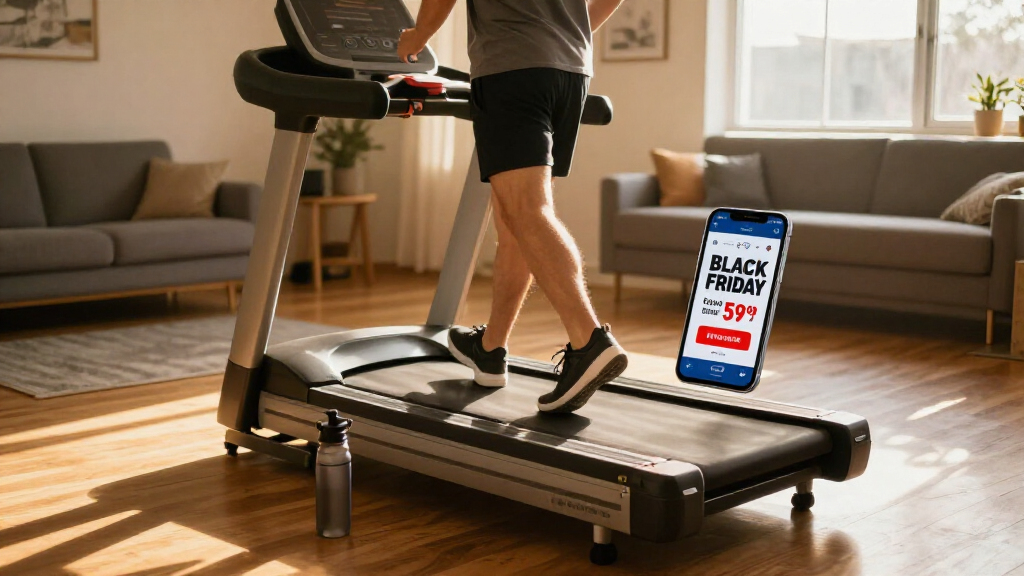
I evaluated these fifteen treadmills by focusing on three core pillars: performance durability, space efficiency, and user experience. For performance, I prioritized continuous horsepower (CHP) ratings and weight capacity, as these specs determine whether a machine can handle sustained running or just casual walking. A treadmill with a low CHP rating may overheat quickly, leading to motor failure, so I filtered out units with misleading peak horsepower claims. Space efficiency was assessed by examining foldability mechanisms, wheel availability for moving, and whether the unit could slide under standard furniture. This is vital for apartment dwellers who cannot dedicate a permanent gym space to a single machine.
User experience criteria included noise levels, dashboard intuitiveness, and safety features like emergency stop keys and side rails. I also considered the ease of assembly and maintenance requirements, such as belt lubrication needs. Products that required complex assembly or lacked clear safety guidelines were ranked lower. The final ranking reflects a balance between these factors, prioritizing models that offer the best long-term value for typical home environments rather than just the cheapest upfront cost.
Factors to Consider When Choosing Black Friday Treadmills For Home
Choosing the right treadmill involves more than just grabbing the biggest discount. You need to match the machine’s capabilities to your actual fitness goals and living space. Here are the critical factors to weigh before making a purchase.
Motor Power and Continuous Rating
When comparing motors, always look for the continuous horsepower (CHP) rating rather than peak horsepower. Peak horsepower is the maximum short-term output, while CHP indicates what the motor can sustain during a workout. For walking, a 1.5–2.0 CHP motor is adequate, but for jogging or running, you need at least 2.5–3.0 CHP to prevent the motor from straining. Underestimating motor needs is a common mistake that leads to premature wear and a noisy workout. If you plan to run regularly, investing in a higher CHP rating is worth the extra cost for longevity.
Incline Options and Workout Versatility
Incline settings significantly impact the intensity of your workout. Manual incline requires you to stop and adjust a lever or pin, which disrupts the flow of your exercise. In contrast, auto incline allows you to change elevation instantly via the console, making it ideal for interval training and hill simulations. If you enjoy varied workouts, auto incline is a superior feature. However, if you strictly walk on flat ground, manual incline models offer a more affordable entry point with fewer mechanical parts that could fail.
Space Requirements and Storage Solutions
Home treadmills come in two main storage categories: foldable uprights and flat-folding walking pads. Foldable uprights typically have a larger footprint but offer a more traditional running experience with handrails. Walking pads are slim and can slide under a bed or desk, making them perfect for small apartments or dual-purpose rooms. Measure your available floor space and ceiling height before buying. Remember that foldable units still need clearance to open fully, so check the unfolded dimensions, not just the folded size.
Weight Capacity and Frame Stability
A treadmill’s weight capacity is a direct indicator of its frame stability and build quality. If you weigh 200 lbs, choose a machine with a capacity of at least 250–300 lbs to ensure the motor and belt handle the impact without wobbling. Lower-capacity models may feel unstable during high-impact activities, posing a safety risk. Higher weight capacity often correlates with a heavier, more durable frame, which absorbs vibration better and reduces noise transmission to floors below, a key consideration for multi-story homes.
Noise Levels and Impact Absorption
Noise is a major factor for home use, especially if you live with others or in an apartment. Look for treadmills with multi-layer running decks and shock-absorption systems, which reduce the thudding sound of foot strikes. Brushless motors, like those in the T10, tend to be quieter than brushed motors. Additionally, consider using a treadmill mat to dampen vibration and protect your flooring. Quieter models allow you to exercise without disturbing household members or neighbors, making them a practical choice for shared living spaces.
Frequently Asked Questions
Is it worth buying a treadmill with auto incline for home use?
Auto incline is worth the investment if you plan to do interval training or want to simulate outdoor hills without stopping. It allows you to increase intensity dynamically, which burns more calories and engages different muscle groups. However, if your primary goal is low-impact walking for general health, a manual incline or flat-only model may suffice and costs less. Consider your workout routine: if you never change your pace or elevation, you do not need the extra complexity and cost of an auto-incline motor.
Can I use a walking pad under my standing desk?
Yes, many walking pads like the Abonow and T10 are specifically designed to fit under standard standing desks. They typically have a low profile and no front console, allowing the desk to slide over them. Ensure your desk has enough clearance, usually around 4–5 inches, and check that the walking pad’s height fits. Be aware that walking pads generally have lower speed limits and weight capacities than full-sized treadmills, so they are best for walking rather than running.
How much maintenance does a home treadmill require?
Most home treadmills require regular belt lubrication every 3–6 months, depending on usage frequency. You will need silicone-based lubricant, which is often not included with the purchase. Additionally, you should check and tighten the belt alignment periodically to prevent slippage. Neglecting this maintenance can lead to motor strain and premature belt wear. Some newer models offer self-lubricating decks, which reduce this chore, but they are rarer and more expensive.
Are foldable treadmills less stable than non-foldable ones?
Modern foldable treadmills are engineered with reinforced hinges and locking mechanisms that provide excellent stability when unfolded. However, they may have slightly more flex than heavy-duty commercial units, especially at high speeds. To maximize stability, always ensure the locking pins are fully engaged before stepping on the belt. If you plan to sprint frequently, a non-foldable model or a high-end foldable with a robust frame, like the NXSCI, will offer a more secure feel than budget-friendly folding options.
What is the best way to protect my floors from treadmill damage?
Using a high-density treadmill mat is the most effective way to protect hardwood, tile, or carpet from scratches and sweat damage. The mat also absorbs vibration, reducing noise for neighbors below and preventing the treadmill from sliding during intense workouts. Look for a mat that extends at least 6 inches beyond the treadmill on all sides. For carpeted floors, a mat prevents the treadmill feet from sinking into the pile, which can destabilize the machine and cause uneven wear.
Conclusion
Selecting the right treadmill depends on your specific space, budget, and fitness goals. For the Best Overall balance of features and space-saving design, the UMAY Foldable Treadmill with 20% Auto Incline is the strongest choice for most home gyms. If you are looking for the Best Value for walking and light jogging, the LONTEK Incline Walking Pad with Handlebar offers excellent functionality at a lower price point. For Best Premium durability and heavy-duty performance, the NXSCI Folding Home Treadmill provides a robust frame and high weight capacity ideal for serious runners. Beginners who want a simple, low-profile option for working from home should choose the T10 Walking Pad Treadmill for its quiet operation and sleek design. Finally, for those with limited floor space who need Best Compact storage, the Abonow Under-Desk Walking Pad fits seamlessly under furniture without sacrificing build quality.
Black Friday Picks

Oral-B iO Series 7 Deep Clean + Protect Rechargeable Electric Toothbrush, Black, with 2 Brush Heads and Charging Travel Case
As an affiliate, we earn on qualifying purchases.