
TL;DR
Two yoga instructors recommend cat-cow, downward-facing dog and supine twists as ways to support spinal mobility and stretch muscles around the back. Their advice is instructional, not evidence that the poses prevent back injuries; they suggest easier variations for people with mobility limits and say to stop if sharp pain occurs.
Two yoga instructors recommend cat-cow, downward-facing dog and supine twists as movements that may support spinal flexibility and stretch muscles around the back. Their guidance offers options for people who spend long periods sitting, but it does not establish that the poses prevent lower-back injury or guarantee protection.

Get workout gear delivered free with Prime
- Fast, free delivery on millions of items
- Prime Video, Amazon Music and more included
- Member-only deals all year
Missy White, a certified instructor and owner of Studio 108 Yoga and Teacher Training Center, says yoga can help support spinal health by maintaining flexibility and strengthening supporting muscles. Ashley Lynn Caputo, who runs Unwind the Mind Hypnosis & Wellness in Tampa, recommends cat-cow for moving the lower and middle back through controlled rounding and arching. She says this may counter stiffness associated with prolonged sitting.
Caputo describes downward-facing dog as a partial inversion that stretches the shoulders, spine and hamstrings. She says supine twists stretch muscles around the spine and encourage rotation. These are instructors’ explanations of the poses, not findings from a clinical study; no evidence or measured outcomes are provided with the recommendations.
Each pose is suggested for five to 10 breaths, whether after a long period of sitting, before exercise or as part of a morning routine. The instructions emphasize comfort over depth: a stretch should not cause sharp pain, and anyone who experiences it should stop and speak with a doctor before continuing.
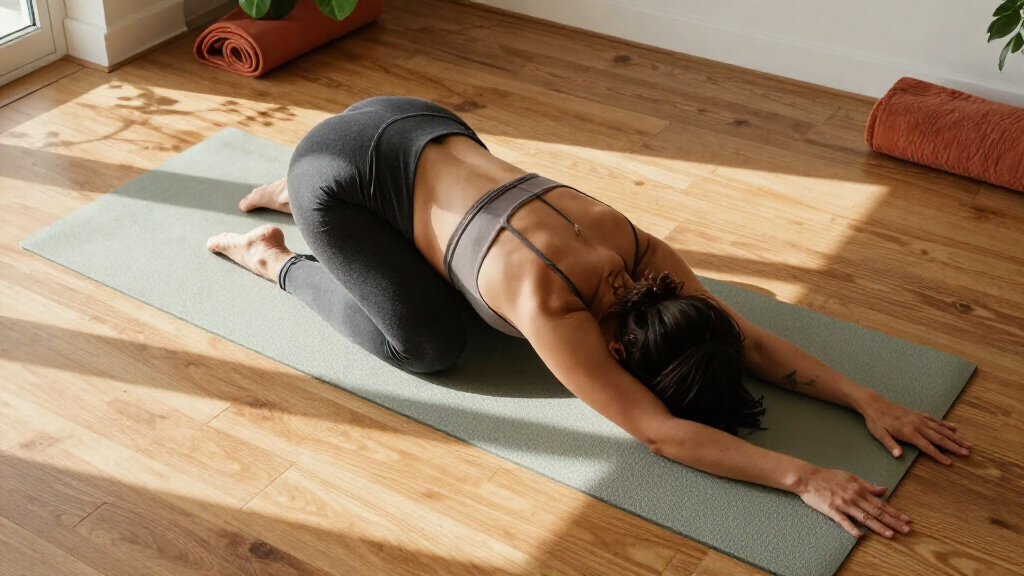
Three yoga poses for lower-back mobility
Instructors recommend a gentle sequence to move the spine and stretch muscles around the back. Their advice does not show that these poses prevent pain or injury.
The recommended sequence
Move gently and choose a variation that feels manageable.
Round and gently arch the back on hands and knees; try an elevated surface if needed.
Lift the hips while keeping the spine long. Bend the knees or place hands against a wall.
Lie on your back and lower a bent leg to the side; support the knee with a prop or try a seated twist.
Make the movements accessible
Adjust your setup
Pad sensitive knees, spread your fingers and keep shoulders away from your ears.
Keep it gentle
Start with bent knees and prioritize a long spine over straight legs.
Support the knee
Use a block or another prop if the knee feels uncomfortable or does not reach the floor.
What the guidance establishes
- Gentle movement and stretching
- Modifications for mobility limits
- Stopping if sharp pain occurs
- Prevention of back pain or injury
- Proven treatment effects
- Suitability for every person
Options for Desk-Bound Backs
The recommendations give readers a short sequence that can be tried without special equipment and include adaptations for limited mobility. That makes the guidance more usable for people who find standard floor poses uncomfortable, while keeping the focus on movement and stretching rather than promising a medical outcome.
Back discomfort can have different causes, and the article does not assess an individual reader’s condition. The poses should not be treated as a substitute for medical advice or as a proven way to prevent injury. The most actionable safety point is to avoid sharp pain and seek professional guidance if it occurs or if there are existing mobility concerns.
Products Worth Considering

Garmin Forerunner 255 GPS Running Smartwatch, 46 mm, Slate Gray

Garmin Forerunner 55 GPS Running Smartwatch, Black

Garmin Forerunner 265 Running Smartwatch, 46 mm, Black/Powder Gray
As an affiliate, we earn on qualifying purchases.
How the Three Poses Differ
The sequence combines movement through the spine with stretches held over several breaths. In cat-cow, the practitioner alternates between rounding the back and gently arching it on hands and knees. Caputo advises keeping the shoulders away from the ears, spreading the fingers and padding sensitive knees with a folded blanket.
For downward-facing dog, the practitioner lifts the hips from hands and knees to form an inverted V. Caputo recommends beginning with bent knees and prioritizing a long spine rather than forcing the legs straight. People who cannot comfortably bear weight through their wrists can try the pose with their hands against a wall, she says.
In the recommended supine twist variation, the person lies on their back, bends the knees and brings one leg across the other before lowering the leg to the side. White advises supporting a knee with a yoga block or another prop if it is uncomfortable or does not reach the floor. A seated twist is offered as an alternative for anyone unable to do the floor version.
“Yoga is a great way to improve spinal health.”
— Missy White, certified yoga instructor and owner of Studio 108 Yoga and Teacher Training Center
Limits of the Pose Claims
The guidance does not include a clinical trial, comparison group or other evidence showing whether these poses prevent lower-back pain or injury. Claims that they may ease stiffness or support flexibility should be understood as instructors’ recommendations, not confirmed treatment effects.
It is also unclear whether the poses are suitable for a particular person, since no medical histories or individual assessments are discussed. The advice says people with mobility concerns can try modified versions and that sharp pain is a reason to stop and consult a doctor, but it does not set out guidance for specific conditions. Readers with existing back problems or other health concerns should seek advice from a qualified health professional before starting or changing an exercise routine.
Use Modifications and Monitor Comfort
The immediate next step for someone trying the routine is to use the gentler version that feels manageable: cat-cow can be done on an elevated surface such as a bed, downward-facing dog can be performed against a wall, and a twist can be done seated. The instructors suggest holding each movement for five to 10 breaths, without forcing a range of motion.
There is no announced follow-up study or medical assessment tied to these recommendations. Readers should stop if they feel sharp pain and speak with a doctor before continuing; people with existing mobility limits or health conditions can ask a clinician for guidance about appropriate movements.
Source: rss
Key Questions
Which three yoga poses do the instructors recommend?
They recommend cat-cow, downward-facing dog and supine twists as movements that may support spinal mobility and stretch muscles around the back.
How long should each pose be held?
The guidance suggests five to 10 breaths for each pose. It does not recommend pushing through discomfort or forcing a deeper stretch.
What if a standard pose is difficult?
Options include doing cat-cow on an elevated surface, placing the hands against a wall for downward-facing dog, or trying a seated twist. A prop can support a knee during the supine twist.
Do these poses prevent back pain or injury?
The instructors recommend the movements for mobility and stretching, but the guidance does not provide research showing that they prevent pain or injury. It should not be treated as a medical guarantee.
When should someone stop?
The guidance says to stop immediately if a pose causes sharp pain and speak with a doctor before continuing. People with existing conditions or mobility concerns can seek professional advice before trying the routine.
Source: fitandwell.com