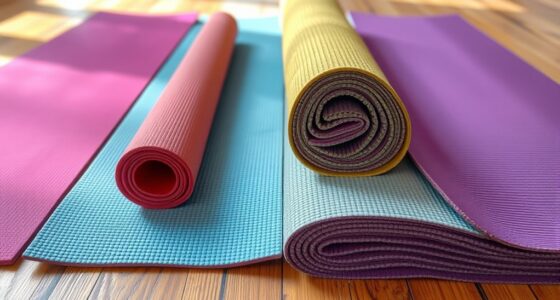
When comparing meditation and yoga, you’ll find that meditation focuses on mental clarity and emotional regulation through introspection, while yoga combines physical postures and breathwork for body strength and flexibility. Both practices promote mindfulness, but meditation is purely mental, and yoga also engages the body. If you seek a purely mental experience, meditation is ideal. If you want a blend of physical movement and mindfulness, yoga’s your best bet. Discover more benefits as you explore further!
Key Takeaways
- Meditation primarily enhances mental clarity, stress management, and emotional regulation through focused attention and mindfulness.
- Yoga improves physical strength, flexibility, and balance while promoting self-awareness through intentional movement and breath alignment.
- Both practices overlap in fostering mindfulness and emotional well-being, yet they approach it through different methods: mental versus physical.
- Yoga can prepare the body for meditation by promoting comfort, while meditation can deepen the focus required during yoga postures.
- Individual preferences and wellness goals determine the choice between meditation for mental practice or yoga for physical activity combined with mindfulness.
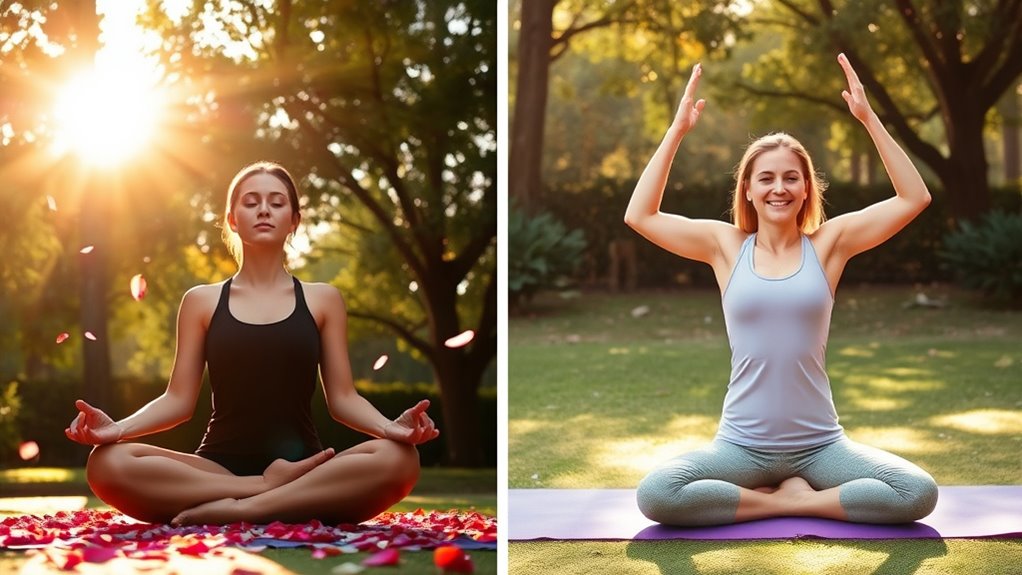
Have you ever wondered how meditation and yoga differ? While both practices aim to promote mental clarity and emotional well-being, they approach these goals in unique ways. Meditation primarily focuses on cultivating mindfulness, allowing you to explore deep into your thoughts and feelings. On the other hand, yoga incorporates physical postures, blending movement with breath, which can enhance both physical and mental health.
Discover the unique approaches of meditation and yoga in promoting mental clarity and emotional well-being.
When you think of meditation, picture a serene environment where you sit quietly, focusing your attention inward. It’s all about being present in the moment, whether you’re observing your breath, repeating a mantra, or visualizing calming imagery. This practice encourages you to observe your thoughts without judgment, fostering a sense of mindfulness that can spill over into your daily life. You may find that regular meditation helps you manage stress, reduce anxiety, and improve your overall mood.
Yoga, however, takes a different route. While it certainly incorporates mindfulness practices, it does so through a series of physical postures designed to strengthen and stretch your body. Each pose in yoga is intentional, focusing on alignment and breath, which can help you build physical strength, flexibility, and balance. As you flow from one posture to another, you’re not only working your muscles but also cultivating a deeper connection between your mind and body. This connection can lead to improved self-awareness and a greater understanding of your physical limits.
You might notice that the benefits of meditation and yoga overlap, yet they complement each other beautifully. If you practice yoga, you may find that it enhances your ability to meditate. The physical postures can prepare your body for stillness, making it easier to sit in meditation without discomfort. Conversely, meditation can deepen your yoga practice, helping you to remain focused and present as you move through each pose. Additionally, incorporating color accuracy into your meditation or yoga space can enhance your overall experience by creating a calming environment.
Ultimately, the choice between meditation and yoga boils down to your personal preferences and goals. If you’re seeking a purely mental practice, meditation could be your path. But if you crave the physical aspect alongside mindfulness, yoga may be the way to go. Both practices offer valuable tools for enhancing your well-being, so why not explore both and see how they can benefit you in unique ways?
Frequently Asked Questions
Can Meditation Help With Physical Fitness Like Yoga Does?
Yes, meditation can help with physical fitness, though not in the same way yoga does. By fostering a strong mind-body connection, meditation improves your focus and mental clarity, which can enhance your workout performance. It also aids in stress reduction, allowing you to approach physical activity with a calmer mindset. While it may not provide physical movements like yoga, the mental benefits can markedly support your overall fitness journey.
Is It Necessary to Practice Both Meditation and Yoga Together?
You don’t necessarily need to practice both mindfulness meditation and yoga poses together, but doing so can enhance your overall well-being. Studies show that combining these practices can improve stress reduction by up to 30%. By pairing yoga’s physical benefits with meditation’s mental clarity, you create a holistic approach to health. If you’re seeking deeper relaxation and focus, integrating both might just be the perfect solution for you.
How Long Should I Practice Meditation or Yoga Daily?
You should aim for about 10 to 30 minutes of meditation daily, depending on your schedule and comfort level. For yoga, practicing 3 to 5 times a week can be beneficial. Consistency matters more than duration, so find a routine that fits your lifestyle. Listen to your body; if you feel good, keep going. Ultimately, it’s about what works best for you and helps you maintain a balanced practice.
Are There Specific Meditation Techniques for Stress Relief?
Yes, there are specific meditation techniques for stress relief. You can use mindfulness techniques, like focusing on your present thoughts and sensations, to help clear your mind. Incorporating breathing exercises, such as deep inhalations and slow exhalations, can ground you and reduce anxiety. Try setting aside a few minutes daily to practice these techniques. You’ll find that consistent practice can lead to a calmer, more centered state of mind.
Can Beginners Easily Start Practicing Yoga Without Prior Experience?
Absolutely, beginners can start practicing yoga without prior experience! In fact, studies show that 36 million Americans practice yoga, with many being newcomers. To ease into it, follow these yoga beginner tips: choose a gentle class, use props for support, and listen to your body. Combine your practice with meditation start guidelines, like focusing on your breath, to enhance relaxation. You’ll find yoga can be a rewarding journey right from the start!
Conclusion
In the dance between meditation and yoga, both offer unique gifts for your mind and body. Picture yourself seated in serene stillness, the gentle waves of calm washing over you in meditation. Now, envision flowing through dynamic postures, each breath igniting a vibrant energy within. While meditation cultivates inner peace, yoga strengthens your body’s connection to the present. Embrace both practices, allowing them to intertwine like threads in a tapestry, enhancing your overall well-being and harmony.