TL;DR

Get workout gear delivered free with Prime
- Fast, free delivery on millions of items
- Prime Video, Amazon Music and more included
- Member-only deals all year
Fit&Well describes the CALM reminder, a brief check-in that scans the chest, arms, legs and mouth for signs of tension, followed by gentle tensing and release. The report recommends trying it two to four times a day, but provides no research evidence showing how much it reduces stress or improves sleep.
Fit&Well has reported on the CALM reminder, a brief daily check-in that asks people to notice tension in the chest, arms, legs and mouth, then gently tense and release those areas. The technique is presented as a way to become more aware of physical signs that may accompany stress; the report does not establish that it treats stress or demonstrate a measured health benefit.
The method’s name refers to its four checkpoints: chest, arms, legs and mouth. During the first step, people sit or lie comfortably, take a slow breath and observe each area without trying to change it. Prompts include checking for shallow breathing or tightness in the chest, braced arms or gripping hands, restless or locked legs, and a clenched mouth or jaw.
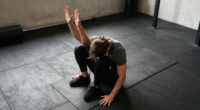
The second step is to lightly contract and release the muscles in each area. The report suggests drawing the shoulders together and releasing them with a long exhale; making loose fists before opening the hands; pressing the feet into the floor before relaxing the legs; and gently pressing the lips together before letting the jaw drop. A final slow breath is followed by another scan to notice any change.
Woods, whose first name and professional credentials are not included in the supplied report, recommends two to four check-ins a day, each lasting 30 to 60 seconds. Suggested moments include waking, midday or mid-afternoon, the end of the workday and before bed. These are recommendations attributed to Woods, not a schedule validated by evidence cited in the article.
A Short Pause to Notice Tension
The technique is framed as a low-time-cost way to check whether the body is holding tension during ordinary routines. That may be useful to readers who do not immediately connect tight muscles, jaw clenching or changes in breathing with feeling stressed. The report quotes Woods saying people may mistake physical signs for unrelated discomfort, but it does not establish that any particular symptom is caused by stress.
Repeated check-ins could also help a person notice when tension tends to arise, such as during a particular task or time of day. The practical value described is awareness and observation, rather than diagnosis or a substitute for care. Fit&Well’s account offers no study results, comparison group or other data quantifying whether the exercise reduces stress, changes cortisol levels or improves sleep.
Products Worth Considering

Withings Body Smart Wi-Fi and Bluetooth Smart Scale

Theragun Mini 3rd Generation Massage Gun – Travel Essential (Black)

OMRON VIVA 360+ Body Composition Monitor and Smart Scale
As an affiliate, we earn on qualifying purchases.
How the Four-Step Check-In Works
Woods describes the method as targeting four body areas that commonly hold tension. The suggested sequence moves from noticing, to a brief contraction and release, to checking again. The contrast between tension and relaxation is said to help people recognise what a less tense muscle feels like. This explanation is Woods’s account of the technique; the supplied material does not identify its developer or cite clinical research evaluating it.
The report connects the exercise to the body’s response to stress. Woods says the brain’s threat detection system can prompt the release of adrenaline and cortisol, which prepare the body to respond and may be associated with muscle contraction. The article also cautions that the body can feel more alert after waking, when cortisol naturally rises, and suggests treating that as a baseline rather than assuming the check-in has failed.
“This practice was developed as a quick check-in that targets the four areas of the body that most commonly hold on to stress.”
— Woods, as quoted by Fit&Well
Evidence and Symptoms Remain Unclear
The supplied report does not name the CALM method’s developer, provide Woods’s full identity or qualifications, or cite studies testing the technique. It also gives no measured outcomes for stress, sleep or other health effects. The description therefore supports reporting the practice as guidance, not as a proven intervention.
Physical symptoms such as headache, abdominal discomfort, tightness or shallow breathing can have different causes. The article says they can sometimes be associated with tension, but it does not offer a way to distinguish stress from other explanations. Readers should not use a body scan to diagnose symptoms or delay seeking appropriate medical advice for persistent, severe or concerning problems.
Try It as a Brief Check-In
Fit&Well’s report suggests trying the sequence at a few regular points in the day and observing whether particular situations coincide with tension. It does not announce a formal rollout, further research or a future publication milestone. No follow-up evidence or evaluation is included in the material provided.
For readers who try it, the steps are to observe, gently tense and release, then check again. The exercise should remain comfortable; the source describes light contractions, not forceful stretching or straining. Any effect will vary, and the report does not promise that the routine will reduce stress or improve sleep.
Key Questions
What does CALM stand for?
CALM refers to the chest, arms, legs and mouth, the four areas the check-in asks a person to scan for signs of tension.
How do you do the CALM reminder?
Sit or lie comfortably, take a slow breath and notice each area. Gently tense and release the muscles in turn, then take another breath and scan again. The source describes the contractions as light and brief.
How often does the report recommend using it?
Woods recommends two to four check-ins daily, lasting 30 to 60 seconds each. Suggested times include morning, midday, after work and before bed.
Is the CALM reminder proven to reduce stress?
The supplied Fit&Well report does not cite studies or provide measured results establishing that it reduces stress. It presents the method as a way to notice tension and observe changes after tensing and releasing muscles.
Can physical discomfort be assumed to be stress?
No. The report says some physical signs may be associated with tension, but symptoms can have other causes. A check-in is not a diagnosis; persistent, severe or concerning symptoms warrant appropriate medical advice.
Source: rss