
TL;DR

Get workout gear delivered free with Prime
- Fast, free delivery on millions of items
- Prime Video, Amazon Music and more included
- Member-only deals all year
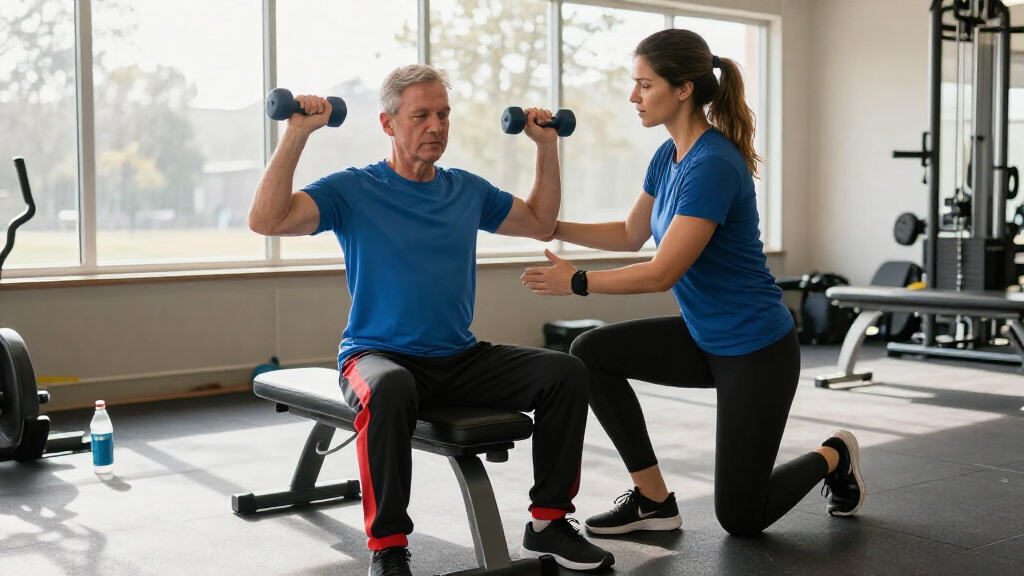
Trainer Garett Reid recommends a beginner full-body strength routine for people with diabetes, with the early focus on observing how exercise affects blood sugar rather than building muscle. The source advises checking glucose before and after exercise and again two to four hours later; individual responses can vary.
Trainer Garett Reid recommends that people with diabetes who are new to exercise begin with a simple, low-intensity strength routine and track their blood sugar response, according to a report by Fit&Well. The approach is intended to help people learn how their bodies respond to training; it is not a guarantee that the workout is safe for every person or a substitute for individual medical advice.
Reid, an NSCA-certified trainer who works with BetterMe: Health Coaching, told Fit&Well that the first month should focus on adapting to exercise and observing blood sugar changes, rather than pursuing muscle growth. He said strength training can improve insulin sensitivity, while cardio can support muscle function and the body’s ability to regulate glucose. Those are his explanations of potential benefits, not a claim that exercise replaces diabetes care.
The suggested routine uses two sets of eight to 12 repetitions for each exercise, with about 90 seconds of rest between sets. Reid recommends repeating the workout two or three times a week for four weeks, keeping effort modest enough that a person could complete three or four more repetitions at the end of a set. The report describes exercises including squats, glute bridges, wall push-ups, a banded bent-over row and a standing resistance-band overhead press.
The source material cuts off during the overhead-press instructions and does not provide the complete workout. It also mentions a plank as a core exercise but does not include its full instructions in the supplied text. Readers should not treat the partial exercise list as a complete program. Fit&Well says the advice was reviewed by Neil Gibson, Diabetes UK’s senior physical activity advisor.
Monitoring Glucose Around Exercise
The report’s central point is that people starting exercise with diabetes may need to pay attention to their individual glucose response, rather than assuming a particular workout will affect everyone in the same way. It recommends checking blood sugar before exercise, immediately afterward and again two to four hours later. That monitoring schedule can help a person notice changes around training, though the article does not set out a personalized response plan or specify what readings should prompt action.
The recommendation also frames the routine as an introductory step, not a fixed prescription. People’s health, treatment plans and responses to activity differ. The report’s guidance may offer a starting point for a conversation with a diabetes care team, but it does not establish that the routine is suitable for every reader or provide advice on changing medication, food or insulin.
Products Worth Considering

BowFlex Results Series SelectTech 552 Adjustable Dumbbell

Levoit Eleva 300X HEPA Air Purifier for Home and Bedroom

Bowflex PR1000 Home Gym
As an affiliate, we earn on qualifying purchases.
The Four-Week Starter Approach
Reid says he generally starts clients with diabetes on strength training because, in his view, many have low levels of muscle mass and do not already strength train. He recommends choosing movements that work several muscle groups and keeping the early sessions consistent. The report says participants can consider gradually increasing resistance or effort after they understand how their body and blood sugar respond.
Fit&Well also reports that BetterMe recently launched a series of workouts for people with diabetes in collaboration with Diabetes UK. The source gives no launch date or further details about the series. Its account of Reid’s routine is specific to his coaching approach; the supplied material does not establish a universal exercise standard or report clinical trial results for the workout.
“Your first month, don’t even worry about building muscle. In my opinion, you need to learn how your body reacts to the training.”
— Garett Reid, trainer with BetterMe: Health Coaching, speaking to Fit&Well
Individual Safety and Missing Details
The source does not identify which types of diabetes or treatment plans the routine is intended for, and it does not give individualized guidance for people whose blood sugar changes during or after exercise. It also does not specify how a person should respond to a particular glucose reading, or whether the exercises should be adjusted for complications, injuries or other health conditions. The report’s description of the routine is incomplete in the supplied material, including the final movements and their instructions.
Reid’s recommendation should be understood as a trainer’s approach reported by Fit&Well, not a finding that this exact program has been shown to be safe for everyone with diabetes. Anyone considering a new workout should seek advice from a qualified health professional familiar with their circumstances, especially if they have existing complications or concerns about exercise-related glucose changes.
Check Responses Before Progressing
Reid’s proposed next step is to keep the routine steady for four weeks and monitor blood sugar before exercise, immediately after, and two to four hours later. Once a person has a clearer sense of their response, he says they can gradually increase the weight or workout intensity. That progression remains a general coaching recommendation rather than individualized medical direction.
Fit&Well’s supplied report does not give further publication or program milestones for the BetterMe and Diabetes UK series. For readers, the practical next step is to discuss an exercise plan and glucose-monitoring approach with their care team before starting or changing training, rather than relying on a partial workout description.
Key Questions
What is the workout meant to do?
Reid presents it as a beginner strength routine intended to help people learn how their blood sugar responds to exercise. The report does not claim it is safe or appropriate for every person with diabetes.
How often does Reid recommend doing it?
The report says Reid recommends repeating the routine two to three times a week for four weeks, using two sets of eight to 12 repetitions per exercise and resting about 90 seconds between sets.
When does the report recommend checking blood sugar?
It recommends checking before exercise, immediately afterward and again two to four hours later. It does not specify what to do for particular readings, so people should follow guidance from their diabetes care team.
Is the complete workout included in the source?
No. The supplied text ends during the standing overhead press instructions and does not provide a complete set of instructions for every exercise. The listed movements should not be treated as a full program based on this material alone.
Should someone with diabetes consult a clinician before starting?
The report does not provide individualized medical clearance. Because responses to exercise and health circumstances vary, readers should ask a qualified health professional familiar with their care about starting or changing a workout.
Source: rss