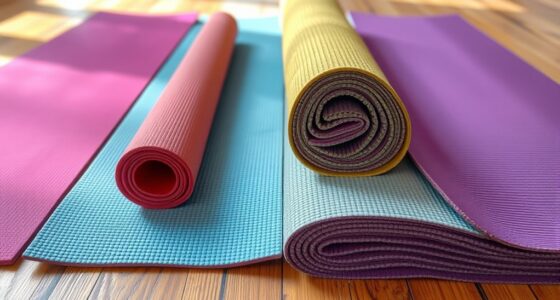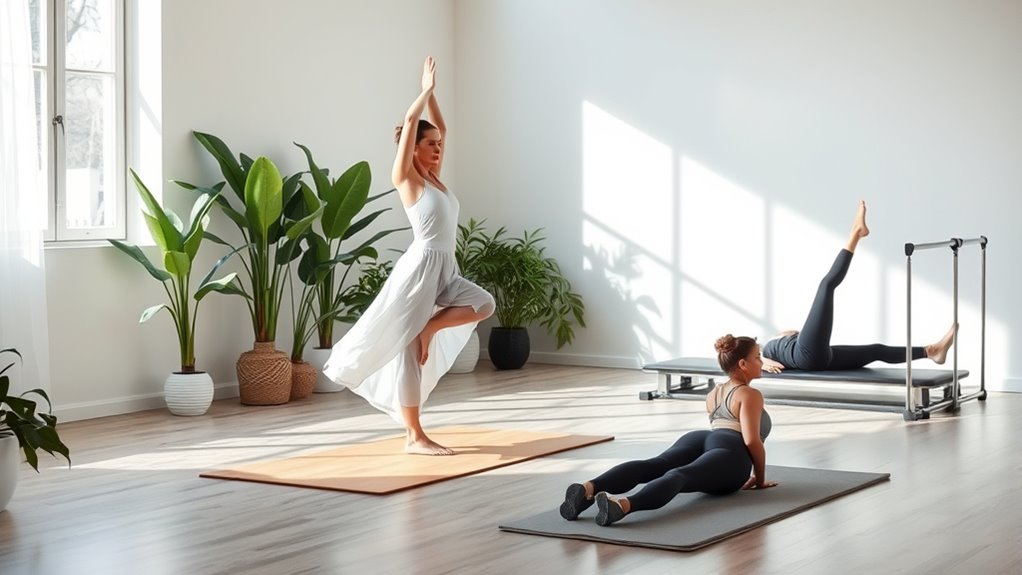

Choosing between yoga and Pilates depends on your goals. If you want flexibility, stress relief, and spiritual balance, yoga is a great fit. If you’re after core strength, better posture, and muscle tone, Pilates suits you well. Both improve mental focus and overall wellness, but they approach movement differently. Considering your fitness level, space, and equipment needs can help, and exploring each can reveal which aligns best with your lifestyle and objectives. Keep exploring to find your perfect fit.
Key Takeaways
- Choose yoga for holistic wellness, mindfulness, and stress reduction; opt for Pilates to strengthen core and improve muscle tone.
- Yoga emphasizes flexibility, meditation, and spiritual connection; Pilates focuses on disciplined movement and physical conditioning.
- Yoga suits beginners and those seeking emotional balance; Pilates is ideal for targeted core strength and injury prevention.
- Both require minimal equipment, but Pilates may need specialized gear; consider space and equipment availability.
- Match your goals: for flexibility and mental clarity, practice yoga; for core stability and muscle tone, choose Pilates.
Origins and Philosophy
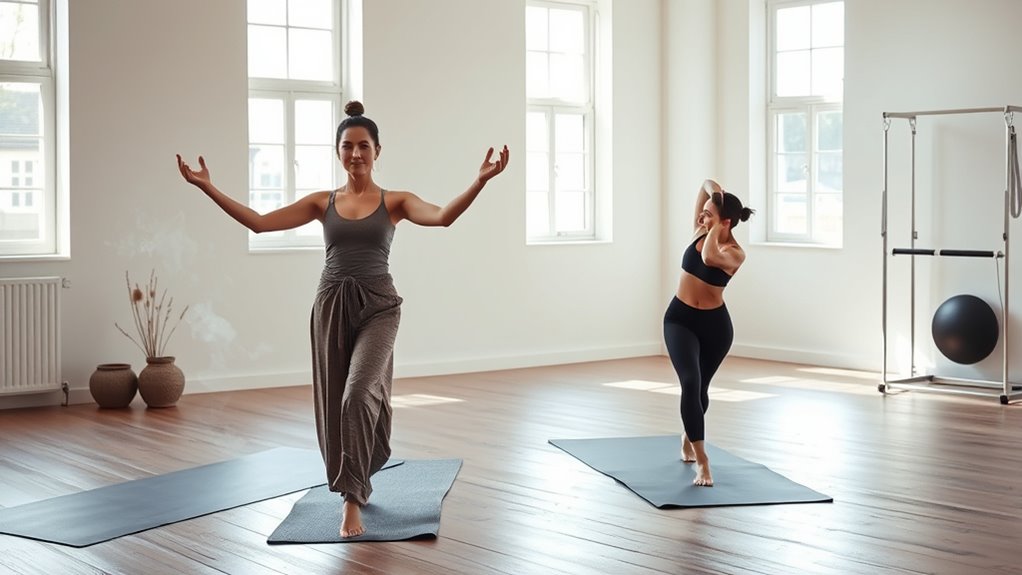
Yoga and Pilates both have distinct origins and underlying philosophies that shape their practices today. Yoga comes from ancient spiritual traditions in India, emphasizing meditative practices that connect mind, body, and spirit. Its roots are deeply embedded in spiritual traditions, aiming for overall harmony and self-awareness. Pilates, on the other hand, was developed in the early 20th century by Joseph Pilates, focusing on physical conditioning, core strength, and alignment. Unlike yoga, it doesn’t have a spiritual component but is rooted in modern fitness principles. While yoga encourages a holistic approach that blends spiritual and physical aspects, Pilates centers on disciplined movement to improve posture and muscle control. Understanding these origins helps you appreciate their unique philosophies and decide which aligns best with your wellness goals, especially considering how different brewing methods can influence your energy levels and focus during practice. Additionally, the different training philosophies behind each discipline can affect your motivation and commitment over time, highlighting the importance of aligning your practice with your personal wellness goals. Recognizing the importance of attention to detail can also enhance your experience, whether you choose yoga or Pilates, by helping you focus on proper form and technique to maximize benefits.
Key Techniques and Movements

You’ll notice both yoga and Pilates emphasize breath control, helping you stay focused and energized during your practice. Core strength movements are central to both, building stability and improving posture. Additionally, flexibility and stretching play an essential role in enhancing your range of motion and preventing injuries. Incorporating core strengthening techniques can further optimize your workout and support overall body health. Many water park hotels feature family-friendly amenities that make your stay more enjoyable and comfortable. To complement your routine, using essential oils for flexibility can help relax muscles and improve your stretching sessions. Exploring kitchen science & materials principles can also inspire innovative ways to incorporate healthy routines into your daily life.
Breath Control Practices
Breath control is fundamental to both yoga and Pilates, serving as a foundation for movement and mental focus. In these practices, mastering breathing exercises enhances your awareness and helps you stay present. You might explore meditation techniques that emphasize slow, deep inhales and exhales, calming your mind and body. Techniques like diaphragmatic breathing strengthen your awareness of breath, while rhythmic breathing supports stamina and stability. As you practice, you’ll notice how controlled breathing guides your movements smoothly and efficiently. Whether you’re inhaling deeply to prepare for a pose or exhaling fully to release tension, these breath control practices are essential. They create a mental clarity that complements physical effort, grounding you in the exercise and fostering mindfulness.
- Deep, diaphragmatic inhalations and exhalations
- Rhythmic breathing patterns for stability
- Focused meditation techniques for mental clarity
- Breathing exercises to enhance endurance
Core Strength Movements
Building on the focus of controlled breathing, engaging your core muscles enhances stability and supports mindful movement. Core strength movements in yoga and Pilates emphasize mindfulness integration and spiritual connection, helping you stay present. Focus on exercises like planks, hundred, and leg lifts to activate deep abdominal muscles. These movements build resilience, improve posture, and foster a sense of inner balance. Maintain steady breathing and awareness of your body’s alignment throughout each exercise. Here’s a quick overview:
| Movement | Technique | Benefits |
|---|---|---|
| Plank | Engage core, keep spine neutral | Builds endurance, stability |
| Hundred | Controlled breath, core tight | Enhances focus and breath control |
| Leg Lifts | Slow, controlled lifts | Strengthens lower abs |
| Boat Pose | Balance, engage core | Develops spinal stability |
Incorporate these for a mindful, spiritually connected core workout.
Flexibility and Stretching
Are you looking to enhance your flexibility and prevent injuries? Flexibility and stretching are essential components of both yoga and Pilates, helping improve your range of motion and reduce strain. Incorporating partner stretches can amplify your progress, offering deeper stretches and better alignment. Flexibility routines often include dynamic movements like hamstring stretches, hip openers, and spinal twists that target key muscle groups. In yoga, you’ll find poses such as forward bends and lunges that deepen stretches over time. Pilates emphasizes controlled movements like leg circles and side splits to build length and strength. Consistent practice of these key techniques and movements not only boosts flexibility but also promotes better posture and injury resilience. Additionally, choosing high-quality fine rugs can create a comfortable and supportive environment for your stretching routines, enhancing your overall experience. Proper body alignment during stretching is crucial for preventing discomfort and maximizing benefits. Incorporating awareness of muscle engagement can improve the effectiveness of your routines and help prevent overstretching or injury. Practicing mindful stretching techniques can further enhance your flexibility and safety. Regularly updating your routines with new flexibility exercises can help prevent plateaus and keep your progress steady. Incorporate these into your routine for lasting benefits.
Physical Benefits and Focus Areas
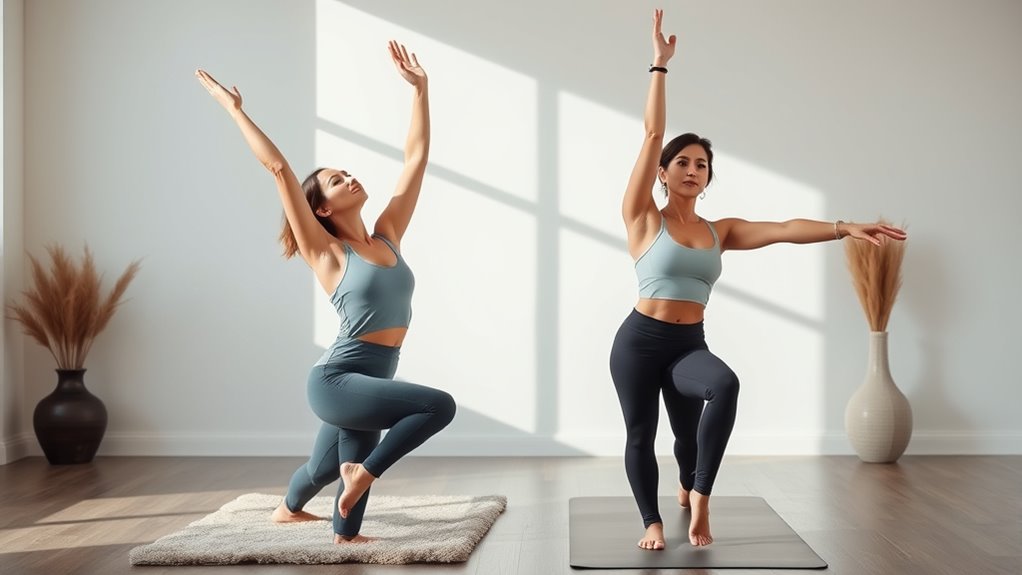
Both yoga and Pilates help improve your flexibility and range of motion, making everyday movements easier. They also focus on strengthening your core muscles, which enhances stability and posture. Understanding how each practice targets these areas can help you choose the right one for your fitness goals. Additionally, exploring market trends and insights can provide a better understanding of how these disciplines are evolving and gaining popularity among different demographics. Recognizing the comparative advantage of each method can further inform your decision based on your personal preferences and needs. Incorporating knowledge of preventive maintenance in your fitness routine can help avoid injuries and ensure consistent progress. Moreover, learning about regional influences like traditional techniques can deepen your appreciation and effectiveness of each practice.
Flexibility and Range of Motion
Flexibility and range of motion are essential components of both yoga and Pilates, helping to improve how your body moves and feels. These practices promote adaptive flexibility, allowing your muscles and joints to adjust to various movements safely. Enhanced flexibility can also contribute to injury prevention by reducing muscle strain during daily activities or exercise. Incorporating proper upkeep and maintenance of your muscles and joints can further support these benefits, ensuring sustained mobility over time. Regularly practicing these disciplines can also promote muscle recovery and reduce stiffness, enhancing overall movement quality. Additionally, maintaining a consistent practice can help improve joint health, supporting long-term mobility. Engaging in targeted stretching and strengthening routines can optimize these benefits and support your body’s natural adaptability to movement. To maximize these benefits, paying attention to proper technique and alignment during practice is essential.
Core Strength Development
Building a strong core enhances your overall movement and stability, supporting the flexibility and range of motion you’ve gained through yoga and Pilates. Both practices emphasize core strength development, but they approach it differently. Pilates often focuses on targeted exercises that improve posture alignment and build deep abdominal muscles, which help stabilize your entire body. Yoga, on the other hand, incorporates meditation focus to cultivate awareness of core engagement during poses, improving balance and posture. Strengthening your core through either method boosts your ability to perform daily activities with ease and reduces injury risk. By honing your core, you also enhance your control and precision, allowing you to deepen your practice and achieve better overall stability in both movement and stillness.
Mental and Emotional Impact

While yoga and Pilates both offer mental and emotional benefits, they do so in distinct ways that can substantially influence your overall well-being. Yoga emphasizes mindfulness practices, helping you stay present and cultivate emotional resilience through meditation and breathing exercises. Pilates, on the other hand, promotes focus and body awareness that reduce stress and improve mental clarity.
You might experience:
- Enhanced emotional resilience through regular mindfulness practices
- Reduced anxiety and stress levels
- Increased mental clarity and focus
- Improved mood and overall mental health
Both disciplines encourage a mind-body connection, but yoga’s meditative approach may foster deeper emotional balance, while Pilates’s emphasis on concentration can boost your mental resilience in daily life.
Suitable Fitness Levels and Goals

Choosing between yoga and Pilates depends largely on your current fitness level and personal goals. If you’re a beginner, both practices offer modifications to suit your needs, making it easier to get started. Yoga often includes beginner modifications that focus on gentle stretching and basic poses, suitable for those new to fitness or recovering from injury. Pilates, while accessible at all levels, can incorporate advanced techniques for more experienced practitioners aiming to challenge their core strength and stability. Your goals also matter: if you want improved flexibility and stress relief, yoga might be ideal. For building core strength and muscle tone, Pilates can be more effective. Assess your fitness level and objectives to choose the practice that aligns best with your progress and aspirations.
Equipment and Space Requirements
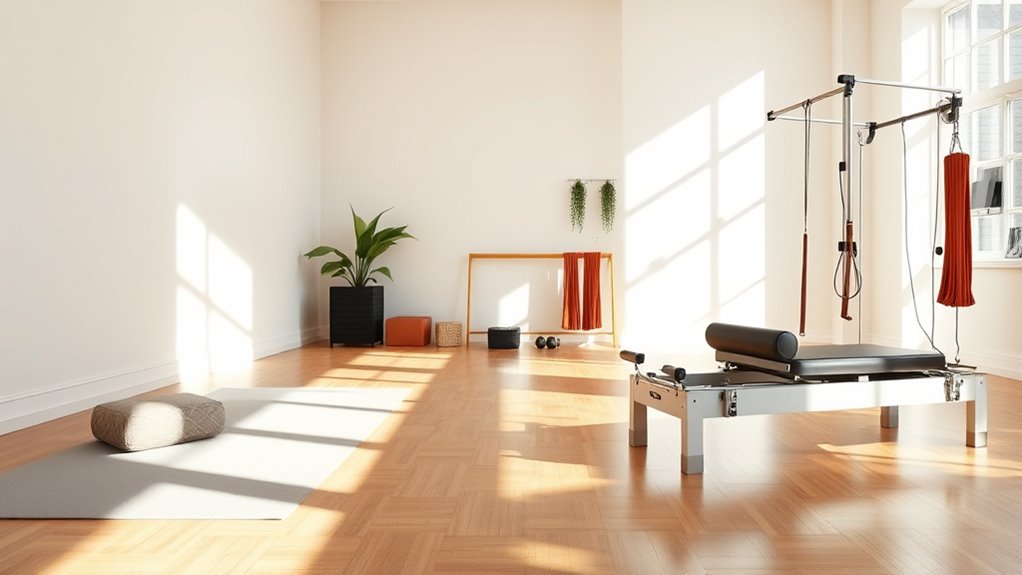
Yoga generally requires minimal equipment and space, making it accessible for most settings. You might only need a yoga mat, comfortable clothing, and maybe a strap or block for support. The space should be quiet and open enough to stretch out fully without obstruction. Pilates, on the other hand, often demands more dedicated space for equipment like reformers, balls, or mats, depending on your routines.
- A yoga mat and optional props like blocks or straps
- A quiet, clutter-free area with enough room for full stretches
- Space for Pilates equipment such as reformers or small apparatus
- Clear floor area to perform exercises safely and comfortably
Both practices can fit into small spaces, but Pilates may require a bit more room for specialized equipment.
Choosing the Right Practice for You

Deciding between yoga and Pilates depends on your fitness goals, preferences, and physical needs. If you’re seeking meditation benefits alongside physical activity, yoga might be the better choice, as it emphasizes mindfulness and breath control. On the other hand, if you prefer a workout focused on core strength and flexibility without the spiritual aspect, Pilates could suit you better. Consider your nutritional considerations as well; both practices benefit from proper fueling, but Pilates often emphasizes more weight management and muscle toning. Think about your motivation—do you want relaxation and stress relief or targeted muscle engagement? Ultimately, choosing the right practice depends on aligning these factors with what excites and motivates you to stay consistent.
Frequently Asked Questions
Can I Combine Yoga and Pilates in My Fitness Routine?
Yes, you can definitely combine yoga and pilates in your routine. It helps you find a balance between the flexibility benefits of yoga and the core strength focus of pilates. Incorporating both allows you to enhance your overall fitness, improve posture, and reduce stress. Just start with a few sessions of each, and listen to your body to avoid overtraining. This blend can keep your workouts fresh and effective.
Which Practice Is Better for Weight Loss?
When it comes to weight loss, there’s no one-size-fits-all answer, but you’ll find that higher exercise intensity and calorie burning are key. Yoga offers gentle movement, great for flexibility and mindfulness, but Pilates usually provides more calorie burning due to its core strength focus. If shedding pounds is your goal, you might want to choose the practice that pushes your limits and keeps your heart rate up, making every effort count.
Are There Any Contraindications for Beginners?
As a beginner, you should be aware of injury risks and medical restrictions before starting yoga or Pilates. If you have existing health issues or injuries, consult your doctor first. Some poses or exercises might strain certain areas, so listen to your body and modify movements as needed. Starting with beginner classes and working with qualified instructors can help you avoid injury risks and guarantee a safe, enjoyable experience tailored to your needs.
How Long Does It Take to See Results?
You’ll start noticing progress within a few weeks, but the timeline varies with consistency. Track your fitness milestones regularly to stay motivated and see how far you’ve come. While some see improvements in flexibility and strength after just a month, others might take longer. Remember, patience is key—consistent practice and progress tracking help you celebrate small wins along the way. Keep at it, and results will follow.
Do Yoga and Pilates Require Professional Instruction?
You don’t necessarily need professional instruction for yoga and pilates, but it offers instructional benefits like proper technique and safety. Beginners especially benefit from guidance to prevent injuries and maximize results. Equipment requirements are minimal for both; yoga often needs a mat, while pilates might need small props. Starting with a professional can help you learn correct form early on, ensuring you gain the most from your practice.
Conclusion
Whether you choose yoga or Pilates, both practices boost your health and well-being. Did you know that over 36 million Americans practice yoga regularly? That’s a proof to its popularity and benefits. Consider your goals, whether improving flexibility or core strength, and pick the one that resonates most. With consistency, you’ll experience increased energy, reduced stress, and better overall fitness. So, take the leap—your body and mind will thank you!