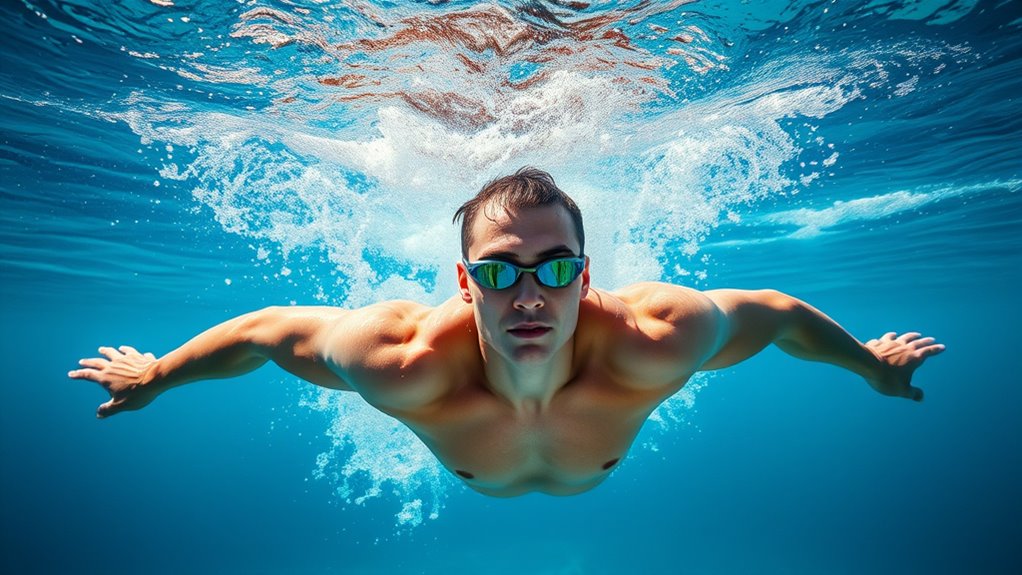

Swimming provides a powerful full-body workout by engaging your arms, shoulders, core, and legs, helping you build strength and tone muscles. It boosts your cardiovascular health, increasing endurance and heart efficiency, while also supporting weight management through high calorie burn. Additionally, swimming is gentle on joints, making it ideal for recovery or those with joint issues. By moving mindfully in water, you also improve mental well-being and longevity. Continue to discover more ways it benefits your fitness journey.
Key Takeaways
- Engages all major muscle groups simultaneously, promoting strength, endurance, and muscle tone.
- Improves cardiovascular health by enhancing heart function and lung capacity.
- Burns calories efficiently, supporting weight management and body composition.
- Provides low-impact resistance that supports joint health and aids injury recovery.
- Boosts mental well-being through stress reduction, endorphin release, and emotional balance.

WSTOO Streamlined Training Short Fins – Silicone Swim Flippers for Adults and Youth (Men & Women), Ideal for Swimming, Snorkeling, and Diving
STREAMLINED AND RIBBED DESIGN: WSTOO flippers feature a streamlined and ribbed design. After precise simulations and tests, this…
As an affiliate, we earn on qualifying purchases.
As an affiliate, we earn on qualifying purchases.
Engages All Major Muscle Groups

Swimming is a highly effective full-body workout because it actively engages nearly all major muscle groups at once. As you move through each stroke, your arms, shoulders, core, and legs work together to propel you forward. During the catch phase, your forearms and hands act as anchors, requiring strength and coordination. Water resistance pushes your muscles to work harder than on land, helping build muscle tone and strength. Every stroke involves your core muscles to stabilize your body, while your legs kick to generate propulsion. This simultaneous engagement maximizes efficiency, targeting muscles from head to toes. Additionally, the low-impact nature of swimming makes it suitable for all ages and fitness levels, reducing the risk of joint strain or injury. Incorporating swimming into your routine can also enhance muscle recovery by promoting blood flow and reducing soreness after workouts. Moreover, the adaptive resistance provided by water allows you to customize your workouts to match your fitness level and goals. Consistent practice can also improve cardiovascular health, making swimming a comprehensive exercise for overall wellness.

Aqua Leisure Fitness Dynamic Resistance Band – Water Exercise – Pool Workout – Fitness Noodle – Length 34"
Resistance Band Foam Tube with swivel handles for total body workout, improves strength throughout the body.
As an affiliate, we earn on qualifying purchases.
As an affiliate, we earn on qualifying purchases.
Boosts Cardiovascular Endurance and Heart Health

Regular participation in swimming considerably boosts your cardiovascular endurance and heart health. When you swim regularly, your heart becomes stronger, pumping blood more efficiently, and your lungs improve oxygen intake. This activity keeps your circulatory system active and resilient. To understand its benefits better, consider these points:
- Enhances circulation by increasing blood flow throughout your body, reducing the risk of cardiovascular disease.
- Lowers blood pressure and cholesterol levels, supporting overall heart function.
- Builds aerobic capacity, enabling you to sustain longer periods of activity without fatigue.
Swimming’s rhythmic, continuous movement challenges your cardiovascular system without putting stress on joints. Over time, this helps prevent heart-related issues and improves your endurance, making everyday activities easier and healthier.

Sunlite Sports Swimming Kickboard with Ergonomic Grip Handles, One Size Fits All, for Children and Adults, Pool Training Swimming Aid, for Beginner and Advanced Swimmers
ERGONOMIC GRIP HANDLES – Featuring two ergonomic grip handle cutouts with grooves for your fingers, this kickboard allows…
As an affiliate, we earn on qualifying purchases.
As an affiliate, we earn on qualifying purchases.
Supports Weight Control and Body Composition

Building on the cardiovascular benefits, swimming is also highly effective for supporting weight control and improving body composition. Because water provides resistance, each stroke challenges your muscles and boosts calorie burn. In just 30 minutes, you can burn over 200 calories, which is more than walking and comparable to running or cycling. Swimming helps increase fat metabolism and promotes lean muscle growth, leading to a healthier body fat percentage. Regular swimming can help overweight individuals shed excess weight, while underweight individuals can build muscle when combined with proper nutrition. The low-impact nature reduces stress on joints, making it sustainable and safe for long-term weight management. Additionally, engaging in aqua exercise can further enhance muscle toning and cardiovascular health. Consistent practice supports a toned, balanced physique and muscle development, which is essential for overall health and mobility. Incorporating exercise consistency into your routine ensures ongoing progress and benefits.

FitsT4 Sports Aqua Gloves Webbed Paddle Swim Gloves Fitness Water Aerobics and Swimming Resistance Training Gloves for Men Women Children Royal M
【Size Reminder】 Measure your palm width, the small water gloves for women with small hands & youth &…
As an affiliate, we earn on qualifying purchases.
As an affiliate, we earn on qualifying purchases.
Provides Low-Impact Joint Support and Rehab Benefits
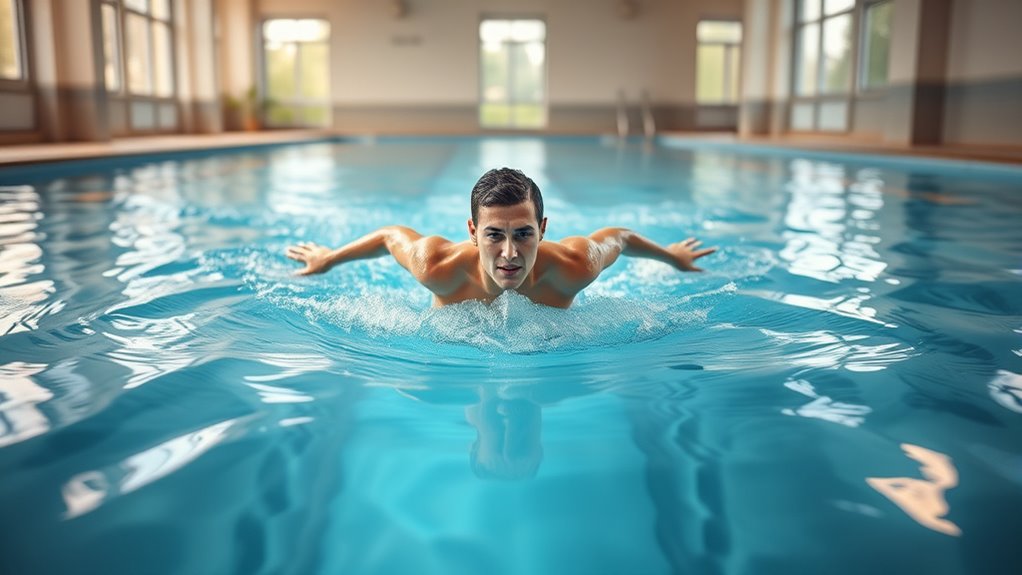
Did you know that water’s natural support can substantially reduce stress on your joints during exercise? This buoyancy minimizes impact, making movement smoother and safer. Whether you’re recovering from an injury or managing joint pain, swimming offers significant rehab benefits. It allows you to stay active without risking further damage. The gentle resistance helps strengthen muscles around affected joints, promoting stability and mobility. Additionally, incorporating low-impact exercise like swimming can improve overall joint health and prevent deterioration over time. Moreover, the consistent, gentle motion in water encourages joint flexibility and helps reduce stiffness. To maximize these benefits, understanding how water resistance can effectively support muscle strengthening is essential. Engaging in water-based workouts can further enhance joint support and overall fitness. Here are three ways swimming supports joint health:
- Buoyancy reduces joint compression, easing pain during movement.
- Water’s resistance improves muscle support around joints, aiding recovery.
- Low-impact exercise helps maintain flexibility and range of motion without wear and tear.
This makes swimming an accessible, effective option for maintaining joint function, especially during recovery or for those with chronic conditions.
Enhances Mental Well-Being and Longevity

Swimming promotes mental well-being and longevity by reducing stress and enhancing mood. When you immerse yourself in the water, you activate the relaxation response, lowering cortisol levels and easing mental tension. The rhythmic strokes and flowing movements help clear your mind, fostering a sense of calm and focus. Regular swimming also boosts your mood by releasing endorphins, which combat anxiety and depression. Over time, this consistent activity can improve your overall psychological resilience. Studies show that swimmers tend to have a lower risk of age-related cognitive decline and live longer, healthier lives. Maintaining this habit supports inflammation reduction and helps manage weight, both vital for longevity. Additionally, engaging in Gold IRA Markets can provide financial stability for a secure retirement, complementing your physical wellness. By making swimming part of your routine, you nurture your mental health and set the stage for a vibrant, extended life. Incorporating mind-body connection practices during your swim sessions can further enhance emotional balance and overall well-being. Consistent physical activity like swimming also promotes cardiovascular health, which is essential for a long, active life. Furthermore, adopting stress management techniques can help maximize the mental health benefits gained from swimming and other activities. Additionally, engaging in sleep hygiene practices can further enhance your overall well-being and recovery.
Frequently Asked Questions
How Does Swimming Improve Flexibility and Joint Mobility Long-Term?
Swimming improves your flexibility and joint mobility long-term by engaging your muscles and joints through a full range of motion. As you regularly move in water, your body adapts, enhancing your ability to stretch and bend without strain. The buoyancy reduces impact stress, allowing safe, sustained movements that loosen tight muscles and improve joint function. Over time, this consistent activity promotes greater flexibility and healthier, more mobile joints.
Can Swimming Help With Specific Chronic Health Conditions Beyond Arthritis?
Swimming can considerably help manage chronic health conditions beyond arthritis, like cardiovascular disease, diabetes, and even depression. You’ll find that water’s gentle resistance and buoyancy make movements easier, reducing strain and inflammation. Regular sessions improve circulation, stabilize blood sugar levels, and boost mood. It’s like giving your health a superhero boost, providing a sustainable, low-impact way to control and even alleviate symptoms of various chronic illnesses.
What Are the Best Swimming Techniques for Maximizing Muscle Engagement?
To maximize muscle engagement, focus on incorporating different strokes like freestyle, butterfly, backstroke, and breaststroke into your routine. Maintain proper form and engage your core during each stroke to activate more muscles. Use controlled, deliberate movements, and increase resistance with tools like kickboards or paddles. Vary your pace and add interval training to challenge your muscles further, ensuring you work both slow-twitch and fast-twitch fibers for ideal strength and endurance.
How Does Swimming Influence Hormonal Balance Related to Stress?
Imagine you’re in Downton Abbey, but instead of tea, you’re swimming. It helps balance your hormones by reducing cortisol, the stress hormone. As you breathe rhythmically and focus, your body releases endorphins, boosting your mood and relaxation. Regular swimming lowers stress levels, improves sleep, and enhances overall hormonal health, making you feel calmer, more resilient, and better equipped to handle life’s daily pressures.
Is Swimming Effective for Elderly Individuals to Maintain Independence?
Swimming is highly effective for elderly individuals to maintain independence. It supports joint mobility, reduces impact stress, and improves muscle strength, helping you stay active and prevent falls. Water’s buoyancy allows you to exercise safely even with joint or mobility issues. Regular swimming enhances cardiovascular health, boosts mental well-being, and promotes recovery from injuries. This low-impact activity keeps you physically capable, encouraging continued participation in daily tasks and social activities.
Conclusion
Imagine gliding effortlessly through cool, refreshing water, your muscles working harmoniously as you breathe in the crisp, clean air. Swimming transforms your body into a balanced, resilient machine, strengthening every major muscle group while calming your mind. As you plunge into each stroke, you not only boost your heart health but also embrace a low-impact, rejuvenating routine. Make swimming your go-to sport and enjoy a healthier, more vibrant life with every splash.