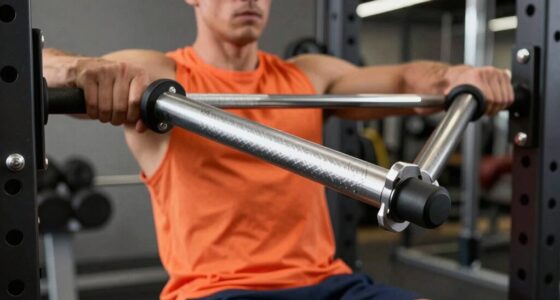

Core strength is key to your home workouts because it supports almost every movement and activity you do. By enhancing stability, it reduces your risk of injury and helps maintain balance during exercises. Strong core muscles also improve posture, which can alleviate back pain and boost your confidence. Plus, prioritizing core engagement makes your workouts more effective and efficient. Want to discover even more benefits and tips for maximizing your core strength?
Key Takeaways
- Core strength supports stability and balance, essential for effective home workouts without gym equipment.
- Strong core muscles enhance posture, reducing the risk of back pain during exercises.
- Engaging the core in various movements maximizes efficiency, leading to better workout results in less time.
- A strong core improves overall functional fitness, aiding daily activities and reducing injury risk.
- Prioritizing core strength establishes a solid foundation for a well-rounded fitness regimen, enhancing overall performance.

When you think about fitness, core strength often takes a backseat, but it’s essential for overall stability and performance. Your core isn’t just about those coveted six-pack abs; it’s the powerhouse that supports nearly every movement you make. Whether you’re lifting weights, doing yoga, or simply going about your daily activities, a strong core helps maintain balance and stability, reducing the risk of injury. In home workouts, you can’t afford to overlook this critical aspect.
Core strength is vital for stability and performance, supporting every movement and reducing injury risk in workouts.
Integrating core exercises into your routine can help you achieve better posture correction. Many people struggle with poor posture from sitting for long periods or improper lifting techniques. By focusing on your core, you can strengthen the muscles that support your spine, encouraging a more upright position. Imagine how much easier it’ll be to sit at your desk or perform daily tasks without that nagging back pain. Maintaining good posture not only makes you feel better physically, but it also boosts your confidence.
Balance training is another essential element of core strength. When you engage your core, you’re not just working out those abdominal muscles; you’re also enhancing your body’s ability to stabilize itself. This is especially important in home workouts, where you might not have access to gym equipment. Simple exercises like planks, bird-dogs, and side lunges can greatly improve your balance. You’ll notice that as your core gets stronger, everyday movements become more fluid and controlled.
Another benefit of focusing on core strength during home workouts is the efficiency it brings. You can combine core exercises with other movements to maximize your workout time. For instance, incorporating a plank into a push-up routine not only targets your upper body but also engages your core, allowing you to work multiple muscle groups simultaneously. This approach saves you time while also ensuring you’re getting a complete workout.
Ultimately, prioritizing core strength in your home workouts pays off in more ways than one. You’ll find that your overall fitness improves, your workouts become more effective, and you can move through your daily life with greater ease. Additionally, cultivating better sleep habits can further enhance your recovery and performance during workouts. So, the next time you plan your home workout, don’t skimp on core exercises. They’re the foundation of a well-rounded fitness regimen, ensuring you’re stable, balanced, and ready to tackle whatever life throws your way.
As an affiliate, we earn on qualifying purchases.
Frequently Asked Questions
How Can I Measure My Core Strength Progress at Home?
You can measure your core strength progress at home by doing balance assessments like the plank or side plank. Start with a 30-second hold and gradually increase your time as your core endurance improves. Keep track of how long you can maintain these positions. You can also try exercises like bicycle crunches or leg raises, noting the number of repetitions you can complete without losing form. Regularly reassess to see your progress!
Are There Specific Exercises for Beginners to Build Core Strength?
You can start with beginner-friendly routines that include foundational exercises like planks, bird-dogs, and dead bugs. These moves engage multiple muscle groups, helping to strengthen your core effectively. Aim for three sets of 10-15 reps for each exercise, gradually increasing the duration for planks as you progress. Consistency is key, so incorporate these into your routine a few times a week, and you’ll notice improvements in no time!
Can Core Strength Improve My Posture During Daily Activities?
Strong core muscles can transform your posture like a superhero’s cape. When you build your core strength, you’ll notice posture improvement during everyday activities, from sitting at your desk to walking. This foundation stabilizes your spine, reduces strain, and helps you stand tall. Plus, better posture can lead to less back pain and increased confidence. So, as you strengthen your core, you’re reaping incredible daily activity benefits that enhance your overall well-being!
What Are Common Mistakes to Avoid in Core Workouts?
To avoid common mistakes in core workouts, focus on core engagement and maintaining proper form. Don’t let your back arch or round during exercises; instead, keep a neutral spine. Avoid rushing through reps; control your movements for better results. Also, steer clear of overtraining your abs without balancing other muscle groups. Eventually, listen to your body; if you feel pain, it’s a sign to reassess your technique or take a break.
How Often Should I Train My Core for Best Results?
You should train your core about three to four times a week for the best results. This frequency helps build core stability, which is vital for overall strength and balance. Mix in different exercises to target all muscle groups, keeping your routine fresh. Remember, consistency is key, but don’t overdo it—rest is essential for injury prevention. Listen to your body, and adjust your training as needed to maximize your gains.
As an affiliate, we earn on qualifying purchases.
Conclusion
Incorporating core strength into your home workouts isn’t just beneficial; it’s essential for maximizing your fitness results. When you build a strong core, you enhance stability, improve posture, and boost overall performance in every exercise. Plus, a solid core helps prevent injuries, making your workouts safer and more enjoyable. So, if you want to elevate your home fitness routine, focus on those core-strengthening exercises. You’ll see the difference, and you’ll love the results!
As an affiliate, we earn on qualifying purchases.
As an affiliate, we earn on qualifying purchases.