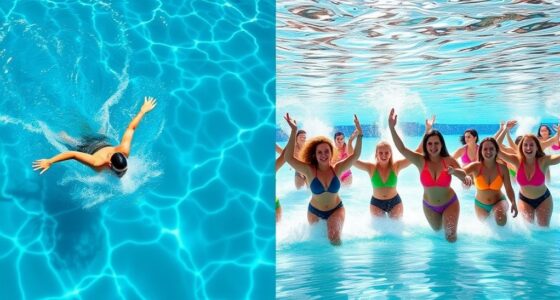

Freestyle swimming burns more calories than breaststroke because it involves faster, more vigorous movements that engage multiple muscle groups. You’ll cover more distance in less time with freestyle, giving you a higher calorie burn per minute. Breaststroke, on the other hand, offers a steady, controlled pace ideal for beginners and endurance. To discover how to maximize your workout and target different goals, keep exploring the benefits of each stroke and how they fit into your routine.

Get workout gear delivered free with Prime
- Fast, free delivery on millions of items
- Prime Video, Amazon Music and more included
- Member-only deals all year
Key Takeaways
- Freestyle burns more calories per minute due to its faster, vigorous, and streamlined movements.
- Breaststroke is slower and less intense, resulting in lower calorie expenditure per minute.
- Both strokes can increase calorie burn with higher intensity or longer duration.
- Freestyle’s focus on cardio makes it more effective for calorie burning in less time.
- Incorporating both strokes balances effort and maximizes overall calorie expenditure.
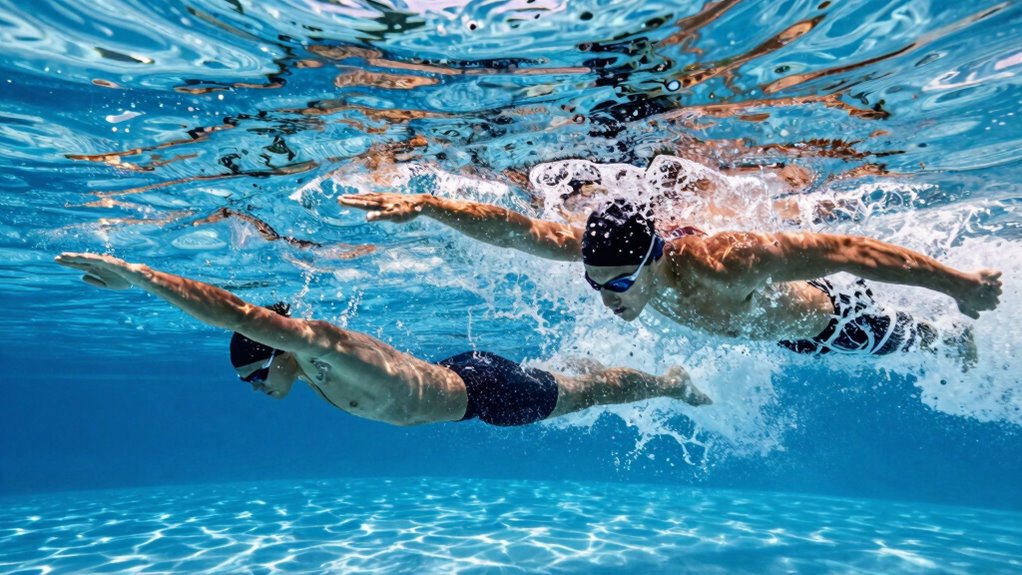
Are you curious about how freestyle and breaststroke compare in the pool? When it comes to swimming techniques, these two strokes are among the most popular, but they also differ notably in how they impact your calorie burn. Understanding the calorie comparison between freestyle and breaststroke can help you tailor your workout to meet your fitness goals more efficiently.
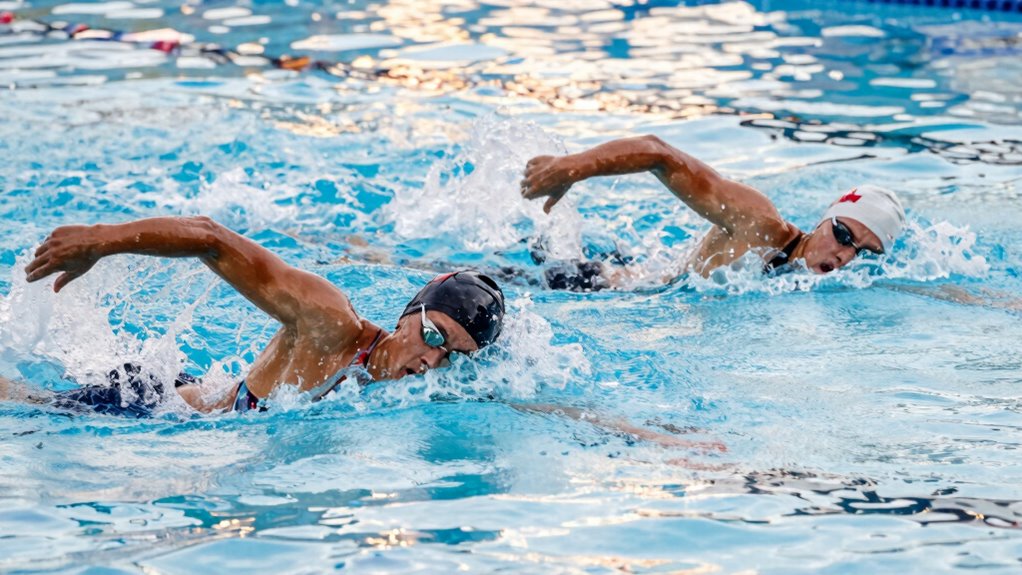
Freestyle, also known as front crawl, is generally faster and more streamlined. It involves alternating arm movements and a flutter kick, which allows you to glide smoothly through the water. Because of its efficiency and speed, freestyle tends to burn more calories per minute than many other strokes, especially if you’re swimming at a vigorous pace. The continuous, rhythmic nature of freestyle makes it ideal for cardio-focused workouts, and because you can cover more distance in less time, you tend to burn more calories overall during a session. Plus, the emphasis on active arm movements and high-intensity kicks engages multiple muscle groups, boosting your overall calorie expenditure.
Freestyle burns more calories per minute due to its efficiency and vigorous, full-body movements.
Breaststroke, on the other hand, is often perceived as more relaxed and easier to learn, making it popular for beginners. It involves a simultaneous arm pull and a frog-like kick, which is less intense but requires more deliberate effort to maintain proper form. While it’s less aerobic than freestyle at a high pace, breaststroke still offers a solid calorie burn, especially if you increase your intensity or duration. Because the stroke is slower and more controlled, you tend to burn fewer calories per minute compared to freestyle, but it’s still effective for building endurance and muscle tone. The distinct swimming techniques involved in breaststroke also target different muscle groups, such as the chest, shoulders, and inner thighs, giving you an all-encompassing workout. Incorporating variety in your swimming routine can help prevent plateaus and keep your workouts engaging.
In terms of calorie comparison, if your main goal is maximizing calorie burn in the shortest amount of time, freestyle generally wins out. Its faster pace and vigorous swimming techniques allow you to torch more calories during your workout. However, if you prefer a lower-impact, steady-paced swim that still burns calories and improves muscular endurance, breaststroke is a great choice. Incorporating both strokes into your routine can keep your workouts balanced, helping you enjoy the benefits of each while effectively working towards your calorie-burning goals. Additionally, understanding emerging trends in digital publishing can help you find innovative ways to track and analyze your swimming progress more effectively.
swimming fins for freestyle training
As an affiliate, we earn on qualifying purchases.
As an affiliate, we earn on qualifying purchases.
Frequently Asked Questions
Which Stroke Is Better for Building Upper Body Strength?
Freestyle is better for building upper body strength because it emphasizes stroke efficiency and engages your arms, shoulders, and back more intensely. As you swim, you improve your upper body endurance by continuously using these muscles. The quick, dynamic movements of freestyle help develop strength faster than breaststroke, which relies more on leg power. To maximize upper body gains, focus on proper technique and consistent practice in freestyle.
How Does Water Temperature Affect Calories Burned?
You burn more calories in colder water because your body works harder to maintain its core temperature, increasing energy expenditure. Water density makes cooling or warming difficult, so temperature regulation becomes essential. When water is colder, your body uses more calories to stay warm, boosting overall calorie burn during your swim. Conversely, warmer water reduces this effort, meaning you burn fewer calories, even though your workout remains effective.
Do Swimming Skills Influence Calorie Expenditure?
Your swimming skills considerably influence calorie expenditure. Better skills improve your hydrodynamic efficiency, allowing you to glide more smoothly through water. This efficiency lets you maintain a faster swimming pace with less effort, increasing calories burned. Conversely, less skilled swimmers may struggle against water resistance, reducing intensity and calorie burn. Improving your technique helps you swim more efficiently, making every stroke count toward greater calorie expenditure.
Can Breathing Techniques Impact Calorie Burn?
Breathing techniques are like a fuel boost for your workout, directly impacting your calorie burn. When you focus on improving breathing efficiency and expanding your lung capacity, you supply your muscles with more oxygen, allowing you to swim longer and harder. This increased oxygen intake helps you burn more calories, making your swim more effective. So, mastering your breathing not only calms your mind but also supercharges your calorie-burning potential.
How Does Body Weight Affect Calorie Burn in Swimming?
Your body weight considerably affects calorie burn in swimming, as heavier individuals tend to burn more calories due to increased effort. Hydrodynamics efficiency plays a role—if you have better technique, you minimize drag, making swimming more effective. Your body composition influence also matters; more muscle mass boosts calorie burn, while higher fat levels might reduce efficiency. Overall, your weight, technique, and body makeup all combine to determine how many calories you burn while swimming.
swimming kickboard for beginners
As an affiliate, we earn on qualifying purchases.
As an affiliate, we earn on qualifying purchases.
Conclusion
So, here’s the irony—despite all the debate, you might find yourself surprised that the stroke you thought was easier or more fun actually burns more calories. Whether you prefer the freestyle or breaststroke, the real winner is your fitness, not the technique. So go ahead, splurge on your favorite stroke. After all, who knew that swimming laps could be the most deliciously ironic way to torch calories while having a good time?
As an affiliate, we earn on qualifying purchases.
As an affiliate, we earn on qualifying purchases.
Evergreen bestsellers Picks
bestsellers
As an affiliate, we earn on qualifying purchases.