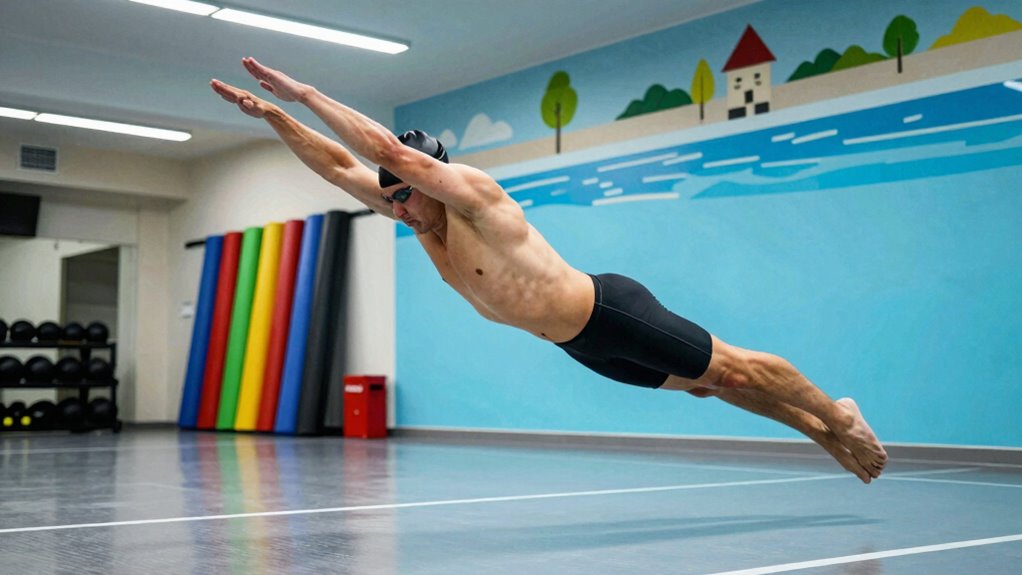
Incorporating dryland exercises into your routine can markedly boost your swimming performance by strengthening muscles, improving endurance, and enhancing breath control. Focus on activities that target core stability, respiratory muscles, and overall strength through exercises like diaphragmatic breathing, pursed-lip drills, and resistance training. These off-water practices help refine skills that are tough to isolate in the pool and build a solid foundation for endurance and power. Keep exploring to discover the best routines for your progress.
Key Takeaways
- Incorporate core stability and strength exercises like planks and Russian twists to enhance swimming power and stability.
- Use breath control drills such as diaphragmatic breathing and breath holds to boost lung capacity and endurance.
- Include resistance training targeting major muscle groups to improve overall strength and injury prevention.
- Perform flexibility and mobility exercises to increase range of motion and reduce injury risk during swimming.
- Combine dryland cardio and interval workouts to build cardiovascular endurance and simulate race pace efforts.
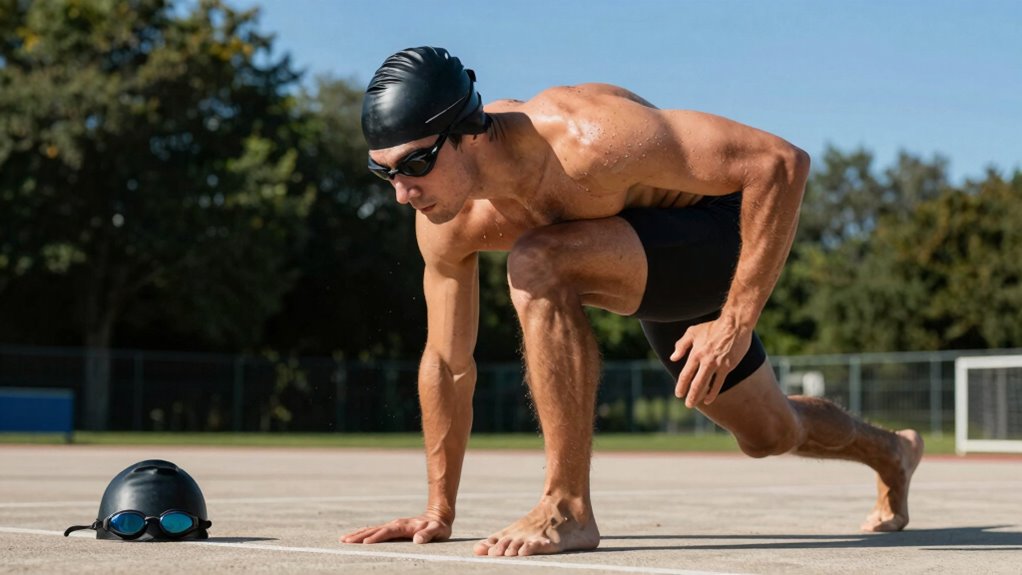
Improving your swimming performance isn’t just about practicing in the water; incorporating targeted dryland exercises can make a significant difference. When you focus on enhancing your breath control and core stability, you create a solid foundation that translates directly into better endurance, efficiency, and power during your swims. Dryland training allows you to work on these critical areas outside the pool, giving you the opportunity to refine skills that are harder to isolate while in the water.
Breath control is essential for maintaining a steady rhythm and conserving energy during extended swims. When you practice breathing exercises on dry land, you learn to control your breath more consciously and efficiently. Techniques like diaphragmatic breathing or controlled inhalation and exhalation can help strengthen your respiratory muscles, making it easier to take in oxygen and release carbon dioxide. This improvement in breath control not only boosts your stamina but also reduces the fatigue that often arises from poor breathing patterns underwater. Incorporating breathing drills, such as breath holds or pursed-lip breathing, into your routine can enhance your lung capacity and help you stay relaxed even during intense sets. Additionally, focusing on proper technique during these exercises ensures you maximize their effectiveness and develop sustainable breathing habits. Developing muscle strength through targeted dryland workouts can also improve your overall swimming power and reduce injury risk. Recognizing the importance of exercise outside the water in complementing your swim training can lead to more comprehensive performance improvements. Building muscular endurance with specific exercises can further enhance your ability to sustain effort over longer distances.

5-Level Resistance Bands for Working Out, Pull Up Assistance Bands
- High-Quality Elastic Material: Made of durable, non-slip TPE material
- Full Body Muscle Training: Offers 5-125 LBS resistance for comprehensive workouts
- Versatile Exercise Support: Ideal for pull-ups, squats, push-ups, and more
As an affiliate, we earn on qualifying purchases.
As an affiliate, we earn on qualifying purchases.
Frequently Asked Questions
How Often Should I Do Dryland Exercises Each Week?
You should do dryland exercises about three to four times a week for ideal training frequency. This schedule helps build strength and endurance without overtraining, reducing your risk of injury. Make sure to incorporate rest days to allow recovery and prevent burnout. Consistent, moderate sessions enhance your swimming performance and promote injury prevention, so stick to this routine and listen to your body’s signals for the best results.
Can Dryland Exercises Prevent Swimming Injuries?
Think of dryland exercises as your personal bodyguard in the pool. They create a fortress of injury prevention by strengthening muscles and improving stability. When you build stronger muscles, you’re less likely to strain or hurt yourself during swims. Incorporating targeted muscle strengthening routines on dry land acts as a shield, reducing injury risk and helping you stay in the game longer and stronger.
Are There Specific Exercises for Different Swimming Strokes?
Yes, there are stroke-specific dryland exercises that target muscles used in each swimming stroke. For example, freestyle emphasizes shoulder and core strength, so you should focus on muscle targeting exercises like planks and shoulder presses. Butterfly requires powerful back and shoulder muscles, so incorporate pull-ups and back extensions. Tailoring your workout to each stroke helps improve performance and reduces injury risk by strengthening the relevant muscle groups effectively.
How Long Before Competitions Should I Start Dryland Training?
You should start dryland training about 8 to 12 weeks before your competition. During this period, gradually increase training intensity to build strength and endurance. Incorporate effective recovery strategies like stretching and rest, as they help prevent injuries and optimize performance. Remember, consistent training over this timeframe allows your muscles to adapt and peak precisely when you need them most, giving you a competitive edge in the water.
Do Dryland Exercises Improve Breathing Efficiency in Swimming?
Yes, dryland exercises can improve your breathing efficiency in swimming. They enhance your breathing mechanics by strengthening the muscles involved in respiration, like your diaphragm and intercostal muscles. Additionally, these exercises can increase lung capacity, allowing you to take deeper breaths and sustain oxygen flow longer during swims. As a result, you’ll find yourself more relaxed and efficient in the water, ultimately boosting your overall performance.
core stability exercise equipment
As an affiliate, we earn on qualifying purchases.
As an affiliate, we earn on qualifying purchases.
Conclusion
By blending bold, body-building drills with dedicated dryland dedication, you’ll develop the drive, dynamism, and determination needed to dominate the water. Consistent, focused effort fuels your fitness, fortifies your focus, and fuels your future feats. So, start sparking your strength today—strengthen, stretch, and soar in the swim. With unwavering willpower and wise workouts, you’ll water your way to winning with unwavering will. Watch your waves widen and your wins grow!
As an affiliate, we earn on qualifying purchases.
As an affiliate, we earn on qualifying purchases.