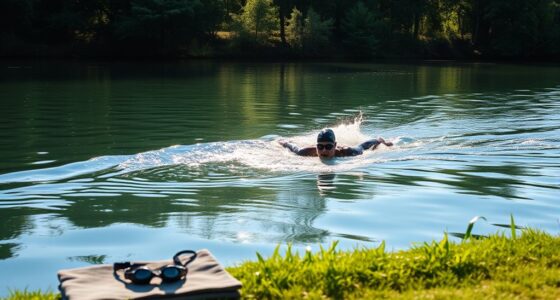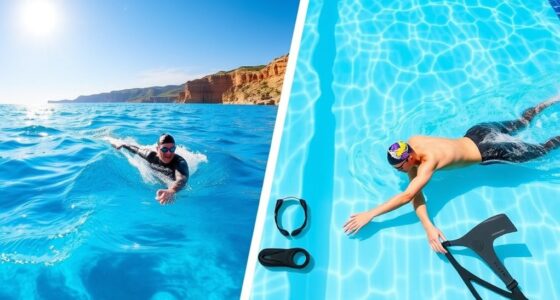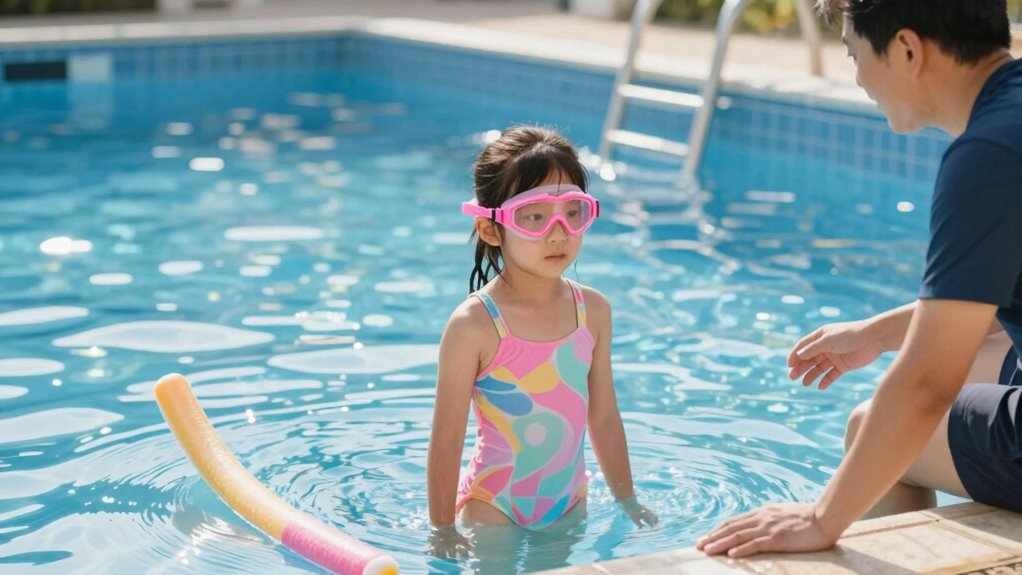

To overcome your fear of water and learn to swim, start by gradually getting comfortable near water—sit, dip your toes, or stand in shallow areas. Practice breathing exercises and focus on feeling safe and in control. Master basic skills like floating and treading water with patience, celebrating small wins along the way. Stay positive and consistent, and you’ll build confidence over time. Keep going, and you’ll find yourself more comfortable and confident in the water.

Get workout gear delivered free with Prime
- Fast, free delivery on millions of items
- Prime Video, Amazon Music and more included
- Member-only deals all year
Key Takeaways
- Gradually introduce yourself to water by sitting, dipping toes, or standing in shallow areas to build trust and comfort.
- Practice controlled breathing and safety techniques to stay calm and manage panic in aquatic environments.
- Master basic skills like floating and treading water slowly to increase confidence and reduce fear.
- Celebrate small achievements and practice regularly for consistent progress and increased water familiarity.
- Maintain a positive mindset, use educational resources, and be patient throughout your learning journey.
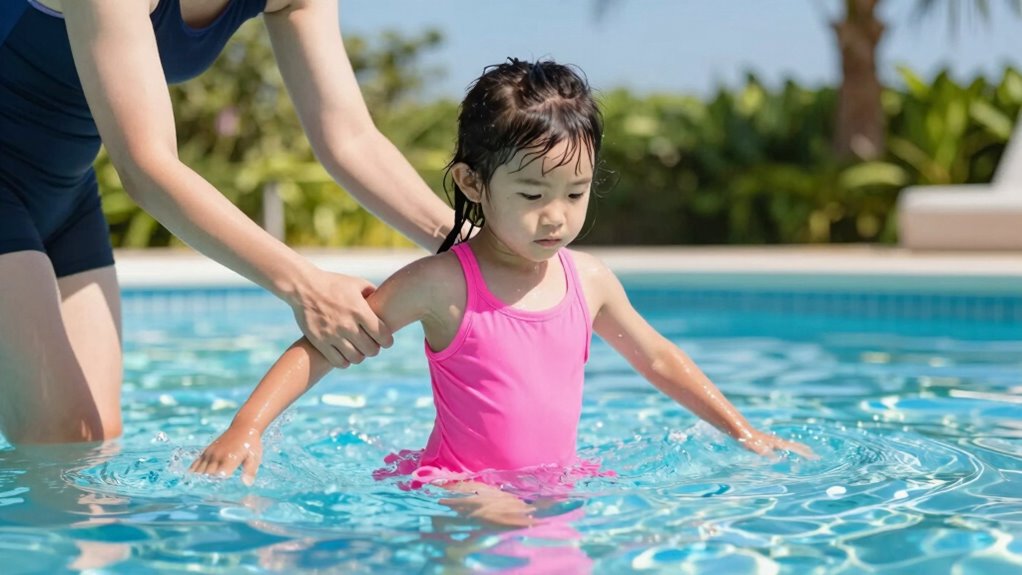
Many people feel anxious or afraid of water, but overcoming this fear is entirely possible with patience and the right approach. Your journey begins by understanding that water safety is vital. Before jumping into swimming techniques, you need to build trust in the water and learn how to stay safe. Start by getting comfortable around water—sit by the pool, dip your toes in, or stand in shallow areas. This helps you gradually reduce anxiety and develop confidence. Remember, feeling safe and in control is key to overcoming fear.
Building trust in water is the first step to overcoming fear and gaining confidence.
Once you feel more at ease, focus on water safety. Knowing how to handle yourself in water reduces fear and increases your confidence. Practice breathing exercises to stay calm and learn to relax when submerged. Even simple breathing drills can help you manage panic if it arises. When you’re ready, consider working with a qualified instructor who emphasizes water safety and teaches swimming techniques step by step. They can guide you through floating, treading water, and proper breathing methods, all of which are essential skills for safe swimming.
As you become more comfortable, start practicing basic swimming techniques. Don’t rush; mastering floating and kicking is a good foundation. These skills help you stay afloat and conserve energy. When practicing, keep your movements smooth and controlled—avoid sudden or jerky motions that might increase anxiety. Focus on slow, deliberate movements, and always listen to your body. If you feel overwhelmed, pause, breathe deeply, and return to a comfortable position. Over time, these controlled movements will help you build both skill and confidence.
It’s important to remember that overcoming fear takes time. Celebrate small victories, like submerging your face in water or floating on your back. These are significant steps toward feeling more secure in the water. Consistency is key—practice regularly, but also be patient with yourself. Don’t push too hard; instead, gradually increase your comfort level. Developing water confidence is a gradual process that involves both mental and physical preparation. Understanding water safety and implementing proper techniques can significantly reduce anxiety and foster trust in the water. Incorporating educational resources, such as instructional videos or books, can also be very helpful in building your knowledge and easing your concerns.
Keep positive, stay patient, and trust the process. With each session, you’ll become more confident and capable in the water. It’s not just about learning to swim; it’s about transforming fear into confidence and enjoying the freedom water provides. Remember, everyone’s journey is different, but persistence and a focus on safety and technique will get you there.
beginner swimming floatation devices
As an affiliate, we earn on qualifying purchases.
As an affiliate, we earn on qualifying purchases.
Frequently Asked Questions
Can Adults Successfully Learn to Swim if Afraid of Water?
Yes, adults can successfully learn to swim despite being afraid of water. With proper water safety practices and gradual exposure, you can build confidence. Focus on anxiety management techniques like deep breathing and positive visualization. Taking small steps, such as floating or submerging your face, helps you feel more comfortable. Consistent practice and patience allow you to overcome fear, making swimming a safe and enjoyable activity.
How Long Does It Typically Take to Overcome Water Fear?
The journey to aquatic confidence varies, but typically, it takes a few weeks to several months. Think of fear management as planting seeds—consistent practice nurtures gradual growth. With dedicated effort, you’ll see progress that feels like breaking through barriers. Your fear of water diminishes as you gain skills and trust, transforming anxiety into calm. Remember, patience is key; perseverance turns water fears into confidence over time.
Are There Specific Mental Exercises to Reduce Water Anxiety?
You can reduce water anxiety with specific mental exercises like visualization techniques and breathing exercises. Visualize yourself feeling calm and confident in the water, which helps reframe your mindset. Practice deep, slow breathing to manage panic and relax your body. These exercises build mental resilience, making it easier to face water fears gradually. Integrate them into your daily routine to reinforce a sense of control and comfort around water.
What Are Common Mistakes Beginners Make When Learning to Swim?
Don’t let common mistakes sink your progress. You might forget to focus on breathing techniques, causing panic or fatigue. Many beginners try to rush, skipping confidence-building exercises, which stalls their learning. Instead, take steady breaths and build confidence gradually. Remember, swimming is about control, not speed. By consciously practicing breath control and celebrating small wins, you’ll find yourself gliding through water with ease, turning mistakes into stepping stones toward mastery.
Is It Necessary to Have Prior Swimming Experience to Start Overcoming Water Fear?
You don’t need prior swimming experience to start overcoming water fear. Focus on water safety, which builds confidence, and use proper swimming gear like goggles and floatation devices to feel secure. Taking small, gradual steps in a comfortable environment helps you get used to water. Remember, patience is key—you’ll develop trust in your abilities as you practice consistently, making swimming an enjoyable and safe activity.
As an affiliate, we earn on qualifying purchases.
Conclusion
Just like Icarus yearned to soar above the sea, your journey to conquer water fear begins with a single brave step. Remember, every swimmer was once a beginner, hesitant and unsure. Embrace each lesson with patience and courage, trusting that the water’s embrace can become your sanctuary. With persistence, you’ll find yourself swimming freely, rewriting your story from fear to freedom—proof that even the deepest waters can become your home.
As an affiliate, we earn on qualifying purchases.
water breathing exercises for beginners
As an affiliate, we earn on qualifying purchases.
As an affiliate, we earn on qualifying purchases.
Fall Picks
fall essentials
As an affiliate, we earn on qualifying purchases.