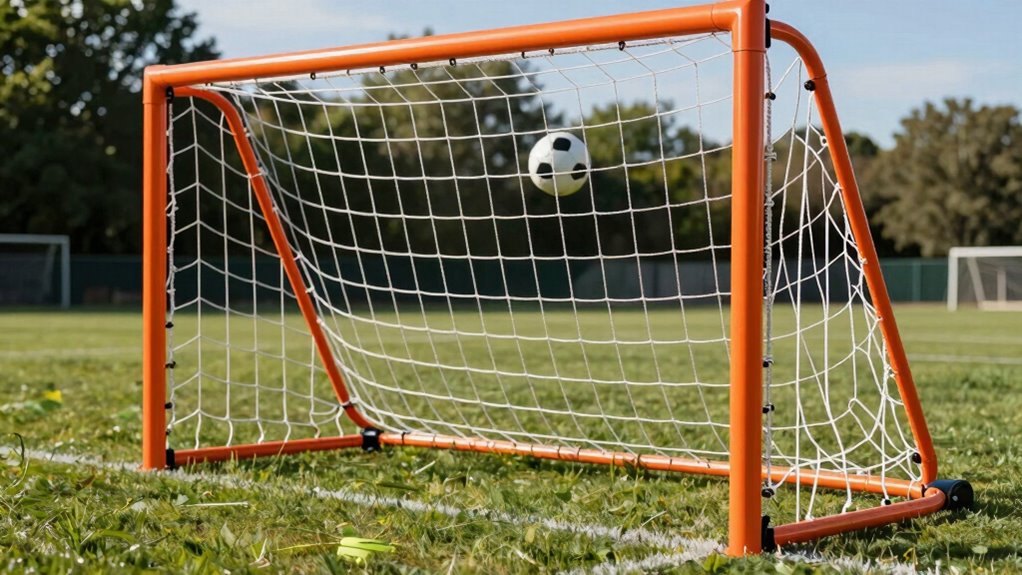
If you’re looking to improve your soccer skills solo, a rebounder is perfect because it offers quick, consistent ball returns that simulate real-game situations. You can work on control, footwork, and dribbling without a partner, making practice more engaging and effective. Setting it up properly and choosing the right environment maximizes your progress. Keep exploring to discover how the right techniques and setup can make your training even more successful.
Key Takeaways
- Enable realistic, consistent ball returns for effective solo training without a partner.
- Improve control, footwork, and muscle memory through various drills and targeted practice.
- Allow adjustable angles and settings to simulate different game scenarios and challenges.
- Create a safe, stable training environment that enhances focus and skill development.
- Transform solo practice into an engaging, efficient workout that accelerates progress.
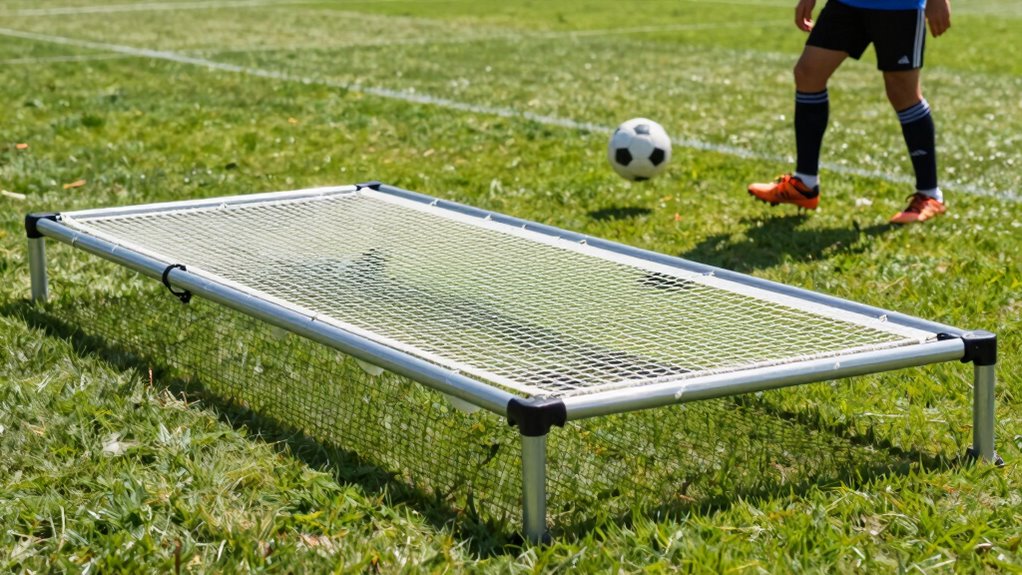
Practicing soccer alone can be challenging without the right equipment, but a soccer rebounder makes solo drills more effective and engaging. When you’re working on your dribbling techniques, having a rebounder helps simulate real-game scenarios by returning the ball quickly and consistently. It’s a handy tool that allows you to focus on your control, improve your footwork, and build muscle memory without needing a partner. With a rebounder, you can practice various drills—whether it’s quick touches, tight ball control, or weaving through cones—while maintaining a steady rhythm. The key to maximizing its benefits is understanding rebounder setup tips, which guarantee you get the most out of each session.
Getting your rebounder set up properly is essential for effective solo practice. First, choose a flat, open space where the rebounder can bounce the ball back to you without obstacles. Securely anchoring it to the ground or using a sturdy frame prevents unwanted movement during your drills. When setting up, adjust the angle of the rebounder if possible, to simulate different ball trajectories—this challenges your control and reaction time. Keep in mind that a slightly inclined rebounder can mimic bouncing passes or uneven surfaces, adding variety to your practice. Additionally, understanding the importance of rebounder setup ensures you can customize your training for optimal results. Incorporating the right training environment is also crucial, as it influences your focus and safety during drills. Being aware of the surface conditions can also help prevent injuries and improve your overall training experience.
As you refine your dribbling techniques, focus on controlling the ball with different parts of your foot—inside, outside, sole—and varying your speed. The rebounder helps you develop a sense of touch and precision, especially when you aim for specific spots on the rebounder’s surface. By practicing consistently, you’ll notice improvements in your ability to keep the ball close and maneuver through tight spaces.
Incorporating rebounder setup tips into your routine also means paying attention to your body positioning. Stand slightly sideways for better control, and keep your knees bent to stay agile. Use the rebounder to simulate game-like situations by practicing quick passes, receiving, and dribbling in rapid succession. Over time, these drills will boost your confidence and improve your overall ball-handling skills.
Ultimately, a soccer rebounder is a versatile tool that transforms solo practice into a dynamic workout. When you master proper setup tips and focus on key dribbling techniques, you create an effective training environment that accelerates your development, all while enjoying the independence of practicing on your own.
soccer rebounder for solo practice
As an affiliate, we earn on qualifying purchases.
As an affiliate, we earn on qualifying purchases.
Frequently Asked Questions
How Long Does It Take to See Improvement Using a Rebounder?
You can start noticing improvement in your skills within a few weeks of consistent training with a rebounder. Regular practice boosts your confidence, sharpens your technique, and enhances coordination. Training consistency is key to faster progress, and using a rebounder also helps prevent injuries by allowing controlled, repetitive drills. Keep practicing daily or several times a week, and you’ll see your ball control and reaction time improve steadily over time.
Can Rebounders Be Used for All Skill Levels?
Yes, rebounders suit all skill levels. For example, a beginner might focus on basic passing, while an advanced player works on mastering advanced techniques like quick footwork. You can customize the equipment to challenge yourself appropriately, adjusting angles or rebound speed. This flexibility makes rebounders perfect for everyone, as you can tailor your practice sessions to your current skill level and gradually increase difficulty as you improve.
What Safety Precautions Should I Follow During Solo Practice?
During solo practice, you should always wear protective gear like shin guards and appropriate footwear to prevent injuries. Make sure your practice area is clear of obstacles and has enough space to move safely around the rebounder. Check the rebounder’s stability before each session to avoid accidents. Staying alert and focused helps you avoid falls or collisions, ensuring a safe, effective practice session every time.
Are There Specific Rebounder Models for Different Soccer Positions?
Yes, there are rebounder models designed for different soccer positions. You can find rebounders that support position-specific drills, helping you improve skills like shooting, passing, or goalkeeping. Some rebounders even offer customization options, allowing you to tailor the bounce and rebound angles to target specific techniques. By choosing a model suited for your position, you can optimize your solo practice sessions and develop your abilities more effectively.
How Do I Maintain and Clean My Soccer Rebounder?
To keep your soccer rebounder in top shape, perform regular rebounder maintenance by inspecting for tears or loose parts. For cleaning techniques, wipe down the surface with a damp cloth and mild soap after each use to remove dirt and debris. Avoid harsh chemicals that could damage the material. Storing it in a dry place when not in use also prolongs its lifespan, ensuring consistent performance during your solo practice sessions.
As an affiliate, we earn on qualifying purchases.
Conclusion
In the end, soccer rebounders are a game-changer for solo practice. They let you hone your skills anytime, rain or shine, making sure you’re always ready to step up your game. With consistent use, you’ll see your control and accuracy improve faster than you might expect. Remember, practice makes perfect — and with a rebounder in your arsenal, you’re well on your way to knocking it out of the park. Keep at it, and success will be within your grasp!
soccer rebounder training equipment
As an affiliate, we earn on qualifying purchases.
As an affiliate, we earn on qualifying purchases.
soccer rebounder with stable frame
As an affiliate, we earn on qualifying purchases.
As an affiliate, we earn on qualifying purchases.