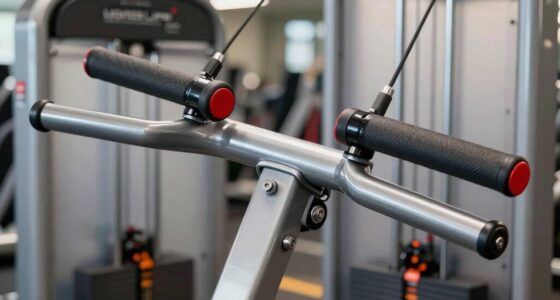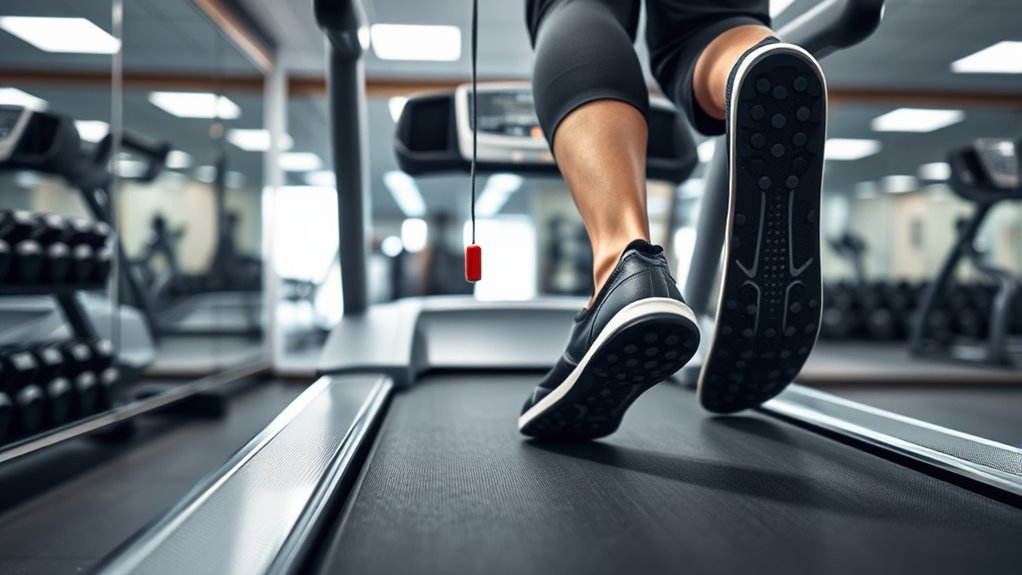

To prevent treadmill injuries, always start with a proper warm-up that includes light stretching and gradual movement increases. Use correct technique by maintaining good posture, centered foot placement, and a natural stride, while relaxing your arms. Adjust settings carefully, check safety features like emergency stops, and inspect the equipment regularly. Pay attention to signs of fatigue or discomfort, stop if needed, stay hydrated, and listen to your body’s signals. Keep these tips in mind to stay safe and effective—and more helpful advice awaits you.

Get workout gear delivered free — and shop member deals
- Fast, free delivery on millions of items
- Access to Prime Big Deal Days deals on October 6–7
- Prime Video, Amazon Music and more included
Key Takeaways
- Always warm up and cool down with stretching and light activity to prepare muscles and prevent strains.
- Maintain proper treadmill form by staying centered, upright, and using natural stride and arm movements.
- Familiarize yourself with emergency stop features and regularly inspect safety components for proper functioning.
- Adjust speed and incline gradually to avoid sudden jolts or strain, and ensure equipment is properly calibrated.
- Listen to your body; stop immediately if you experience discomfort, dizziness, or fatigue, and stay hydrated throughout.
As an affiliate, we earn on qualifying purchases.
Proper Warm-Up and Cool-Down Procedures
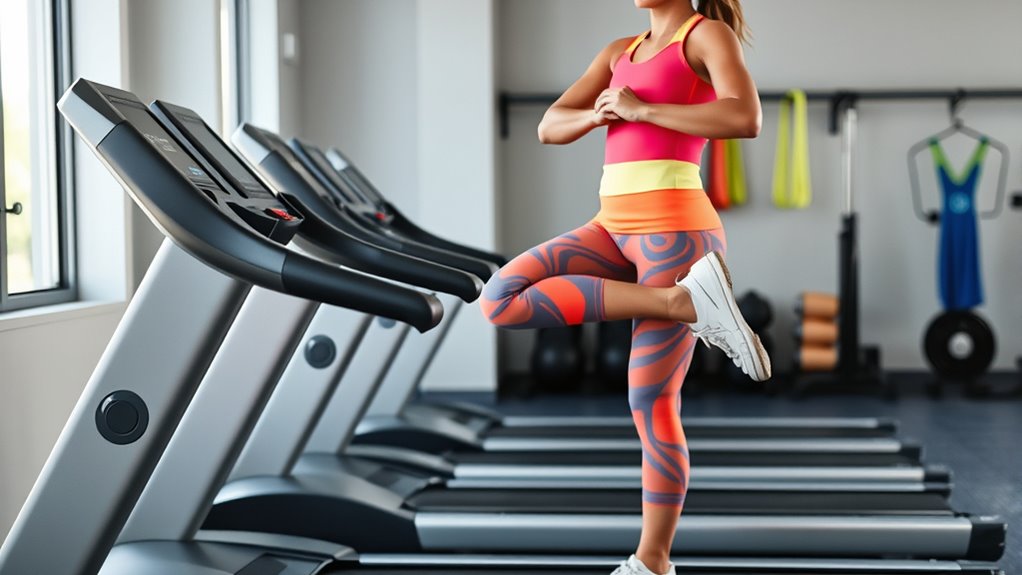
Before starting your treadmill workout, preparing adequately to warm up properly is vital to prepare your muscles and reduce the risk of injury. Begin with light stretching exercises to loosen tight muscles and increase flexibility. Focus on areas like your hamstrings, calves, and hips to improve your range of motion. Don’t forget hydration tips—drink a few sips of water before you start to stay hydrated during your exercise. Proper warm-up increases blood flow, warms your muscles, and prepares your body for more intense activity. Additionally, incorporating muscle activation techniques can enhance your warm-up by engaging your muscles more effectively. Engaging in dynamic movements can further improve your readiness and reduce injury risk. Incorporating gradual intensity increases into your warm-up can help your body adapt smoothly to higher levels of exertion. To optimize your recovery, consider including post-exercise stretching to help relax your muscles and prevent stiffness. Staying hydrated throughout your session also aids recovery and keeps your body functioning efficiently. Incorporating proper warm-up routines based on your activity level can further help prevent injuries and improve performance. These steps set a safe foundation for your treadmill routine.
As an affiliate, we earn on qualifying purchases.
Correct Treadmill Usage and Technique

To guarantee a safe and effective treadmill workout, it’s essential to use the machine correctly and maintain proper technique. Start by paying attention to your foot placement; keep your feet centered on the belt to prevent imbalance and reduce strain. Avoid overstriding, which can lead to joint pain or injury, by keeping your stride length natural and comfortable. Maintain an upright posture, engaging your core and avoiding leaning forward or backward. Keep your arms relaxed and swing them naturally, avoiding excessive arm movement that can throw off your balance. Focus on a steady cadence, and don’t rush your pace. Incorporating smart appliance technology can help monitor your form and provide real-time feedback. Additionally, understanding power tool safety guidelines can help you stay alert and prevent accidental missteps during your workout. Being aware of equipment maintenance practices is also crucial to ensure your treadmill remains safe and functional over time. Regularly inspecting the treadmill’s belt alignment and lubricating moving parts can prevent malfunctions and extend its lifespan. Paying attention to user manual instructions can further enhance safety and proper usage. By following these tips, you can minimize injury risk and maximize the benefits of your workout. Proper technique ensures safety and helps you achieve your fitness goals effectively.
As an affiliate, we earn on qualifying purchases.
Adjusting Settings and Equipment Safety Features

Adjusting your treadmill’s settings correctly is essential for a safe workout. Properly calibrate the speed to ensure it matches your pace, preventing sudden jolts or falls. Familiarize yourself with the emergency stop feature; knowing how to activate it quickly can prevent injuries. Before starting, check that the safety key is securely attached. Regularly inspect the console for accurate readings and responsiveness. Adjust the incline gradually to avoid strain. Ensure all safety features, like handrails and grips, are secure and functioning. Remember to test the emergency stop button during your warm-up to confirm it works smoothly. Being attentive to these adjustments helps maintain control and safety throughout your workout, reducing the risk of accidents or equipment malfunction. Additionally, navigation and mapping features can help you understand your workout space better, enhancing overall safety during use. Checking the safety features of your equipment regularly can help identify potential issues before they lead to accidents. Incorporating proper maintenance routines ensures that all safety components remain in optimal condition, further minimizing risks. Regularly reviewing the user manual can also provide helpful tips on adjusting settings safely and effectively. Staying informed about global outages and how they might impact your equipment’s software can help prevent unexpected malfunctions.
As an affiliate, we earn on qualifying purchases.
Recognizing and Responding to Signs of Fatigue or Discomfort

Paying attention to your body’s signals during a treadmill workout is crucial for safety. If you notice signs of fatigue or discomfort, stop or slow down immediately. Hydration monitoring is necessary—drink water regularly to prevent dehydration, which can heighten fatigue. Pay attention to symptoms like dizziness, muscle weakness, or chest tightness. Clothing selection also matters; wear comfortable, moisture-wicking clothes that don’t restrict movement or cause overheating. Recognizing these signs early helps you respond promptly, reducing the risk of injury or health issues. Don’t push through pain or extreme tiredness. Instead, take a break, hydrate, and reassess your effort level. Listening to your body ensures a safer workout and helps you maintain consistency without risking harm. Being familiar with home renovation tools and their proper use can also help minimize the risk of accidents during your workouts or other physical activities. Additionally, understanding innovative European cloud servers can enhance your awareness of secure and energy-efficient technology solutions that support safer environments overall. Incorporating water-based exercises, such as aquatic therapy or water aerobics, can also be a beneficial way to reduce impact on joints while maintaining effective fitness routines. Maintaining proper body jewelry measurements and materials, especially when engaging in physical activity, can prevent discomfort and skin irritation, further promoting safety during exercise. Moreover, utilizing professional architectural services can help create safer and more ergonomic workout spaces at home or in commercial gyms.
Frequently Asked Questions
What Should I Do if the Treadmill Suddenly Stops During My Workout?
If the treadmill suddenly stops during your workout, stay calm and step off safely using the side rails. Engage the emergency stop button or safety key if available. Then, follow emergency procedures by reporting the issue to gym staff. Regular equipment maintenance helps prevent such incidents, so guarantee the treadmill is checked routinely. Always familiarize yourself with the equipment’s safety features to respond quickly and avoid injury.
How Often Should I Inspect the Treadmill for Safety Issues?
You should inspect your treadmill at least once a month for safety issues and perform daily maintenance checks. Daily, ensure the belt is centered, and listen for unusual noises. Monthly, check the bolts, screws, and electrical components for wear or loose parts. Regular inspections help catch problems early, preventing accidents and prolonging your treadmill’s lifespan. Make these routines part of your maintenance to keep your workouts safe and effective.
Are There Recommended Safety Gear or Accessories for Treadmill Use?
Think safety gear isn’t necessary? Think again. You should wear protective footwear to prevent slips and falls, and consider a safety harness if you’re doing intense or risky workouts. These accessories might seem excessive, but they’re your backup in case accidents happen. Prioritize your safety by using proper gear; it’s a small investment for peace of mind and injury prevention. After all, falling isn’t part of the plan, is it?
Can I Use a Treadmill if I Have Existing Joint Problems?
Yes, you can use a treadmill if you have joint problems, but prioritize your joint health. Start with low-impact exercises and consider modifications like walking instead of running. Use cushioning mats or supportive footwear to reduce impact. Always listen to your body and consult a healthcare professional beforehand. Incorporating gentle, joint-friendly routines helps prevent further damage and keeps you active safely.
What Are the Best Practices for Children and Seniors Using a Treadmill?
Wondering how to keep children and seniors safe on a treadmill? You should always supervise children closely, ensuring they stay within age-appropriate settings. For seniors, start at slow speeds and gradually increase intensity, paying close attention to comfort and balance. Keep the treadmill in a safe, accessible area, and remind users to focus on proper form. With these precautions, everyone can enjoy safe, effective workouts.
Conclusion
By following these safety tips, you’re steering your fitness journey with confidence and care. Think of the treadmill as a trusted partner—respect its signals and listen to your body’s whispers. When you warm up, cool down, and stay alert, you’re charting a path toward strength and resilience. Remember, safety isn’t just a rule; it’s the compass guiding you to a healthier, injury-free future. Keep moving wisely, and let your dedication be your guiding light.
Fall Picks
fall essentials
As an affiliate, we earn on qualifying purchases.