To change gears properly on a bike, anticipate terrain changes and shift gradually to avoid jerks or chain slipping. Use your shifters gently, easing up on pedal pressure during shifts, especially under load. Keep pedaling steadily and stay within the gear range limits to prevent damage. Understanding gear ratios helps you choose the right gear for the terrain, ensuring a smooth ride and preventing mechanical issues. Keep practicing these techniques, and you’ll master smooth gear shifts and ride confidently everywhere.

Get workout gear delivered free with Prime
- Fast, free delivery on millions of items
- Prime Video, Amazon Music and more included
- Member-only deals all year
Key Takeaways
- Anticipate terrain changes and shift to appropriate gears before starting to climb or descend.
- Pedal steadily and smoothly, easing pressure before shifting to prevent chain and derailleur strain.
- Shift gradually using gentle movements on shifters, avoiding abrupt or forceful gear changes.
- Keep within gear range limits to prevent damage and ensure smooth transitions.
- Regularly maintain and operate shifters gently for optimal gear performance and bike longevity.
Changing gears properly on a bike is essential for maintaining smooth progress and preventing damage to your drivetrain. When you shift gears correctly, you not only improve your riding efficiency but also extend the lifespan of your bike’s components. Good bike maintenance starts with understanding how and when to shift, which is vital for your riding safety. Incorrect gear changes can lead to chain slipping, excessive wear, or even accidents, especially if you’re steering tricky terrain or riding at high speeds.
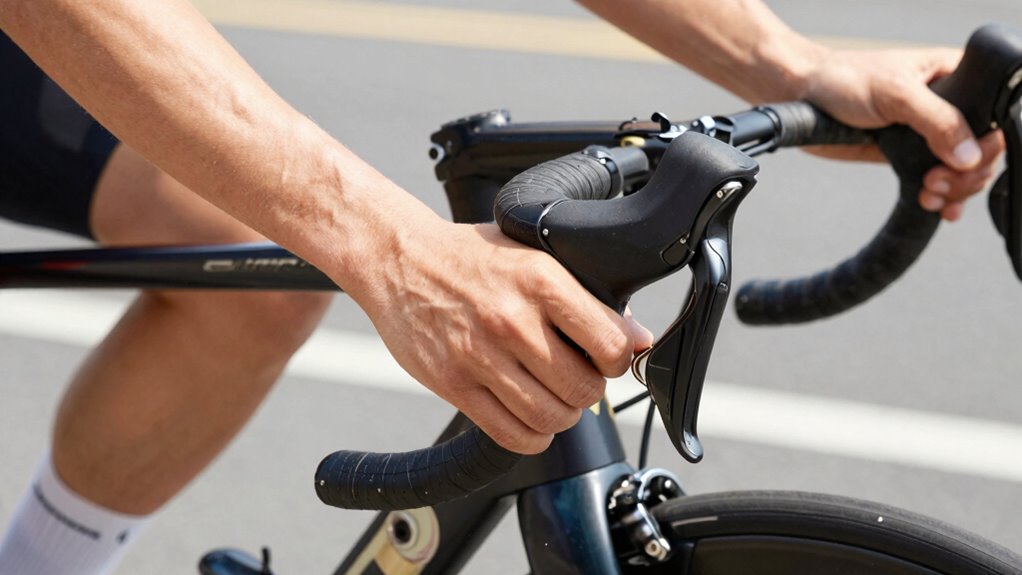
To shift gears effectively, you should anticipate changes in terrain and adjust your gears gradually. For example, when approaching a hill, shift to a lower gear before you start climbing. This prepares your muscles and keeps your pedaling smooth, preventing sudden jerks that could throw you off balance. Similarly, when descending or riding on flat terrain, shift to higher gears to maximize efficiency, but do so smoothly. Use your thumb or finger to operate the shifters gently, avoiding abrupt movements that might cause the chain to jump or drop.
It’s important to keep your pedaling steady and consistent when shifting. Avoid shifting under heavy load, such as when you’re pushing hard on the pedals; this puts unnecessary strain on the derailleur and chain, increasing the risk of mechanical issues and jeopardizing riding safety. Instead, ease up on the pressure just slightly, shift gears, and then resume your normal cadence. This practice not only preserves your bike’s drivetrain but also guarantees smoother gear transitions.
Another key aspect is understanding the gear ratios and how they impact your riding. Lower gears make pedaling easier and are ideal for climbing or starting from a stop, while higher gears are suited for higher speeds on flat or downhill sections. Familiarize yourself with your bike’s gear system so you can shift confidently without second-guessing. Proper shifting also involves staying within the limits of your gear range; avoid forcing the chain onto gears that are not designed for your bike to prevent damage and maintain essential bike maintenance.
As an affiliate, we earn on qualifying purchases.
Frequently Asked Questions
How Do I Know When to Shift Gears?
You should shift gears when you feel resistance or your pedaling becomes harder or easier, indicating it’s time to adjust for better efficiency. Keep an eye on your bike’s gear indicators and listen to your engine’s sound, if applicable. Good gear maintenance guarantees smooth shifting, and paying attention to shift timing helps prevent chain wear and gear damage. Shift proactively before hills or when terrain changes to keep your ride smooth.
What Gear Should I Use for Climbing Hills?
Imagine you’re climbing a steep hill, like pushing through a thick forest. You should shift into a lower gear, making pedaling easier and smoother. Regular gear maintenance and adjustment keep your bike responsive, so you can smoothly switch gears as needed. Use your gears wisely—lower for hills, higher for flats—to conserve energy. Proper gear choice helps you conquer tough terrains effortlessly, turning the climb into a manageable adventure.
How Can I Prevent Chain Slipping During Shifting?
To prevent chain slipping during shifting, make certain your gear alignment is correct and your chain tension is appropriate. Check that the derailleur is properly adjusted, so the chain moves smoothly between gears. Keep the chain tight enough to avoid slack but not so tight that it causes resistance. Regularly clean and lubricate your chain, and shift gears slowly and steadily to allow the drivetrain to adjust properly, reducing the risk of slipping.
How Often Should I Lubricate My Gear Components?
You should lubricate your gear components every few hundred miles, or when you notice squeaking or sluggish shifting. Keep your gears well-aligned, and stick to a regular lubrication schedule—think of it as a spa day for your bike’s drivetrain. Over-lubricating can invite dirt and grime, so find that sweet spot. Proper gear alignment and timely lubrication keep your bike shifting smoothly, making every ride a joy, not a chore.
Can Improper Gear Shifting Damage My Bike?
Improper gear shifting can definitely damage your bike. If you force the gears or shift without proper bike maintenance, you risk damaging the derailleur or misaligning the chain. Always guarantee gear compatibility before shifting and avoid sudden changes. Proper technique and regular maintenance help prevent costly repairs and keep your bike running smoothly. By paying attention to gear operation, you extend your bike’s lifespan and enjoy safer, more efficient riding.
As an affiliate, we earn on qualifying purchases.
Conclusion
Mastering the art of shifting gears seamlessly boosts your biking experience. With patience, practice, and proper technique, you’ll soon find yourself shifting smoothly, saving stamina and enhancing speed. Remember, quick, quiet, and coordinated changes keep your ride reliable and enjoyable. So, stay steady, shift smartly, and savor every spin of the sprockets. Confidence in your cadence comes from consistent control—cultivate your cycling craft and conquer every course with clarity and class.
As an affiliate, we earn on qualifying purchases.
As an affiliate, we earn on qualifying purchases.
Halloween Picks
halloween
As an affiliate, we earn on qualifying purchases.