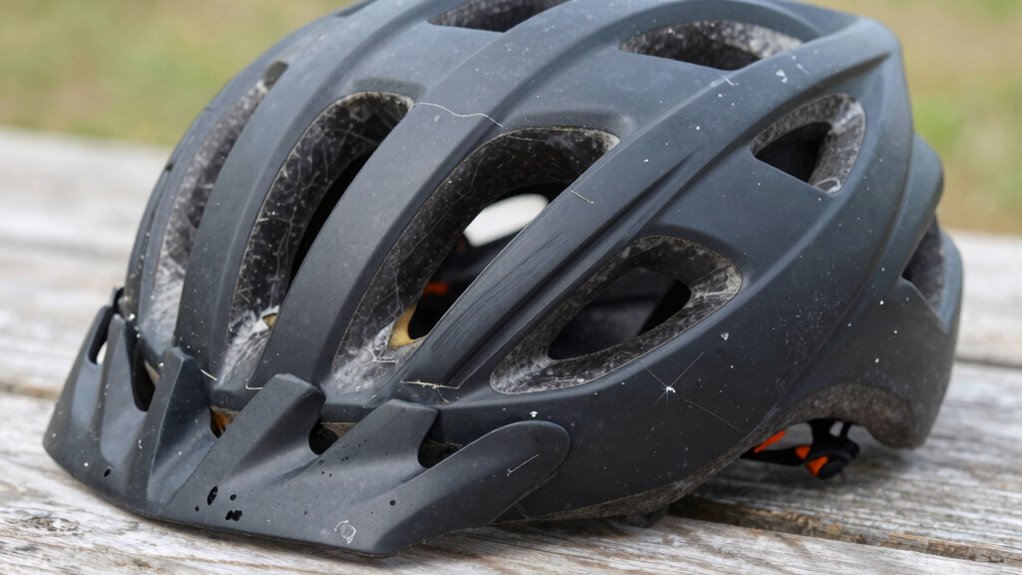

You should replace your bike helmet every five years or immediately after a crash, regardless of visible damage. Proper fit is vital for maximum protection, so keep it adjusted and inspect it regularly for cracks, dents, or frayed straps. Environmental factors like sunlight, sweat, and temps can weaken materials over time, reducing protection. Staying aware of these signs and maintenance tips helps keep you safe on every ride—keep going to discover more essential safety advice.

Get workout gear delivered free with Prime
- Fast, free delivery on millions of items
- Prime Video, Amazon Music and more included
- Member-only deals all year
Key Takeaways
- Replace your helmet after any significant crash, even if no visible damage is present.
- Look for cracks, dents, frayed straps, or other signs of wear during regular inspections.
- Follow the manufacturer’s recommended replacement interval, typically every five years.
- Material degradation from environmental exposure can reduce helmet effectiveness over time.
- Proper fit and regular maintenance ensure maximum safety and prolong helmet lifespan.
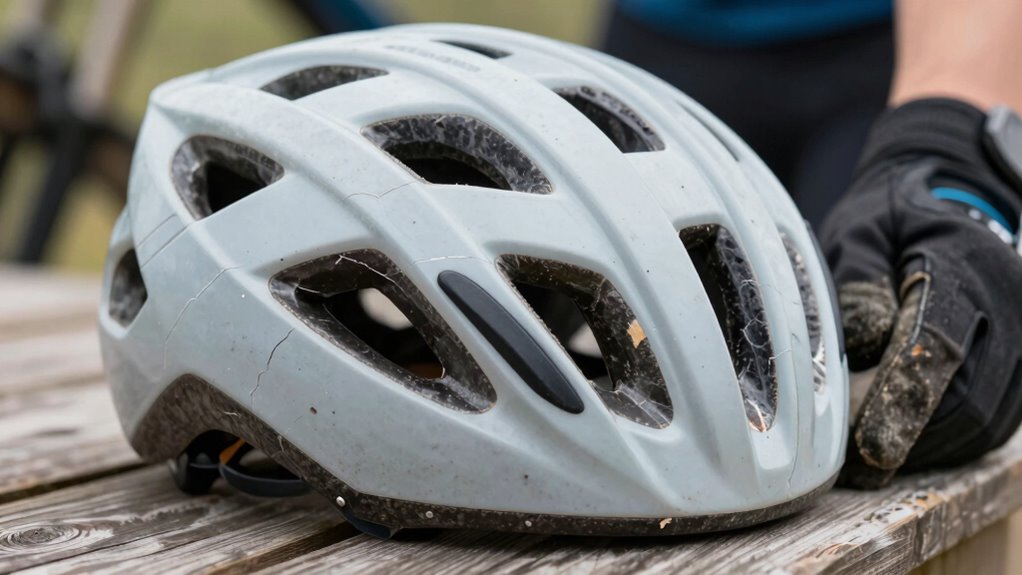
Have you ever wondered how a simple helmet can make a life-saving difference? It’s a small piece of gear that packs a powerful punch when it comes to protecting your head. The key to its effectiveness lies in how well it fits and the quality of its material durability. When your helmet fits snugly without being too tight, it stays securely in place during a crash, providing the necessary cushioning. An ill-fitting helmet, whether too loose or too tight, can compromise safety because it might shift upon impact or cause discomfort, prompting you to remove it prematurely. Making sure your helmet fits properly is essential; measure your head accurately and choose a helmet with adjustable straps to customize the fit. Remember, a helmet that fits well will not only be more comfortable but also more effective at absorbing the force of an impact. Proper helmet fit can significantly reduce the risk of injury by ensuring optimal protection. Additionally, understanding the importance of material durability helps in maintaining the helmet’s protective qualities over time.
Furthermore, material degradation can occur even without visible damage, which underscores the need for regular inspections and timely replacements. Over time, the materials inside your helmet, especially the foam liner and outer shell, can degrade due to environmental exposure—sunlight, sweat, or temperature changes. Even if your helmet looks intact, its ability to absorb shock diminishes as the materials weaken. That’s why it’s essential to regularly inspect your helmet for signs of wear, such as cracks, dents, or frayed straps. If you notice any damage or if the helmet has been involved in a crash, it’s time to replace it. Remember, a helmet’s protective capabilities are most reliable immediately after purchase, but they gradually decline. Many manufacturers recommend replacing helmets every five years, though this can vary based on use and exposure. If you’ve experienced a significant impact, don’t rely on the helmet’s appearance alone—replace it even if no visible damage exists.
Ultimately, understanding when to replace your helmet isn’t just about following a timeline; it’s about recognizing the signs that its protective qualities are compromised. Proper helmet fit ensures it stays in the right position during an accident, maximizing its protective potential. Material durability ensures that the helmet can absorb and distribute impact forces effectively. Proper maintenance and awareness of helmet lifespan can extend the protective benefits of your gear.
As an affiliate, we earn on qualifying purchases.
Frequently Asked Questions
Can a Helmet Be Safely Reused After a Minor Fall?
You shouldn’t reuse your helmet after a minor fall because even if it looks fine, material degradation might have occurred, compromising its safety. Damage can weaken the helmet’s structure without affecting aesthetics, making it less effective in protecting you. Always inspect for cracks or dents and consider replacing it after a fall, regardless of appearance. Prioritize your safety over aesthetics, and remember that a helmet’s integrity is vital for effective protection.
How Do I Check if My Helmet Still Offers Adequate Protection?
To check if your helmet still offers adequate protection, start with a proper helmet fit—ensure it sits snugly without discomfort. Inspect for material degradation, such as cracks, dents, or frayed straps, which compromise safety. If you notice any damage or if it’s been involved in a crash, replace it. Regularly examining the helmet’s fit and condition helps maintain its protective ability and keeps you safe during rides.
Are There Specific Brands Known for Longer-Lasting Helmets?
Like a trusty steed, some brands stand the test of time. Regarding helmet material and brand longevity, brands like Giro, Bell, and POC are renowned for producing helmets with durable construction that often last longer if cared for properly. While no helmet lasts forever, choosing reputable brands known for quality can give you extra confidence. Always check for signs of wear, and replace your helmet when needed.
Does Sweating or Exposure to UV Damage Helmet Integrity?
Sweating and UV exposure can definitely impact your helmet’s integrity over time. Sweat causes moisture buildup that can weaken the helmet’s foam and straps, while UV degradation from sun exposure can make the shell brittle and less protective. To keep your helmet safe, regularly check for signs of damage or deterioration, and store it in a cool, shaded place when not in use. Replace it if you notice any issues.
Is It Necessary to Replace a Helmet After a Crash Even if Undamaged?
Think of your helmet as a guardian—after a crash, even if it looks undamaged, replace it. Damage can be invisible, weakening its protective ability. Your helmet’s color might fade, but its fit could loosen, reducing safety. Don’t gamble with your protection; a compromised helmet may not cushion impacts as it should. Always prioritize safety and opt for a new helmet after any crash, ensuring your head stays protected.
As an affiliate, we earn on qualifying purchases.
Conclusion
Remember, your helmet is your first line of defense, yet it’s only effective if it’s in top shape. Think of it like a shield—if it’s cracked or worn, it can’t protect you. Replacing your helmet might seem small, but it’s an essential step in staying safe. Just as a sturdy helmet guards your head, regular updates guard your peace of mind. Stay vigilant, stay protected—your safety depends on it.
As an affiliate, we earn on qualifying purchases.
As an affiliate, we earn on qualifying purchases.
Halloween Picks
halloween
As an affiliate, we earn on qualifying purchases.