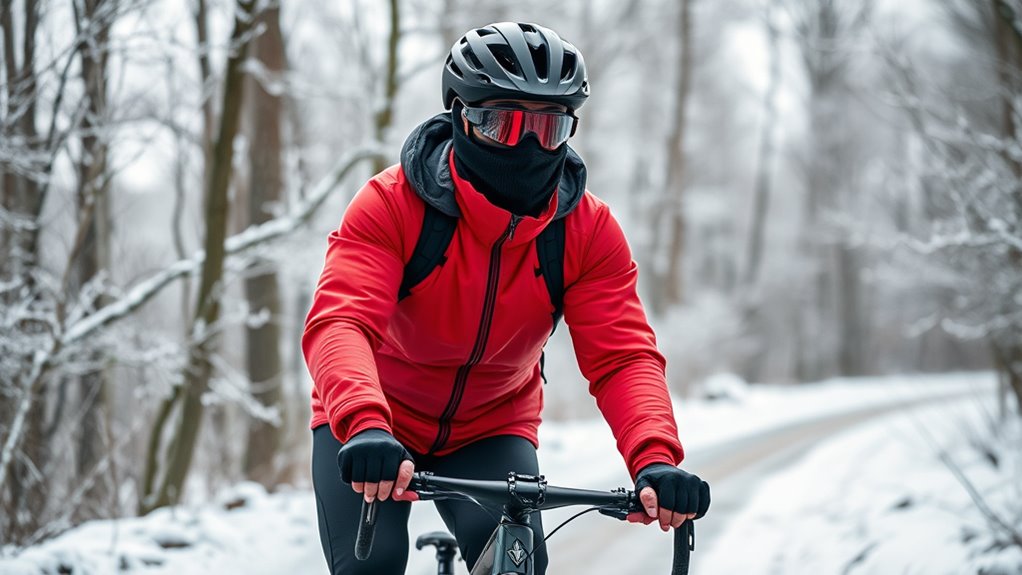

To stay warm while cycling in cold weather, choose moisture-wicking base layers like merino wool and add insulating outer layers that trap heat but still breathe. Protect your extremities with thermal gloves, insulated shoes, and windproof covers. Wear a snug hat or balaclava and use reflective gear for visibility. Managing moisture and preventing overheating are key, so layer smartly. Keep gear well-maintained, and you’ll be ready for winter rides—more tips await if you keep going.
Key Takeaways
- Layer moisture-wicking base layers with insulating outerwear to trap heat and manage sweat effectively.
- Protect extremities with thermal gloves, insulated footwear, and neck warmers for added warmth and moisture control.
- Use waterproof, windproof, and breathable outer layers to shield from weather while allowing moisture escape.
- Incorporate high-visibility clothing and properly maintained bike lights for safety in low-light winter conditions.
- Regularly inspect and maintain gear, including tires, waterproof clothing, and footwear, for optimal performance and protection.
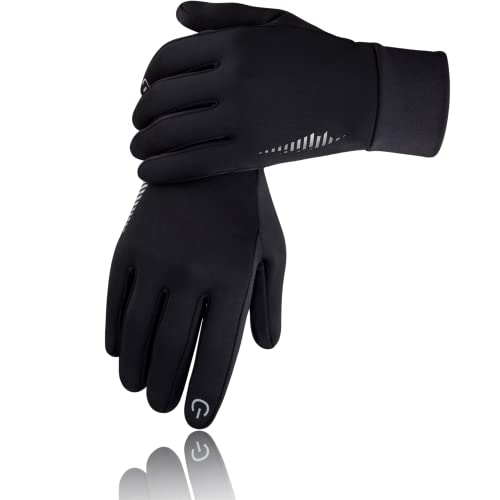
SIMARI Winter Gloves Women Men Ski Snow Gloves Liner Thermal Warm Touch Screen, Suit for Running, Cycling, Biking, Hiking, Driving, Walking, Typing, Freezer Work, Sports, Soccer, Shooting, Gaming 102
- Touch Screen Compatibility: Compatible with smartphones and tablets
- Warm and Comfortable Material: Made of polyester, spandex, with flannel lining
- Enhanced Grip and Safety: Silicone grip on palms and reflective patterns
As an affiliate, we earn on qualifying purchases.
As an affiliate, we earn on qualifying purchases.
Choosing the Right Base Layers for Cold Weather
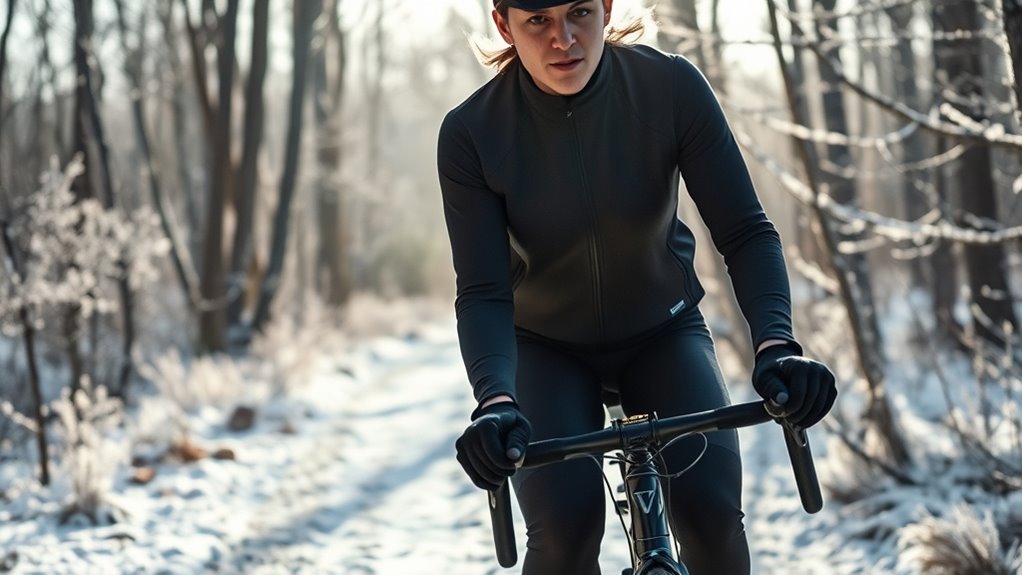
When cycling in cold weather, selecting the right base layers is essential for staying warm and comfortable. Your base layer should excel at thermal regulation, helping your body maintain a stable temperature despite the cold. Look for materials like merino wool or synthetic fabrics designed for moisture management; these wick sweat away from your skin, keeping you dry. Staying dry is vital because moisture can quickly lead to chills and discomfort. Choose fitted base layers that trap heat without restricting movement. Avoid cotton, which absorbs moisture and loses insulating properties when wet. Properly selected base layers work silently beneath your outer gear, ensuring you stay warm, dry, and ready to ride in cold conditions.

Fizik Tempo Artica GTX Gore-Tex, Road Cycling Waterproof Winter Shoes, Black, 7.5
- All-Weather Insulated Design: Waterproof, breathable winter cycling shoes
- GORE-TEX Protection: Fully waterproof with enhanced breathability
- Fleece Lined for Warmth: Brushed-fleece lining for extra insulation
As an affiliate, we earn on qualifying purchases.
As an affiliate, we earn on qualifying purchases.
The Importance of Insulating Outer Layers
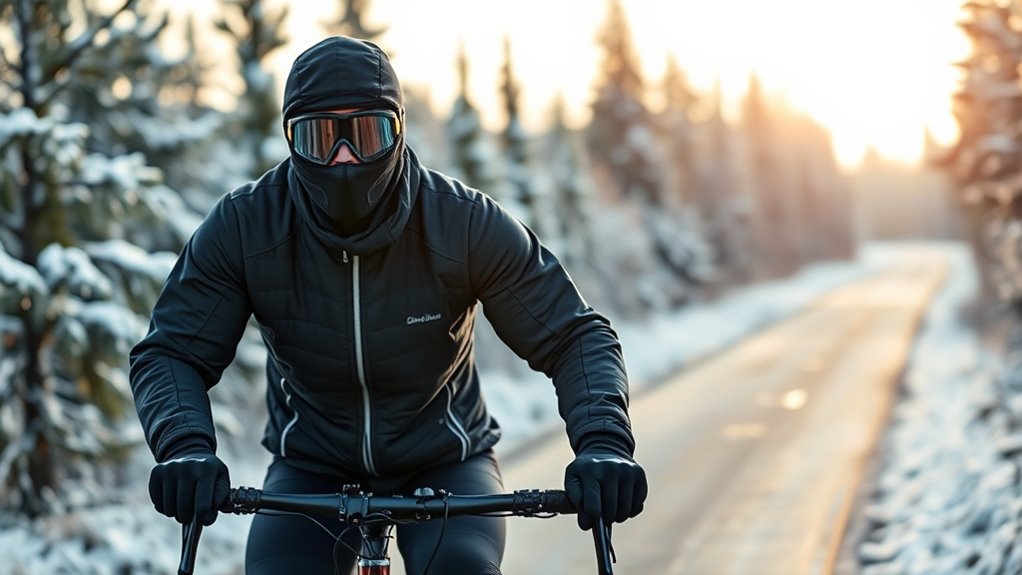
Your outer layer should be made from layered materials that trap heat and keep you warm. Look for fabrics that are windproof yet breathable to prevent overheating and moisture buildup. Choosing the right combination guarantees you stay comfortable and protected during cold rides. Additionally, selecting appropriate outdoor gear designed for cycling can enhance insulation and moisture management, ensuring optimal performance in winter conditions. Incorporating clothing with moisture-wicking properties can further help to keep you dry and comfortable throughout your ride. Proper layering and insulation techniques are essential to maintaining body heat and preventing cold-related discomfort. Using high-quality materials in your outer layers can also improve durability and overall comfort during winter cycling.
Layered Material Selection
Choosing the right insulating outer layer is essential for staying warm and comfortable during cold-weather rides. Your outer layer should support thermal regulation and moisture management, preventing heat loss while wicking away sweat. When selecting materials, consider these key factors:
- Insulation properties – Opt for fabrics that trap heat without adding bulk, ensuring consistent warmth.
- Moisture-wicking ability – Choose materials that draw sweat away from your skin, keeping you dry and avoiding chills.
- Durability and breathability – Ensure the outer layer withstands weather elements while allowing excess heat and moisture to escape.
Windproof and Breathable Fabrics
Windproof and breathable fabrics are essential for maintaining warmth and comfort during cold-weather cycling. They help block wind, which can drastically reduce body temperature, while allowing excess heat and moisture to escape. A well-designed outer layer with windproof and breathable properties guarantees you stay warm without sacrificing ventilation. This balance keeps you comfortable, dry, and focused on your ride, even when the temperature drops. Additionally, understanding the contrast ratio of your gear can help you select clothing that enhances visibility and safety in low-light conditions. Proper piercing care and choosing the right materials for body jewelry can also contribute to your overall comfort during outdoor activities. Incorporating outdoor gear designed specifically for winter conditions can further improve your experience by providing additional insulation and protection. As advancements in nanotechnology continue, materials with enhanced insulating capabilities are becoming more accessible and effective for winter sportswear. Furthermore, selecting gear with suitable fabric technology can optimize moisture management and thermal regulation, ensuring you stay warm and dry throughout your ride.
merino wool base layers for cycling
As an affiliate, we earn on qualifying purchases.
As an affiliate, we earn on qualifying purchases.
Protecting Your Extremities: Gloves and Footwear
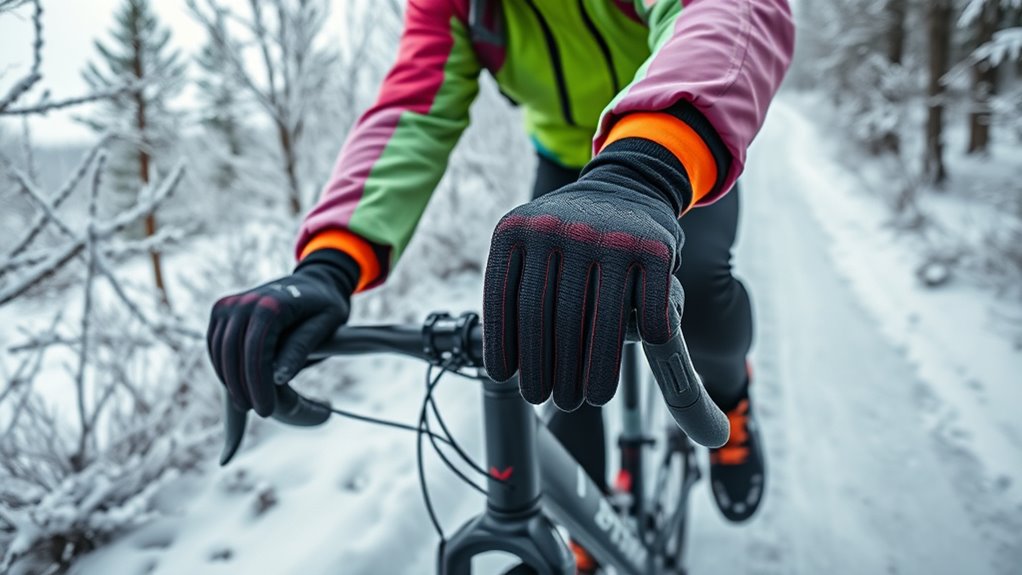
When cycling in cold weather, protecting your extremities is crucial to staying comfortable and safe. Your hands and feet are most vulnerable to cold, so choose gear wisely. Use thermal gloves to keep your fingers warm and maintain dexterity, especially during long rides. Select insulated footwear that provides extra warmth without sacrificing pedal grip, preventing numbness. Consider these tips for essential protection:
- Layer your gloves with moisture-wicking liners and waterproof outer shells.
- Wear insulated shoes or shoe covers designed for cold conditions.
- Ensure your footwear fits well to avoid restriction and cold air entry.
- To optimize your gear setup, understand the importance of proper gear selection and how it can improve your winter cycling experience. Additionally, investing in high-quality gear, such as durable gloves and footwear, can significantly enhance your comfort and safety during cold rides. Recognizing the role of appropriate insulation can help you maintain warmth effectively throughout your ride. Incorporating eco-friendly travel practices into your cycling routine can also promote sustainable outdoor activities. Being aware of specialized cold-weather gear options can further improve your performance and comfort during winter cycling.

baleaf Men's Rain Jacket Waterproof Hood Lightweight Packable Yellow L
- Waterproof & Breathable: 5000mm waterproof, 3000g/m2/24hr breathability
- Lightweight & Packable: Folds into its own pocket for easy packing
- Multiple Pockets: Includes 4 zipper and 2 inner pockets
As an affiliate, we earn on qualifying purchases.
As an affiliate, we earn on qualifying purchases.
Headgear and Neck Warmers for Comfort and Safety
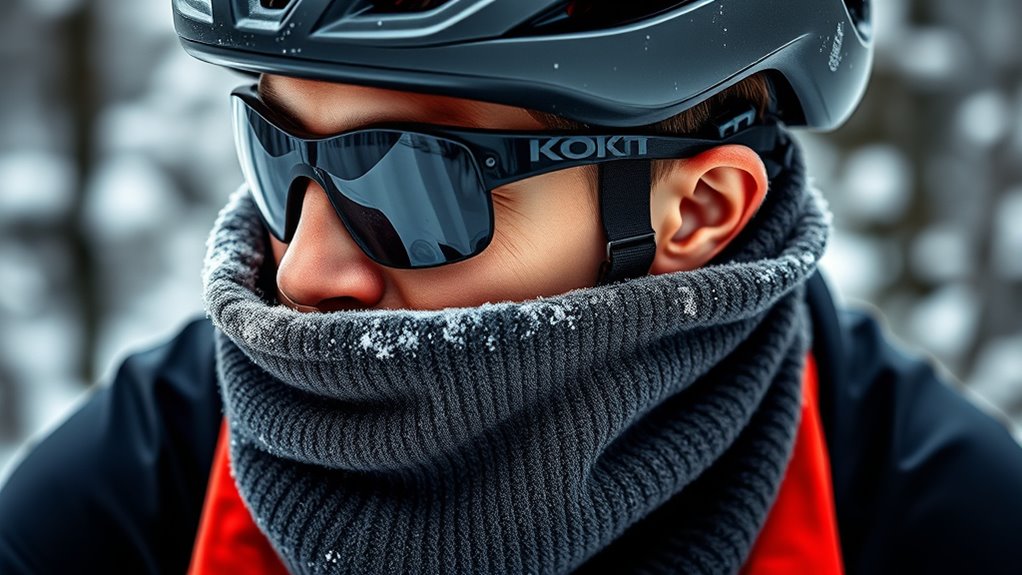
Keeping your head and neck warm is essential for staying comfortable and safe during cold-weather cycling. Proper gear prevents heat loss and shields you from wind chill. Balaclava options vary from full-face coverage to partial masks, offering versatility for different conditions. Neck warmer styles include fleece tubes, merino wool scarves, or seamless fleece sleeves, which fit snugly without restricting movement. To choose the right gear, consider breathability, fit, and the level of insulation needed. Here’s a quick comparison:
| Headgear Options | Neck Warmer Styles |
|---|---|
| Full-face balaclava | Fleece neck tube |
| Thermal beanie | Merino wool scarf |
| Helmet-compatible balaclava | Seamless fleece sleeve |
Additionally, selecting appropriate materials can enhance comfort and durability during your rides, especially with the integration of smart textiles that can offer moisture-wicking and temperature regulation features. Using gear made of performance fabrics ensures you stay warm without overheating, which is crucial for maintaining energy and safety on your rides.
Windproof and Waterproof Gear to Combat Elements
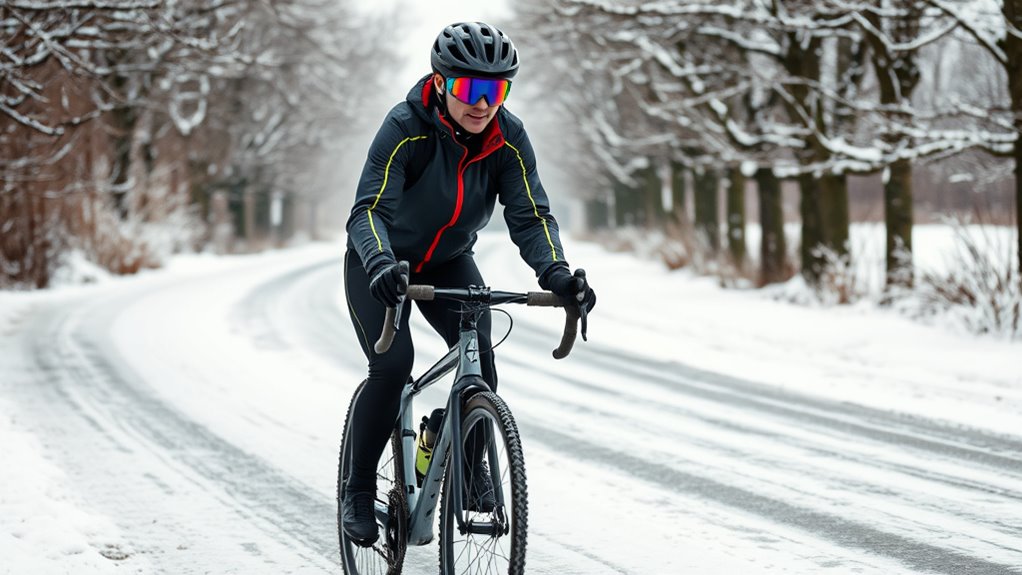
To stay comfortable and dry during cold, gusty rides, you need gear that blocks wind and repels water effectively. Selecting the right fabrics is vital; look for windproof and waterproof materials like Gore-Tex or treated polyester. Proper gear maintenance extends their lifespan and keeps them effective. Additionally, incorporating sound healing science principles, such as using specific frequencies, can help you maintain focus and calmness during challenging rides.
Investing in gear with proper fabric technology ensures better performance and durability, especially in demanding weather conditions. Consider these essentials: 1. Invest in a high-quality windproof jacket that offers breathability alongside water resistance. 2. Choose waterproof gloves and shoe covers to protect extremities from moisture and wind chill. 3. Use a packable, waterproof layer that you can quickly add if weather worsens. Fabrics selection impacts performance, and choosing materials with advanced waterproofing coatings can provide extra protection. Regular gear maintenance ensures your gear stays functional and reliable during winter rides. Recognizing the importance of fabric performance can significantly enhance your riding experience. Staying prepared means staying warm and dry no matter the elements.
Staying Visible and Safe During Winter Rides
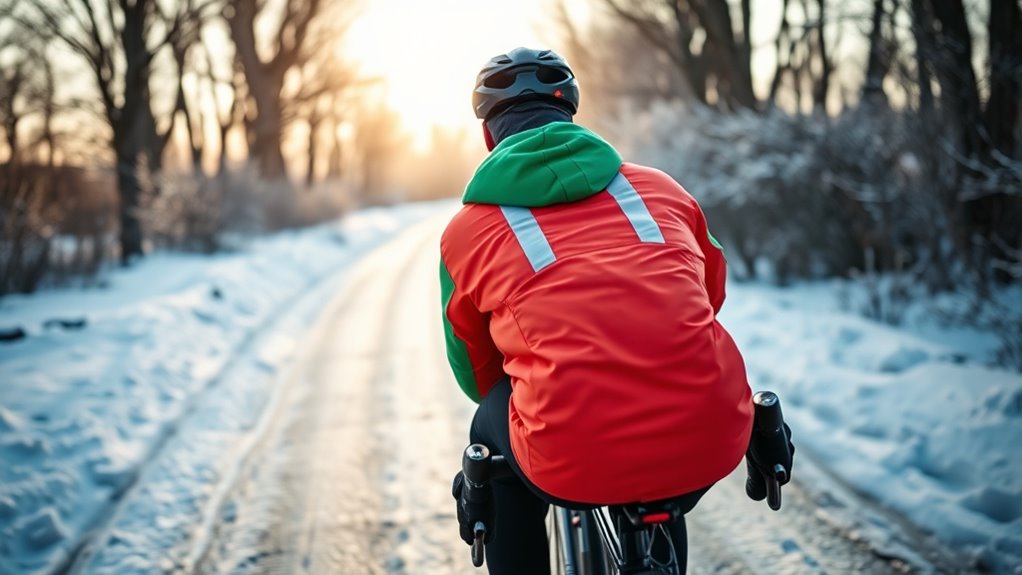
Staying visible during winter rides is essential for your safety, so choose bright clothing that stands out in low light. Make sure your bike is equipped with proper lighting—front and rear—to help others see you clearly. These simple steps can make a big difference in keeping you safe on winter roads, especially when navigating low light conditions often encountered during winter months. Additionally, understanding the importance of lighting placement can greatly enhance your visibility and reduce the risk of accidents. Proper lighting maintenance ensures your lights function effectively throughout your ride, further improving your safety.
Bright Clothing Choices
During winter rides, wearing bright clothing is essential to guarantee you’re visible to drivers and other cyclists, especially in low-light conditions. Bright colors like neon jackets catch attention quickly, making you more noticeable on the road. Reflective vests add an extra layer of visibility, especially when car headlights hit them. To maximize safety, consider these options:
- Wear a neon jacket combined with reflective strips for high visibility.
- Use a reflective vest over your layered clothing for added safety.
- Opt for bright-colored gloves and accessories to ensure you’re seen from all angles.
These choices help you stand out against winter landscapes and ensure you’re easily spotted, reducing the risk of accidents. Bright clothing choices are a simple yet effective way to stay safe during your cold-weather rides.
Use Proper Lighting
Proper lighting is essential for winter cycling, especially when daylight is limited. You should equip your bike with reliable bike lighting, including front and rear lights, to increase visibility. Bright, powerful lights help you see obstacles and signal your presence to drivers and pedestrians. Reflective gear is equally important; wear reflective vests, ankle bands, or stickers to catch the light from other sources. Make sure your lights are clean and functioning before each ride, and consider using multiple lights for added visibility. During overcast days or early mornings, proper lighting prevents accidents and keeps you safe. Always check local regulations on required lighting levels, and avoid riding without adequate illumination. Staying visible during winter rides is vital for your safety.
Tips for Managing Moisture and Preventing Overheating
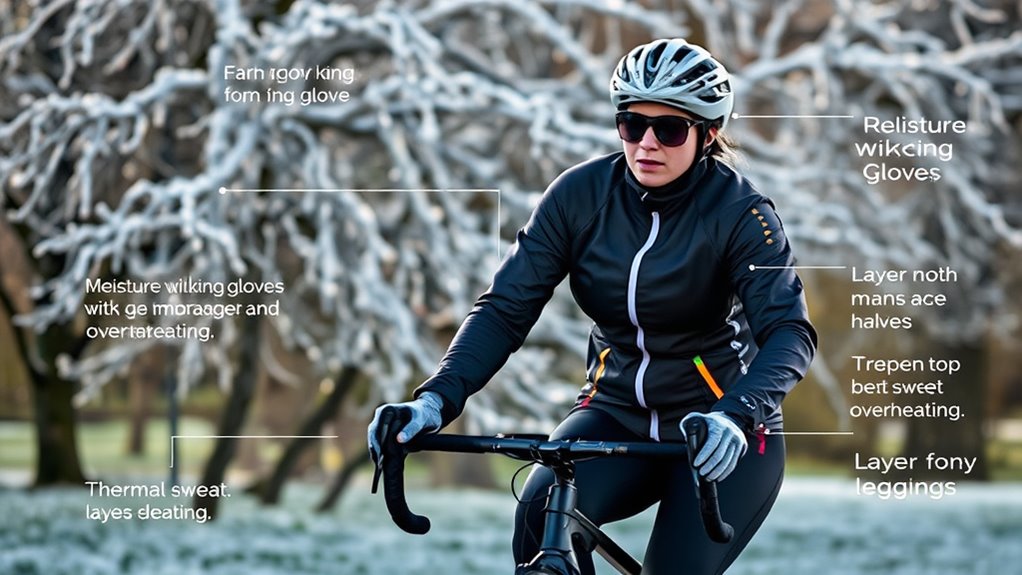
Managing moisture effectively while cycling in cold weather is essential to stay comfortable and prevent overheating. Proper moisture management helps you stay dry and maintain an ideal body temperature. To achieve this, consider these tips:
Effective moisture management keeps you dry and comfortable during winter cycling.
- Wear moisture-wicking base layers that draw sweat away from your skin, reducing the risk of dampness and chills.
- Adjust your clothing as you ride—remove or open ventilation zippers to prevent overheating and excessive sweating.
- Layer smartly with breathable, insulating outerwear that allows moisture to escape, keeping you dry and warm.
Essential Accessories for Cold Weather Cycling
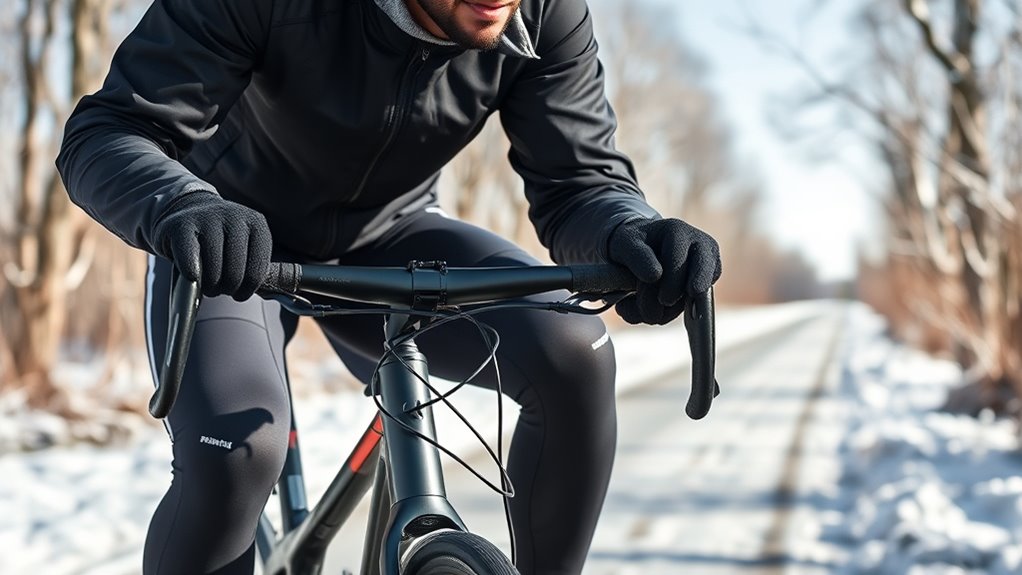
When cycling in cold weather, having the right accessories can make all the difference in staying warm, dry, and comfortable. Essential items include thermal insulative gloves and headgear, which trap heat and prevent heat loss. Look for accessories made from moisture wicking fabrics that draw sweat away from your skin, keeping you dry and reducing chill. Thermal insulators like neck gaiters or balaclavas add extra warmth without bulk, protecting your face and neck from cold air. Consider thermal insoles for your shoes to maintain warmth in your feet. Lightweight, moisture-wicking socks, combined with insulated shoe covers, help prevent dampness and freezing temperatures. Investing in these accessories ensures you stay comfortable, protected, and ready for winter rides.
Maintenance and Care for Your Winter Cycling Gear
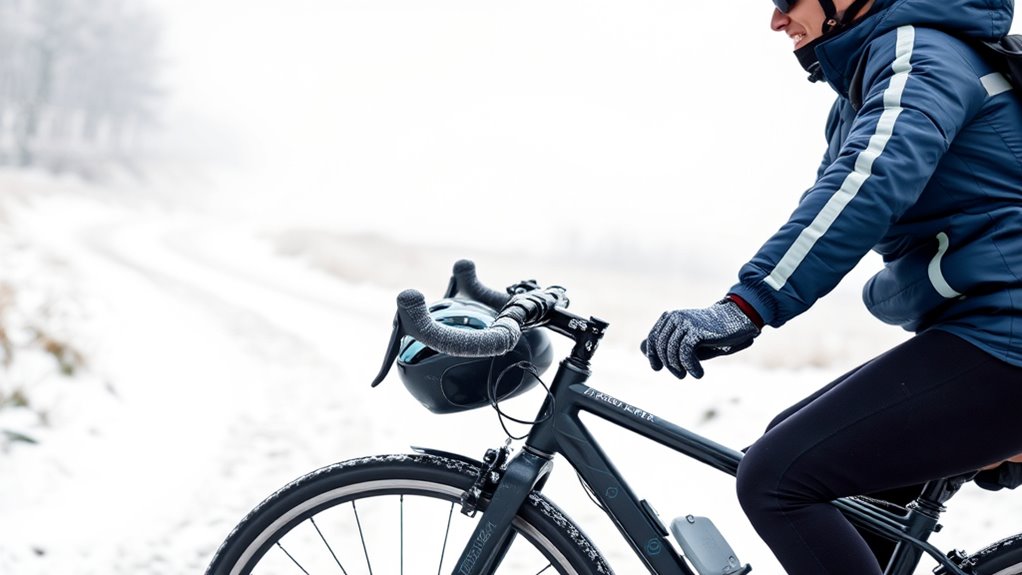
Winter cycling gear endures harsh conditions, so regular maintenance is essential to keep it performing at its best. To guarantee your gear stays reliable, focus on these key areas:
- Clean and dry your cycling shoes after each ride to prevent moisture buildup and damage. Check for cracks or worn-out soles and replace if necessary.
- Regularly inspect and maintain your tires, including tire pressure and tread wear. Proper tire maintenance improves grip and reduces the risk of flats in cold, icy conditions.
- Store your gear in a cool, dry place, and periodically treat waterproof clothing with appropriate repellents to maintain its effectiveness.
Frequently Asked Questions
How Do I Prevent My Bike Components From Freezing in Cold Weather?
To prevent your bike components from freezing, you should prioritize bike maintenance and component protection. Keep your bike dry and store it indoors when possible. Apply anti-freeze sprays to vulnerable parts like cables and chains, and consider using insulated covers for exposed components. Regularly check and lubricate moving parts to prevent moisture buildup. These steps help your bike stay functional and protected against cold weather damage, ensuring smooth rides even in freezing temperatures.
What Are the Best Strategies for Riding on Icy or Snow-Covered Roads?
To ride safely on icy or snow-covered roads, focus on winter bike maintenance and traction enhancement. Use studded tires for better grip and lower tire pressure slightly for increased contact. Reduce your speed and brake gently to prevent slipping. Stay alert to changing conditions, and consider installing fenders to stay dry. These strategies help you maintain control and stay safe during winter rides on slippery surfaces.
How Should I Adjust My Cycling Clothing for Changing Weather Conditions?
Did you know that layering can increase your insulation efficiency by up to 50%? To adjust your clothing for changing weather, start with layering essentials such as moisture-wicking base layers, insulating mid-layers, and a weather-resistant outer shell. As conditions shift, add or remove layers accordingly. Always wear weather-resistant gear to stay dry and warm, and make sure your clothing adapts to temperature and rain, keeping you comfortable and safe on every ride.
What’s the Recommended Way to Carry Extra Gear or Snacks During Winter Rides?
You should carry extra gear or snacks during winter rides with a handlebar bag or a Camelbak hydration pack. Handlebar bags are convenient for quick access to snacks, gloves, or a maps, while Camelbak keeps your hands free and makes sure you stay hydrated. Both options let you easily access essentials without stopping, helping you stay warm and energized while riding in cold weather conditions.
How Can I Avoid Overheating During Intense Winter Cycling Sessions?
To avoid overheating during intense winter rides, you need to master layer management and hydration strategies. Start with moisture-wicking base layers, add breathable insulation, and remove layers if you feel too warm. Keep hydrating regularly to regulate your body temperature, and listen to your body’s signals. Ventilate your clothing when needed, and stay alert to prevent overheating. Proper gear and hydration help you stay comfortable and safe on cold rides.
Conclusion
Braving cold weather on your bike can feel like confronting a frozen fortress, but with the right gear, you’ll glide through winter’s grip like a warm breeze. Layer up, protect your extremities, and stay visible—your ride becomes a cozy adventure rather than a chilly challenge. Embrace the elements with confidence, and let your gear be the armor that turns icy obstacles into mere ripples on your winter journey. Stay warm, ride on.