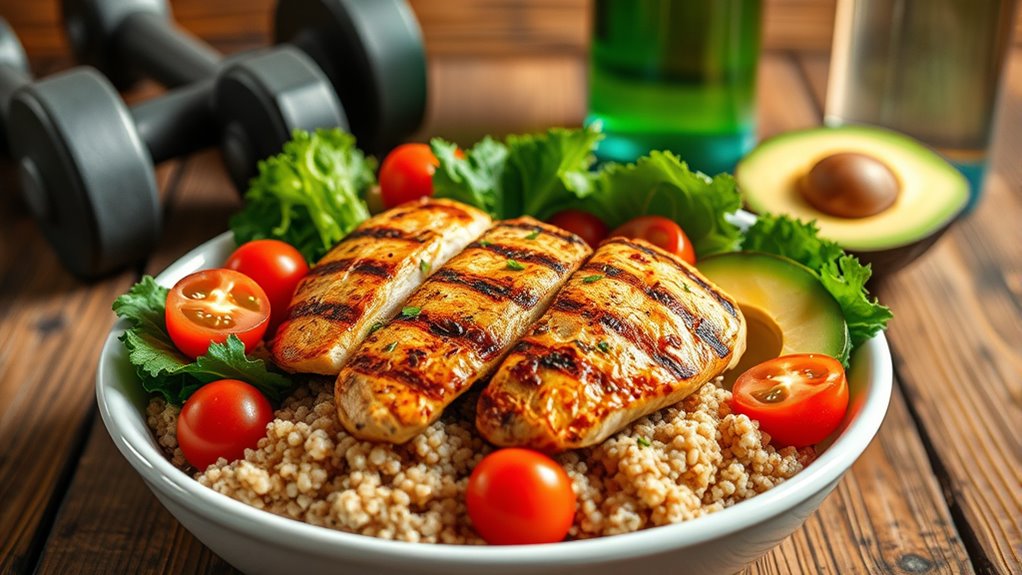

To build muscle effectively, you need to understand protein’s vital role in recovery and growth. Aim for about 1.6 to 2.2 grams of protein per kilogram of your body weight each day. Incorporate a variety of high-quality protein sources like chicken, fish, eggs, and beans. Timing matters too—you should consume protein after workouts to kickstart recovery. A well-balanced diet alongside proper hydration supports your efforts. Stick around for tips on optimizing your protein intake for muscle gains.
Key Takeaways
- Protein is essential for muscle growth and recovery, repairing muscle fibers damaged during workouts.
- Aim for 1.6 to 2.2 grams of protein per kilogram of body weight daily for optimal muscle gains.
- Incorporate diverse high-quality protein sources like meat, dairy, and plant-based options to meet your needs.
- Consume protein shortly after workouts, ideally within a couple of hours, to enhance recovery and muscle synthesis.
- Maintain a balanced diet with healthy fats and carbohydrates, and stay hydrated for overall muscle function and performance.
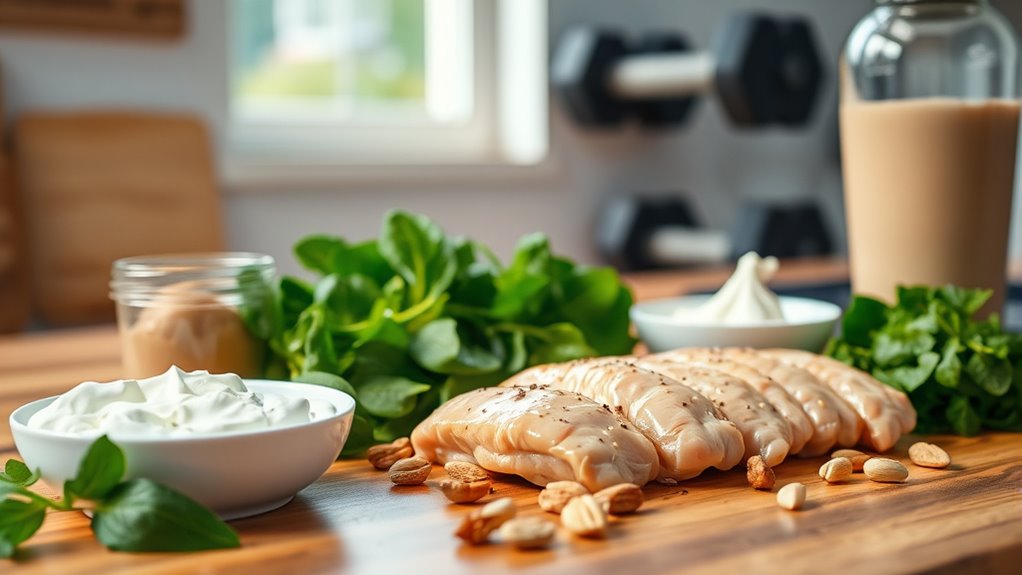
When you’re starting your journey into muscle building, understanding protein’s role is fundamental. Protein isn’t just a macronutrient; it’s a key player in your muscle growth game. When you lift weights, you’re causing tiny tears in your muscle fibers. This is where protein comes into play. It helps repair those tears through a process known as protein synthesis, which is indispensable for muscle recovery and growth. If you want to see real gains, you need to fuel your body with the right amount of protein.
Understanding protein’s essential role is crucial for muscle building and recovery after workouts. Fuel your gains with the right amount of protein.
To promote muscle hypertrophy, or the increase in muscle size, you need to guarantee you’re consuming enough protein daily. For most people aiming to build muscle, a general guideline is to consume around 1.6 to 2.2 grams of protein per kilogram of body weight. This might sound like a lot, but it’s necessary for effective recovery and growth. Think of it as the building blocks your body needs to repair and grow those muscles you’ve just worked hard to develop.
Incorporating a variety of protein sources into your diet can help you meet your goals. Foods like chicken, fish, lean beef, eggs, dairy products, and plant-based options like lentils, beans, and quinoa can all contribute to your protein intake. It’s not just about the quantity, though; the quality of the protein matters too. High-quality proteins contain all the essential amino acids your body requires to effectively promote protein synthesis.
Timing your protein intake is also important. Consuming protein shortly after your workouts can optimize recovery and muscle growth. Aim for a meal or snack that contains both protein and carbohydrates within a couple of hours post-exercise. This combination can help replenish your energy stores and kickstart the recovery process.
Don’t forget about hydration and overall nutrition as well. While protein is indispensable, your body needs a well-rounded diet that includes healthy fats and carbohydrates to support energy levels and overall health. Staying hydrated is key for muscle function and recovery, too. Incorporating outdoor ovens into your meal prep can also enhance your cooking experience, making it easier to prepare nutritious meals.
As you set out on this muscle-building journey, remember that consistency is key. Stick with your training and nutrition plan, and give your body the time it needs to recover. With patience and dedication, you’ll see the fruits of your labor in the form of increased muscle mass and strength.
Frequently Asked Questions
How Much Protein Do I Need to Build Muscle?
You need about 1.6 to 2.2 grams of protein per kilogram of body weight to effectively build muscle. This range supports protein synthesis and aids muscle recovery, ensuring you’re getting the most out of your workouts. Focus on consuming high-quality protein sources throughout the day, especially after exercising. By doing this, you’ll enhance your recovery and promote muscle growth, helping you achieve your fitness goals more efficiently.
Can I Build Muscle Without Supplements?
Absolutely, you can build muscle without supplements! Think of it like growing a garden; with dietary diversity and natural alternatives, you’ll cultivate strength. Focus on whole foods like lean meats, beans, nuts, and dairy to get the protein your body craves. Combine these with regular strength training, and you’ll see progress. Just remember, consistency is key, and a balanced diet can provide all the nutrients you need for muscle growth.
What Are the Best Sources of Protein?
The best sources of protein include both animal proteins and plant-based proteins. Animal proteins like chicken, fish, eggs, and dairy provide complete proteins, which are great for muscle repair. On the other hand, plant-based proteins such as lentils, beans, quinoa, and tofu offer excellent options for those preferring a vegetarian diet. Combining different plant sources can guarantee you get all essential amino acids, so you can effectively support your muscle-building goals.
How Often Should I Eat Protein Daily?
You should aim to eat protein with each meal, ideally three to five times daily. This meal frequency helps maintain muscle synthesis and supports your energy levels. If you have dietary restrictions, like being vegetarian or lactose intolerant, you can still find plenty of protein sources that fit your needs. Just be mindful to balance your intake throughout the day for ideal results. Consistency is key in achieving your goals!
Is Protein Timing Important for Muscle Growth?
Yes, protein timing can be important for muscle growth. By focusing on meal timing, you can optimize nutrient timing to enhance recovery and muscle repair. Consuming protein shortly after your workouts helps your muscles absorb the nutrients more effectively, promoting growth. Aim for a balanced intake throughout the day, but don’t stress about being perfect. Instead, find a routine that works for you and supports your fitness goals!
Conclusion
Incorporating enough protein into your diet might seem overwhelming, but it doesn’t have to be complicated or expensive. You can start by adding simple sources like eggs, chicken, or legumes to your meals. Remember, building muscle takes time, so be patient with yourself. With consistent effort and the right nutrition, you’ll see progress. Don’t let the fear of complexity hold you back—embracing these changes can lead to impressive results in your fitness journey!