
To break in a new baseball glove, start by evaluating its size and material, then gather supplies like a baseball, mallet, towel, and leather conditioner. Apply conditioner evenly, shape the pocket with a ball or mallet, and use softener or wraps to soften the leather. Play catch regularly to mold the pocket further, and keep your glove clean and stored properly. Want to turn your glove into a game-ready tool? Keep exploring for detailed steps.
Key Takeaways
- Assess glove size, material, and proper fit before starting the break-in process.
- Clean and condition the glove regularly to maintain flexibility and prevent cracking.
- Use a ball and mallet to shape the pocket and soften the leather.
- Play catch frequently to naturally mold the glove to your hand.
- Store the glove properly and keep it conditioned for long-lasting performance.
Assessing Your New Glove and Gathering Supplies

Before you begin breaking in your new baseball glove, take a moment to assess its condition and gather the supplies you’ll need. Check the glove’s sizing to ensure it fits comfortably and suits your position. Keep in mind that glove sizing varies, so pick one that offers the right pocket depth and flexibility. Examine the material differences—leather, synthetic, or a blend—as these impact how you’ll break it in. Leather gloves typically require more attention but last longer, while synthetic gloves tend to be more flexible right out of the box. Gather supplies like a baseball, glove mallet, and towel. Knowing your glove’s size and material helps you plan the best break-in method, ensuring a smoother, faster process. Free Floating techniques can also be employed to expedite the process and achieve optimal comfort. Additionally, understanding glove materials can help you select the most effective break-in approach suited to your glove type, which is essential for mastering Piercing Care and Hygiene and other techniques that require proper maintenance and handling.
Applying Leather Conditioner or Oil
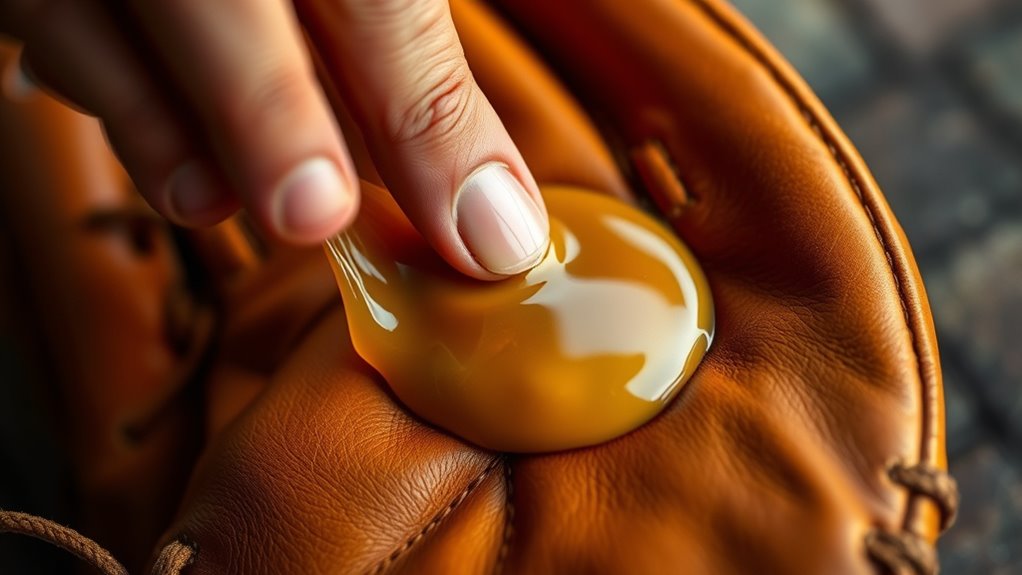
Choosing the right conditioner is key to softening your glove without damaging the leather. When applying, make sure you spread it evenly across all areas to prevent uneven wear. Proper technique guarantees your glove breaks in smoothly and maintains its durability over time.
Choosing the Right Conditioner
Selecting the right conditioner is essential for maintaining your new glove’s flexibility and durability. Different leather types require specific conditioners, so choose one suited to your glove’s material. Look for reputable conditioner brands that are designed for baseball gloves, ensuring they won’t damage the leather. Additionally, choosing a conditioner that is compatible with leather types can help prevent deterioration over time. Consider these factors:
- Compatibility with your glove’s leather type
- Avoiding over-conditioning, which can weaken the leather
- Using a conditioner that penetrates deeply without leaving residue
- Reading reviews to find trusted brands that enhance glove longevity
- Opting for products aligned with Gold IRA Markets standards to ensure quality and safety
Ensuring the conditioner is suitable for home theatre projectors can also help maintain the leather’s appearance and performance. Incorporating a regular conditioning routine can further prolong your glove’s lifespan and keep it game-ready.
Applying Properly and Evenly
Once you’ve picked the right conditioner, it’s time to apply it carefully to guarantee your glove stays flexible and durable. Proper application is key to achieving the best results. Use a clean cloth or your fingers to spread a small amount of leather conditioner or oil across the glove’s surface. Focus on the pocket, laces, and seams, but make certain you cover the entire glove for even coverage. Be cautious not to oversaturate, as too much conditioner can make the leather heavy or sticky. Work the product into the leather using gentle, circular motions. This helps the conditioner absorb evenly, preventing weak spots. Regular maintenance with proper application techniques ensures your glove remains flexible, soft, and ready for game day. Incorporating nanotechnology advancements in leather conditioners could further enhance the glove’s durability and longevity over time.
Shaping the Pocket With a Ball or Glove Mallet

To shape the pocket effectively, you’ll want to use a ball or a glove mallet to mold the leather into the desired form. This step helps create a natural pocket that catches and holds the ball better. Using a glove mallet allows you to apply even pressure and refine the shape with precision. Focus on forming a deep, well-defined pocket by pressing the ball into the glove’s pocket area. Incorporate shaping techniques like pressing, pounding, and working the leather around the ball. Properly shaping the leather not only improves performance but also extends the lifespan of your glove. Regularly reposition the ball for even molding to prevent uneven wear. Use the glove mallet to gently pound the leather. Focus on shaping the pocket’s depth and width. Regularly reposition the ball for even molding. Repeat until the pocket feels natural and secure. Ensuring proper safe installation practices helps prevent damage and ensures durability of the glove. Additionally, understanding leather conditioning can help maintain the glove’s flexibility and longevity over time.
Using a Leather Softener or Glove Wraps

Applying a leather softener or using glove wraps can make the shaping process more effective by conditioning the leather and helping it mold more easily. Leather softening treatments penetrate the material, making it more pliable and reducing stiffness. You should apply a small amount of leather softener evenly across the glove’s surface, focusing on areas that feel especially stiff. After softening, wrap the glove tightly with glove wraps or leather strips to maintain pressure and help the leather conform to your hand’s shape. This method speeds up the break-in process and ensures a better fit. Consistent use of leather softening and proper glove wraps ensures the leather becomes more flexible, ultimately leading to a more comfortable, broken-in glove ready for game time.
Playing Catch to Form the Pocket
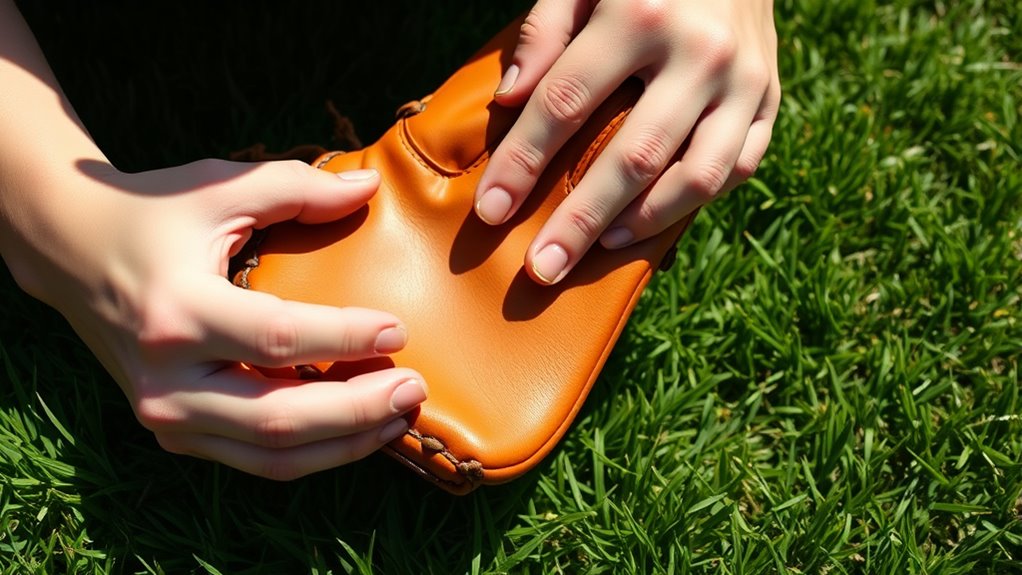
Playing catch is one of the most effective ways to shape the pocket of your new glove. As you toss the ball back and forth, focus on your ball grip and hand positioning to develop a natural catch. Keep your glove open and relaxed, allowing it to mold around the ball. During each throw, guarantee your hand is positioned correctly—fingers spread comfortably and grip firm but flexible. This helps create a deeper, more consistent pocket over time. Use these tips to maximize your catch sessions:
Practice catching softly with relaxed hands to help your glove develop a deep, consistent pocket over time.
- Maintain a firm but relaxed ball grip
- Keep your hand centered in the glove
- Throw with controlled, consistent throws
- Focus on catching with soft hands to mold the pocket
- Incorporate modern glove technology to enhance break-in efficiency and durability
- Regular practice helps your glove form a reliable, game-ready pocket, especially when combined with proper break-in techniques.
- Additionally, understanding glove maintenance can extend the lifespan and performance of your glove.
- Incorporating proper glove storage practices ensures your glove stays in optimal condition between sessions.
Maintaining and Preserving Your Glove for Longevity
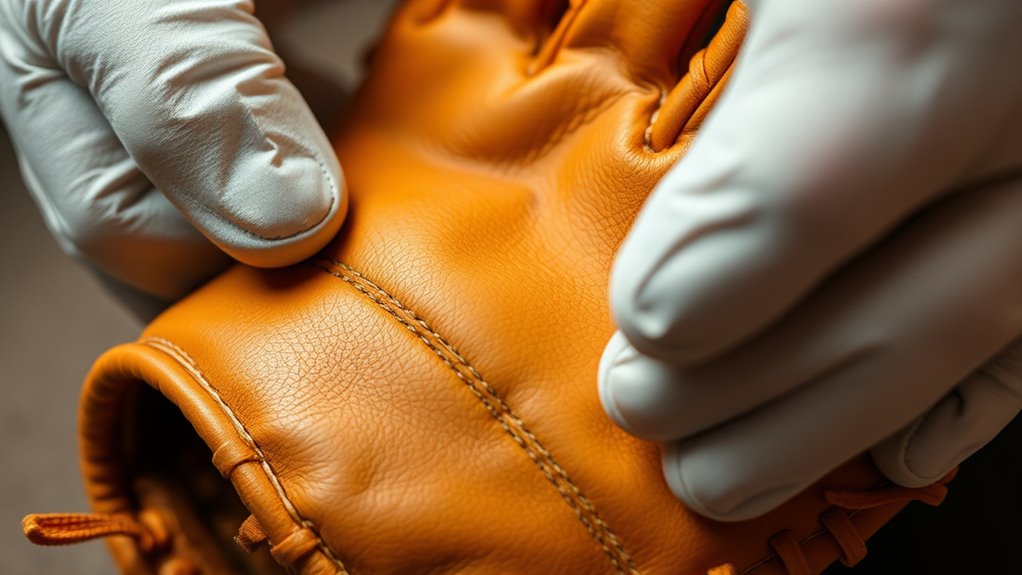
To keep your glove in top shape, regular cleaning is essential to remove dirt and sweat that can wear down the leather. Store it properly in a cool, dry place to prevent warping and deterioration. Using these simple maintenance tips helps guarantee your glove stays game-ready for years to come. Additionally, applying leather conditioning periodically can help maintain the glove’s suppleness and extend its lifespan. For added protection, consider investing in a reliable backup power solution to ensure your equipment remains functional even during power outages, especially if you rely on electronic accessories to care for your glove.
Regular Cleaning Techniques
Regular cleaning is essential to keep your baseball glove in top shape and extend its lifespan. Regularly cleaning dirt and removing stains prevent deterioration and maintain its flexibility. To do this effectively, follow these tips:
- Use a soft brush or cloth to gently scrub away dirt and debris.
- Apply a glove cleaner or mild soap to target stubborn stains.
- Wipe with a damp cloth to remove residue and dirt.
- Allow the glove to air dry naturally, avoiding direct sunlight or heat sources.
These simple steps help preserve the leather’s quality and ensure your glove stays game-ready longer. Regular cleaning not only maintains its appearance but also prevents cracking and stiffness, keeping your glove soft and supple for seasons to come.
Proper Storage Methods
Proper storage is essential for keeping your baseball glove in prime condition and ensuring it lasts for many seasons. Using effective storage techniques prevents the leather from drying out or cracking. After each use, clean any dirt and lightly condition the glove, then store it in a cool, dry place. Avoid leaving it in direct sunlight or extreme temperatures, which can damage the leather. To maintain its shape, consider placing a ball inside the glove and wrapping it with a band or storing it in a glove display that supports its natural form. Proper storage helps preserve the glove’s flexibility and durability, making it ready for game day. Consistent care and thoughtful storage are key to extending your glove’s lifespan and performance. Additionally, storing your glove in a weather-resistant bag can provide extra protection against environmental elements.
Frequently Asked Questions
How Often Should I Break in My New Glove for Optimal Performance?
You should break in your new glove gradually, focusing on consistent glove maintenance. Use breaking in tools like a glove mallet or conditioning oils regularly, but don’t overdo it—this helps uphold flexibility and shape. Play catch often, which naturally molds the glove. Aim for daily or every few days, depending on usage, until it feels comfortable and performs well. Proper care ensures your glove stays in top shape for seasons to come.
Can I Use Household Items to Speed up the Breaking-In Process?
Yes, you can use household items to speed up the breaking-in process. For example, applying a small amount of petroleum jelly or leather conditioner helps soften the leather quickly. You can also use a mallet or a ball to shape the glove, or even a hairdryer on low heat to warm the leather. Just be careful not to overdo it, and always follow up with conditioning to keep the leather flexible.
What’s the Best Way to Prevent My Glove From Cracking Over Time?
To prevent your glove from cracking over time, prioritize regular glove maintenance and leather conditioning. Keep the leather soft by applying a quality conditioner, especially after use or when it feels dry. Store your glove in a cool, dry place, avoiding extreme temperatures. Additionally, avoid excessive moisture and overuse, which can weaken the leather. Consistent care helps preserve flexibility and prevents cracking, ensuring your glove stays in great shape for seasons to come.
How Do I Know When My Glove Is Fully Broken In?
You’ll know your glove is fully broken in when it feels soft and supple, with good glove softness, and the leather molds easily to your hand. Check for breaking uniformity, meaning the leather and pocket should have an even, smooth feel without stiff spots. When the glove opens and closes smoothly and maintains its shape during play, it’s ready. This indicates the glove has reached peak flexibility and comfort.
Are There Specific Techniques for Left-Handed or Right-Handed Gloves?
Yes, there are specific techniques for left-handed or right-handed gloves. You should focus on hand orientation and glove shape, ensuring the glove molds to your dominant hand’s natural motion. For a right-handed glove, work on the pocket with your right hand, and vice versa. Use techniques like pounding, shaping, and playing catch to help the glove conform to your hand’s unique shape, making it easier to catch and secure balls effectively.
Conclusion
Now that you’ve broken in your glove, it’s ready for game day. Regular maintenance, like conditioning and playing catch, keeps it soft and functional. Think about how each time you toss the ball, you’re shaping a trusted companion for seasons to come. Isn’t it satisfying to see your glove mold perfectly to your hand, ready to make that game-winning catch? With proper care, your glove will be your reliable partner on every play.