To prepare for open water swimming, focus on understanding environmental factors like tides, water quality, and weather, and practice in conditions similar to race day. Build mental resilience by gradually increasing your swim distances and using visualization techniques. Invest in proper gear like wetsuits for colder water. Meanwhile, in the pool, work on technique and stamina through drills and interval training. Combining both approaches helps you become adaptable and confident, and there’s more to discover to enhance your skills further.

Get workout gear delivered free with Prime
- Fast, free delivery on millions of items
- Prime Video, Amazon Music and more included
- Member-only deals all year
Key Takeaways
- Practice in conditions similar to race day to build familiarity with water temperature, currents, and environmental factors.
- Invest in appropriate gear like wetsuits for open water and focus on technique drills in the pool.
- Develop mental resilience through visualization and gradual exposure to challenging water conditions.
- Monitor tide charts and weather to plan safe open water swims, avoiding dangerous currents and poor water quality.
- Incorporate both pool interval training and open water practice to enhance efficiency, stamina, and adaptability.

When choosing between open water swimming and pool swimming, understanding their differences can help you decide which suits your goals and preferences best. Preparing for each type requires specific strategies to guarantee you stay safe, improve, and enjoy your swim fully. Open water swimming demands a focus on tide awareness, which involves understanding how water levels and currents change with the tide. Before hitting the water, check local tide charts and weather conditions. Knowing when the tide is flowing in or out can help you plan your swim to avoid dangerous currents or strong undertows. This awareness not only keeps you safe but also enhances your confidence in unpredictable environments. In contrast, pool swimming offers a controlled environment, so tide awareness isn’t necessary. Instead, your preparation revolves around mastering your technique and pacing in a consistent setting.
For open water swimming, mental resilience is vital. Unlike the predictable environment of a pool, open water presents challenges like waves, temperature fluctuations, and limited visibility. To prepare mentally, start with shorter swims and gradually increase your distance, building confidence in your ability to handle different conditions. Visualize your swim beforehand, imagining yourself navigating through various scenarios calmly. It’s also helpful to practice breathing techniques and stay focused, especially when encountering unexpected situations, such as a sudden change in water temperature or a rough patch. Developing mental resilience isn’t just about physical readiness; it’s about cultivating a calm, focused mindset that enables you to adapt quickly. Understanding the science behind sound vibrations can provide calming effects that support mental focus during challenging swims. Additionally, being aware of environmental factors, such as water quality and weather patterns, can significantly influence your safety and performance in open water. Recognizing how water quality impacts buoyancy and comfort can help you choose appropriate gear and prepare better for your swim.
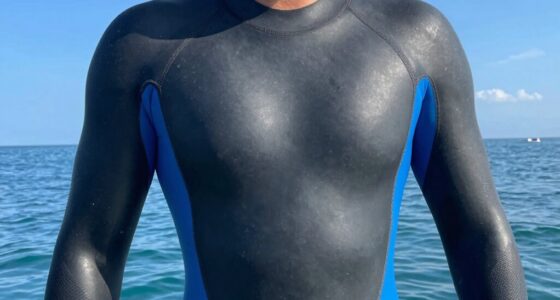
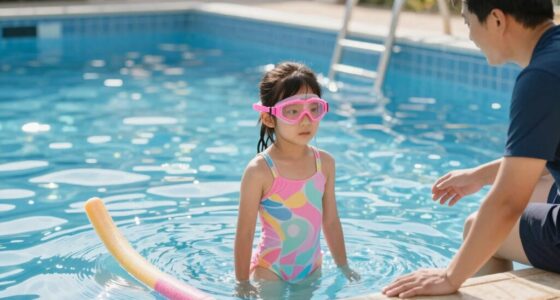
In terms of preparation, open water swimmers should invest in appropriate gear, such as a wetsuit if water temperatures are low, and practice in conditions similar to race day. Familiarity with the environment through practice swims can boost both tide awareness and mental resilience. Pool swimmers, meanwhile, need to focus on technique drills and interval training, which improve efficiency and stamina. Regardless of where you swim, consistency is key. Regular practice builds your confidence, sharpens your skills, and prepares you mentally to face different challenges. Ultimately, understanding the unique demands of each setting and preparing accordingly guarantees you make the most of your swimming experience, whether in the unpredictable open water or the predictable confines of a pool.
wetsuits for open water swimming
As an affiliate, we earn on qualifying purchases.
As an affiliate, we earn on qualifying purchases.
Frequently Asked Questions
How Do I Stay Safe From Marine Life During Open Water Swims?
You stay safe from marine life during open water swims by maintaining marine life awareness, staying alert to your surroundings, and avoiding provoking animals. Use safety signal communication with your team to alert them of any sightings or concerns. Avoid bright clothing or shiny jewelry that might attract creatures. Stick to designated swimming areas, and if you encounter marine life, remain calm, keep your distance, and slowly back away to prevent unnecessary interactions.
What Gear Is Essential for Open Water Swimming?
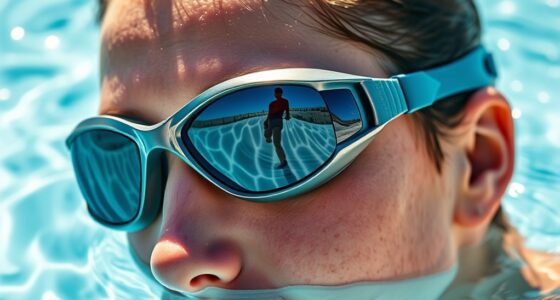
You’ll want essential gear that keeps you safe and comfortable. Start with a good wetsuit selection to protect against cold water and provide buoyancy. Don’t forget goggles for clear vision and a swim cap to reduce drag. Remember, gear maintenance is key—rinse your equipment after each swim and check for damage. This way, you guarantee your gear stays in top shape, ready for your next open water adventure.
How Can I Improve Navigation in Open Water?
To improve navigation in open water, focus on mastering navigation techniques like sighting regularly and maintaining a straight line. Use natural landmarks such as buoys, shoreline features, or distinctive objects to help orient yourself and confirm your course. Practice sighting every few strokes, and keep a mental map of your surroundings. These strategies boost your confidence, reduce anxiety, and guarantee you stay on track during your swim.
How Does Weather Impact Open Water Swimming Conditions?
Weather markedly impacts your open water swimming conditions. Changes in weather patterns, like wind, rain, or storms, can create choppy water and reduce visibility, making navigation harder. Water temperature also plays an essential role; colder water can cause fatigue and hypothermia, while warmer water might lead to overheating. Always check weather forecasts, dress appropriately, and be prepared for sudden changes to stay safe and comfortable during your swim.
What Are Common Open Water Swimming Injuries and Prevention Tips?
You might face common open water swimming injuries like hypothermia, cuts, or shoulder strain. To prevent these, prioritize injury recovery through proper rest and hydration, and refine your training techniques to avoid overuse injuries. Always wear appropriate gear, stay aware of your surroundings, and gradually build endurance. Regularly check your body for signs of strain or discomfort, and address issues promptly to keep swimming safely and enjoyably.
swimming technique drills for pool training
As an affiliate, we earn on qualifying purchases.
As an affiliate, we earn on qualifying purchases.
Conclusion
While open water swimming offers a unique and invigorating experience, it’s natural to feel apprehensive about safety and unpredictable conditions. Remember, with proper preparation—like practicing in similar environments and always swimming with a buddy—you can confidently tackle open waters. Embrace the challenge, and you’ll find that the thrill of conquering open water far outweighs the initial fears. Ultimately, both pool and open water swimming can complement each other, making you a more versatile and resilient swimmer.
As an affiliate, we earn on qualifying purchases.
visualization training for swimmers
As an affiliate, we earn on qualifying purchases.
As an affiliate, we earn on qualifying purchases.
Halloween Picks
halloween
As an affiliate, we earn on qualifying purchases.