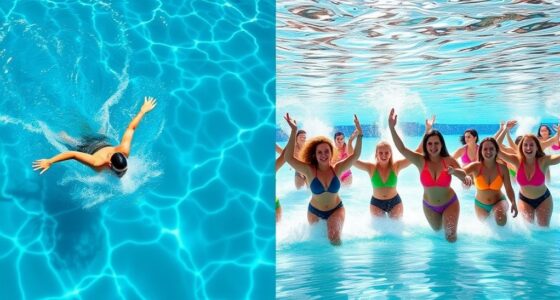
Swimming workouts do work for weight loss! They offer a low-impact, full-body exercise that effectively burns calories through the resistance of water. This engages multiple muscle groups, helping to tone your body and boost your metabolism. Incorporating techniques like interval training can make your sessions even more effective, while proper breathing enhances endurance. By maintaining a consistent routine, you can achieve your weight loss goals. Discover additional tips to maximize your swimming workouts!
Key Takeaways
- Swimming is a low-impact exercise that effectively burns calories and engages multiple muscle groups for weight loss.
- Water resistance increases workout intensity, leading to higher calorie expenditure compared to land-based exercises like running or cycling.
- Proper breathing techniques enhance endurance and allow for longer, more intense swimming sessions, contributing to greater weight loss.
- Incorporating interval training in swimming workouts keeps sessions dynamic and maximizes calorie burn while reducing injury risk.
- Consistency is key; aiming for at least three swim sessions weekly supports long-term weight loss and improved overall fitness.

If you’re looking to shed some pounds while enjoying an invigorating workout, swimming might be your best bet. It’s a low-impact exercise that allows you to torch calories while being gentle on your joints. The unique aspect of swimming is that it involves water resistance, which means your body works harder to move through the water compared to running or cycling. This added resistance can considerably boost your calorie burn during each session.
When you swim, you engage multiple muscle groups. This full-body workout helps tone your body and increases your metabolism. Imagine gliding through the water, feeling the coolness around you as you push against its resistance. With every stroke, you’re not just enjoying the moment; you’re actively working to lose weight. Whether you prefer freestyle, breaststroke, or backstroke, each stroke has its own benefits, but they all contribute to weight loss by increasing your heart rate and improving your cardiovascular fitness.
Engage your muscles and boost metabolism with every stroke, as swimming transforms your workout into a refreshing weight loss journey.
To maximize your swimming workouts, focusing on your breathing techniques is vital. Proper breathing not only aids in endurance but also helps maintain a steady rhythm in your strokes. When you inhale deeply and exhale fully, you guarantee that your muscles receive the oxygen they need to perform at their best. This technique can enhance your performance and help you swim longer and harder, which in turn can lead to greater calorie expenditure.
You might find that incorporating interval training into your swimming routine can be particularly effective for weight loss. Alternate between high-intensity sprints and slower-paced laps. This method allows you to push your limits while giving your body brief recovery periods. It’s a great way to keep your workouts dynamic and challenging. Plus, the water’s buoyancy can help reduce the risk of injury, making it a safe option for those new to exercise or recovering from an injury.
Lastly, consistency is key. Aim to swim at least three times a week, and gradually increase the duration and intensity of your workouts. As you become more comfortable in the water, you’ll likely notice improvements not only in your fitness level but also in your mood and energy. So, dive in and make swimming a regular part of your weight loss journey. With dedication and the right techniques, you’ll be on your way to achieving your goals while enjoying every stroke. Additionally, understanding the importance of accessory advice can help you choose the right swim gear to enhance your experience in the pool.
Frequently Asked Questions
How Many Calories Can I Burn Swimming for 30 Minutes?
You can burn approximately 200 to 400 calories swimming for 30 minutes, depending on your workout intensity. If you swim at a moderate pace, you might hit the lower end of that range, but if you crank up the intensity, you’ll likely reach the higher end. To get a more accurate calorie estimation, consider factors like your weight and swimming style, as these can profoundly influence how many calories you burn.
Is Swimming Better Than Running for Weight Loss?
Swimming can be better than running for weight loss, especially if you’re looking to reduce joint impact. While running puts stress on your knees and ankles, swimming utilizes water resistance, providing a full-body workout without harsh impacts. This makes it easier to maintain longer sessions, burning calories effectively. Plus, the cool water can keep you refreshed, encouraging you to swim more often. Ultimately, it’s about what you enjoy and can stick with!
Can I Lose Weight Swimming Just Once a Week?
You can lose weight swimming just once a week, but it might take longer without more frequent workouts. Water resistance provides an excellent full-body workout, helping you burn calories effectively. However, weekly consistency is key. To see better results, consider adding more swim sessions or incorporating other exercises into your routine. Remember, combining swimming with a balanced diet will enhance your weight loss efforts, making your journey more successful overall.
What Swimming Strokes Are Most Effective for Losing Weight?
The most effective swimming strokes for losing weight are freestyle and butterfly. Freestyle offers great stroke efficiency and allows you to maintain a steady pace, burning calories effectively. Butterfly, while challenging, engages multiple muscle groups, boosting your metabolism. Incorporating varied swimming techniques like breaststroke and backstroke can also help, as they provide different intensity levels and keep your workouts interesting. Mix them up for ideal results and keep your body guessing!
How Does Water Temperature Affect My Swimming Workout?
Imagine diving into a pool that feels like a warm hug versus one that’s brisk and invigorating. Water temperature considerably affects your swimmer performance. Warmer water can make your muscles feel loose, helping you swim longer, while cooler water can boost your energy and stamina, pushing you to work harder. Finding the right temperature for your workouts can enhance endurance and overall effectiveness, allowing you to maximize each swim session.
Conclusion
So, do swimming workouts for weight loss really work? The answer isn’t as simple as you’d think. While you might feel the burn and see some initial results, the key lies in consistency and combining your efforts with a balanced diet. Imagine diving into a routine that not only sheds pounds but also boosts your mood and energy. Are you ready to take the plunge and discover the incredible transformation that awaits you beneath the water’s surface?