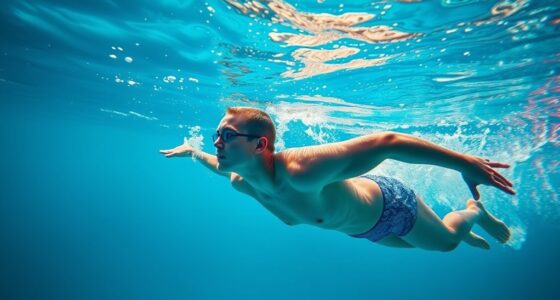
Swimming laps and water aerobics both have their unique advantages. If you enjoy mastering techniques and want a challenging, self-paced workout, swimming laps may be your best bet. On the other hand, if you prefer a low-impact, social environment with a mix of cardio and resistance training, water aerobics could be more appealing. Both options can enhance your fitness and suit various preferences. Discover which activity aligns with your goals and lifestyle by exploring the details further.
Key Takeaways
- Swimming laps enhance endurance and strength through self-paced workouts, focusing on technique and drills for a more individualized experience.
- Water aerobics offers a low-impact workout combining cardiovascular and resistance training, making it ideal for those with joint issues.
- Both activities require minimal equipment, but swimming primarily focuses on technique while water aerobics utilizes tools for added resistance and variety.
- Preference between the two often depends on personal enjoyment, with swimming appealing to those who like mastering techniques and water aerobics attracting social group enthusiasts.
- Alternating between swimming laps and water aerobics can provide a balanced fitness routine, keeping workouts engaging and tailored to individual fitness goals.
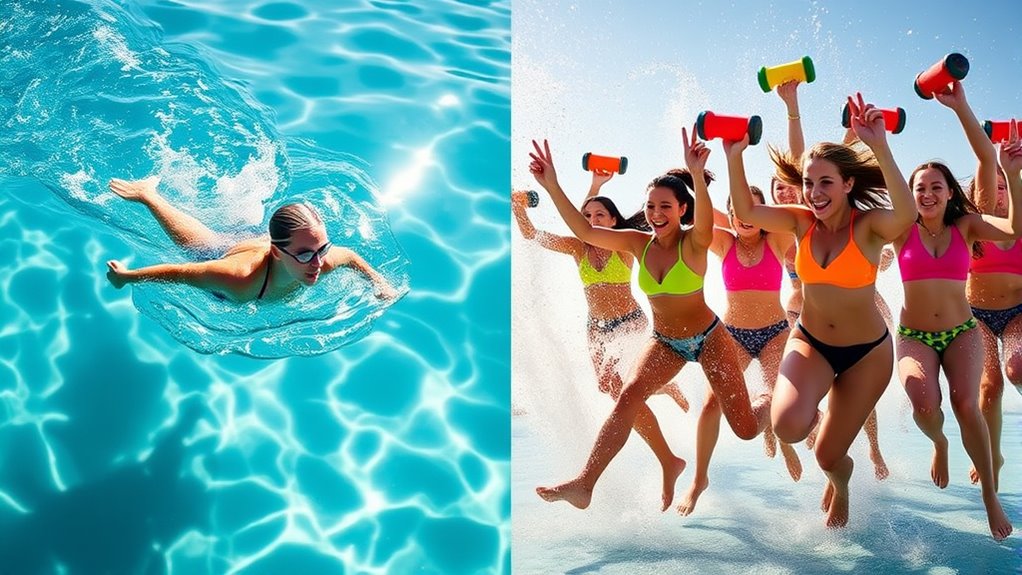
When you think about staying fit in the water, you might wonder whether swimming laps or doing water aerobics is the better choice for you. Both activities offer unique benefits, but your decision could depend on your fitness goals, preferences, and even your current skill level. Let’s break down what each option entails, helping you decide which is the right fit for your water workout routine.
Swimming laps is a fantastic way to build endurance, strength, and cardiovascular fitness. You can use various training techniques to enhance your swimming experience. For instance, interval training—alternating between fast and slow laps—can elevate your heart rate and improve your overall stamina. If you’re focused on specific skills, you might incorporate drills that target your stroke technique or breathing patterns. Plus, swimming laps generally requires minimal equipment. A swimsuit, goggles, and maybe a swim cap are all you need to plunge in and start your workout.
Swimming laps enhances endurance and strength with minimal equipment, allowing for personalized training techniques like interval workouts and stroke drills.
On the other hand, water aerobics offers a different approach to fitness. It combines cardiovascular and resistance training in a low-impact environment, making it ideal for those with joint issues or anyone looking for a gentler workout. In a typical water aerobics class, you’ll engage in various exercises that target different muscle groups, using the resistance of the water to tone and strengthen your body. While you might not need specialized equipment, some classes use tools like foam dumbbells, noodles, or kickboards to enhance your workout experience. These equipment options can help increase resistance and add variety to your routine.
When weighing the two, consider what you enjoy more. If you thrive on the challenge of mastering swimming techniques and prefer a solitary or self-paced workout, swimming laps could be your best bet. However, if you enjoy the social aspect of group classes and prefer a more upbeat atmosphere, water aerobics may be the way to go. Additionally, both activities can be beneficial for overall fitness and can complement your existing workout regimen.
Ultimately, both swimming laps and water aerobics can contribute to a fit and healthy lifestyle. Each has its unique advantages, and the best choice depends on your personal goals and preferences. Don’t hesitate to try both to see which one resonates more with you. You might even find that alternating between the two keeps your workouts fresh and exciting!
Frequently Asked Questions
Can Both Swimming Laps and Water Aerobics Help With Weight Loss?
Yes, both swimming laps and water aerobics can help with weight loss. When you swim or do aerobic exercises in water, the water resistance boosts your calorie burn. You’ll also enjoy cardiovascular benefits from both activities, as they elevate your heart rate and improve endurance. By incorporating either or both into your routine, you’ll effectively work towards your weight loss goals while enjoying a low-impact workout that’s easy on your joints.
Which Activity Is Safer for Individuals With Joint Issues?
When it comes to safeguarding your joints, think of water aerobics as a gentle buoy, cradling you away from joint strain and minimizing injury risk. This low-impact workout allows you to strengthen muscles without harsh impacts on your joints, making it ideal for those with joint issues. Swimming laps can still be beneficial, but it might pose a higher risk of strain if not done with care. Choose the activity that best supports your body’s needs.
How Many Calories Do You Burn During Each Activity?
You’ll burn about 400–500 calories per hour swimming laps, depending on your activity intensity. Water aerobics, on the other hand, typically burns around 200–400 calories in the same timeframe. The calorie comparison shows that swimming can offer a higher burn, especially if you swim vigorously. However, if you prefer a lower-impact workout, water aerobics still provides an effective way to stay active while burning a decent number of calories.
What Equipment Is Needed for Water Aerobics?
You’d think all you need for water aerobics is a swimsuit, right? Well, you’ll actually want a few essentials. First, grab some aquatic footwear to protect your feet and provide traction. You’ll also benefit from water resistance tools like dumbbells or kickboards, which enhance your workout. Don’t forget a pool noodle for added support and fun! With these items, you’ll turn your water workout into a challenging and effective session.
Can Beginners Participate in Either Swimming or Water Aerobics?
Absolutely, beginners can participate in both swimming and water aerobics! You’ll find that water aerobics offers beginner-friendly workouts, allowing you to ease into exercise with low-impact movements. Plus, instructors often provide water exercise modifications to suit your ability level. If you prefer swimming, consider starting with shorter laps and gradually increasing your distance. Both options are great for building strength and endurance while enjoying the supportive environment of the water.
Conclusion
In the dance of fitness, both swimming laps and water aerobics offer unique rhythms to your routine. If you crave the solitude of gliding through water, swimming’s your siren call. But if you seek a lively chorus of camaraderie and varied movements, water aerobics invites you to join its vibrant symphony. Ultimately, the better choice depends on your personal melody—embrace the one that resonates with your heart, and let the water carry you toward your goals.