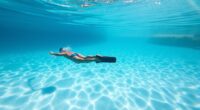
When preparing for open water swimming, make sure you check weather and water conditions beforehand. Swim with a buddy and wear a bright cap for visibility. In colder waters, a wetsuit is essential. For pool swimming, focus on drills and lap times in a controlled environment. Remember to adapt your training for navigation and sighting techniques in open water. Understanding these differences can enhance your swimming experience, and there’s more to explore on this topic.
Key Takeaways
- Assess water conditions like temperature, currents, and weather before open water swimming to ensure safety and readiness.
- Choose appropriate gear, including wetsuits for colder waters and bright-colored swim caps for visibility.
- Practice navigation and sighting techniques in open water to maintain course and adapt to unpredictable conditions.
- Always swim with a buddy or inform someone of your plans for safety during open water sessions.
- Familiarize yourself with potential hazards, such as wildlife and currents, to enhance your overall swimming experience.
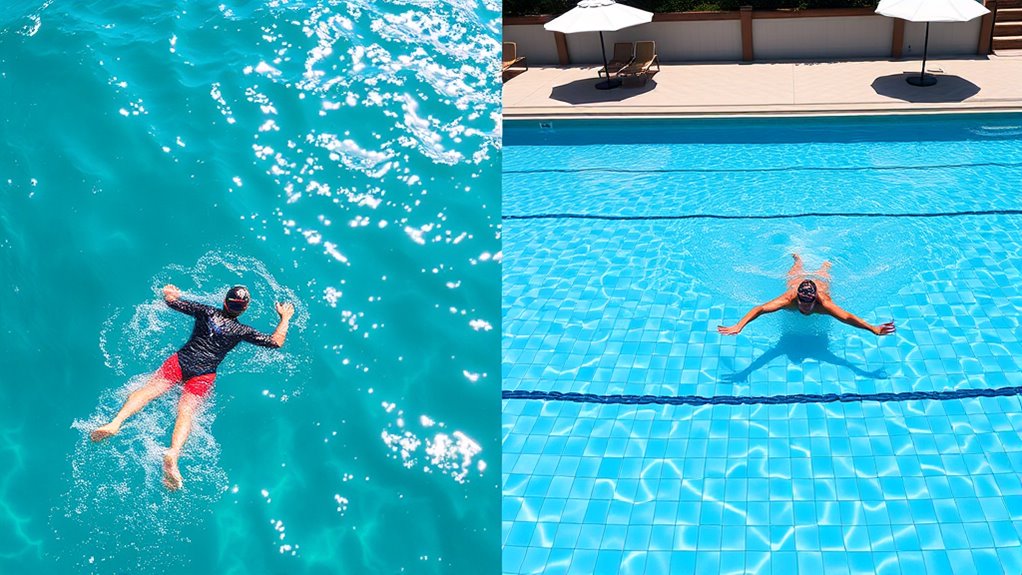
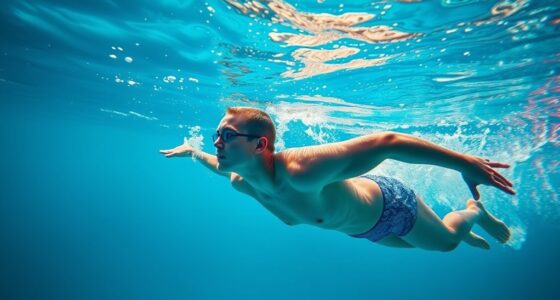
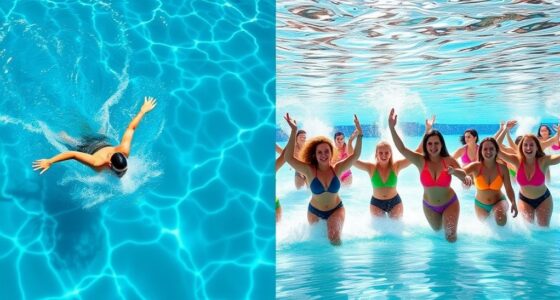
Have you ever wondered what sets open water swimming apart from pool swimming? While both activities involve the same fundamental movements, the surroundings and conditions can drastically change your experience. When you swim in a pool, you’re in a controlled environment—temperature, visibility, and depth are all predictable. In contrast, open water swimming exposes you to nature’s elements, which introduces unique challenges and considerations you need to prepare for.
One major difference lies in safety considerations. In a pool, lifeguards are typically present, and you’re often surrounded by other swimmers. Open water, however, can be isolating. You might find yourself swimming in lakes, rivers, or oceans, where factors like waves, currents, and wildlife can pose risks. You should always check the weather and water conditions before heading out. It’s *imperative* to swim with a buddy or let someone know your plans. This way, if anything goes awry, help is nearby. Wearing a bright-colored swim cap can improve your visibility, making it easier for others to spot you.
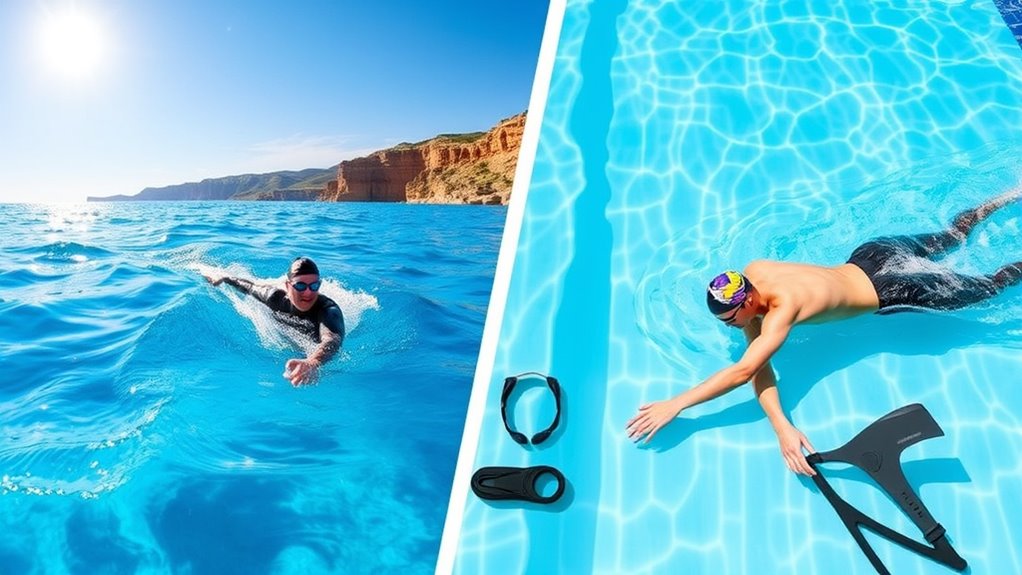
Then there are the equipment differences to think about. In a pool, you might rely on swim goggles and a swimsuit, but when you venture into open water, your gear needs to adapt to the environment. A wetsuit becomes essential, especially in colder waters, as it provides insulation and buoyancy. It’s also wise to invest in a pair of good-fitting swim goggles designed for outdoor use. These often have tinted lenses to reduce glare from the sun, which can be a significant distraction while swimming. You might also consider a buoyancy aid or swim buoy that attaches to you, allowing you to float while remaining visible to others.
Training for open water swimming also varies. In the pool, you can focus on lap times and drills, but in open water, you need to account for navigation and sighting. You’ll want to practice swimming straight and adjusting your course based on landmarks or buoys. The experience can be exhilarating but requires a different mindset—*accepting* the unpredictability of the water. Additionally, guiding and planning your route can significantly enhance your open water swimming experience.
Ultimately, whether you favor the tranquility of a pool or the adventure of open water, understanding these differences can enrich your swimming experience and *guarantee* you stay safe while enjoying the thrill of the water. So, prepare well and embrace the journey ahead!

Synergy Men's Volution 3/2mm Triathlon Wetsuit – Full Sleeve Open Water (Black, L1)
- Open Water Confidence: Enhanced buoyancy and warmth for control
- Comfortable Neck Design: Soft, chafe-free low-neck collar
- Powermax Arm Panels: Maximize stroke efficiency with high-stretch neoprene
As an affiliate, we earn on qualifying purchases.
As an affiliate, we earn on qualifying purchases.
Frequently Asked Questions
What Gear Is Essential for Both Swimming Environments?
For both swimming environments, you’ll need a few essential pieces of gear. A swim cap helps keep your hair out of the way and can reduce drag, making your swim smoother. Don’t forget your goggles; they’re vital for protecting your eyes and improving visibility in the water. Whether you’re in a pool or open water, having a good fit with both items ensures a comfortable and enjoyable swim experience.
Are There Safety Concerns Unique to Open Water Swimming?
Yes, there are safety concerns unique to open water swimming. You need to be aware of marine life, which can pose risks, like jellyfish or other creatures. It’s essential to monitor water quality, as pollution levels can affect your health. Always check local advisories before you swim and consider swimming with a buddy or in designated areas. Staying alert to your surroundings can greatly enhance your safety while enjoying the open water.
How Do Weather Conditions Affect Open Water Swimming?
Weather conditions critically influence your open water swimming experience. Cold temperatures can elevate hypothermia risks, so you should always check the forecast and dress appropriately. Additionally, poor weather can reduce water visibility, making it harder to navigate and increasing safety concerns. Rain, wind, and waves can also affect your swimming performance, so it’s essential to stay informed and adjust your plans accordingly for a safer, more enjoyable swim.
What Nutrition Should I Consider Before Swimming?
You can’t swim your best on an empty stomach! Prior to swimming, focus on pre swim snacks like bananas or energy bars to fuel your performance. Pair these with effective hydration strategies, ensuring you drink plenty of water before hitting the water. An ideal balance of carbs and protein will keep your energy levels soaring. Don’t forget to hydrate consistently during your swim to maintain peak performance and avoid fatigue!
Can I Practice Open Water Skills in a Pool?
Yes, you can practice open water skills in a pool! Focus on navigation techniques by using the pool’s lanes to simulate sighting for buoys. You can also train for varying water temperatures by adjusting the pool’s temperature settings, if possible. Practicing your starts and turns will help build endurance and confidence. Remember, while the pool won’t mimic all open water conditions, it’s a great way to enhance your skills.
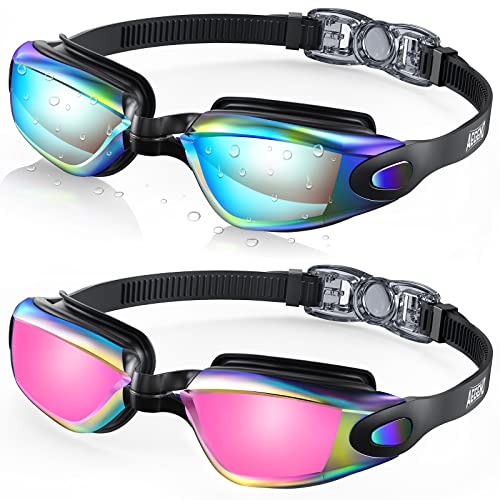
Aegend Swim Goggles 2 Pack for Adult Men Women No Leak with Storage Case
- Value 2-Pack for All Swimmers: Includes 2 pairs with different lens colors
- Crystal Clear & Anti-Fog Vision: Anti-fog coating with UV400 protection
- Wide-Angle Peripheral View: 180° clear underwater visibility
As an affiliate, we earn on qualifying purchases.
As an affiliate, we earn on qualifying purchases.
Conclusion
Whether you’re slicing through the cool, shimmering waves of the open water or gliding beneath the comforting, tiled surface of a pool, both experiences offer unique thrills. Picture the sun warming your back as you navigate the unpredictable currents or the steady rhythm of your strokes in calm, chlorinated lanes. Embrace the challenges of each environment, and remember, every splash brings you closer to mastering the art of swimming. Jump in and enjoy every moment!
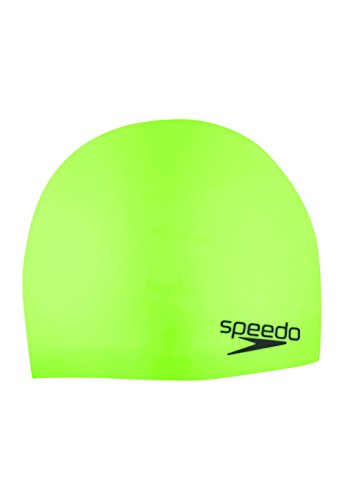
Speedo Unisex-Adult Swim Cap Silicone Elastomeric
- Comfortable Micro Grid Texture: Provides comfort and stretchability
- Snag-Resistant Silicone: Won't pull or snag hair
- Durable Silicone Material: Long-lasting wear
As an affiliate, we earn on qualifying purchases.
As an affiliate, we earn on qualifying purchases.

Swim Float Kids Safety Training: Secure Dual-Lock Buckle 140 lb Test Lesson
- Secure Dual-Lock Buckles: Resist accidental release and slip-offs
- CPSIA Compliant Safety: Ensures safety standards are met
- Adjustable Buoyancy Layers: Grow with your child's skills
As an affiliate, we earn on qualifying purchases.
As an affiliate, we earn on qualifying purchases.