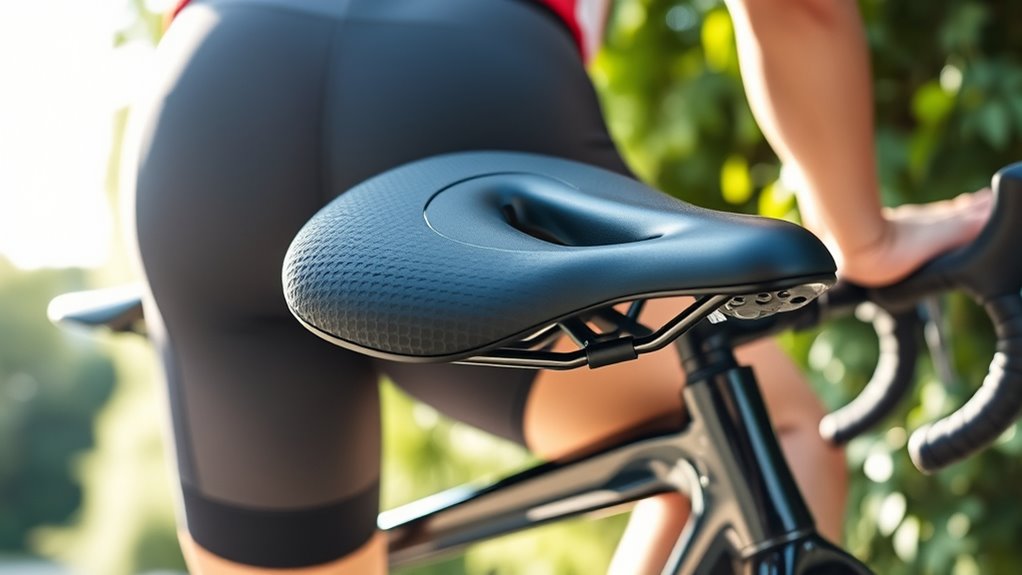

To prevent and treat saddle soreness, guarantee your bike fits properly by adjusting the saddle height, tilt, and handlebar position for comfort. Wear padded, moisture-wicking cycling apparel, and choose a saddle that fits your body shape. Strengthen your core and pelvic muscles to support your riding posture. Take regular breaks during rides to stretch and recover, and use supportive accessories when needed. If soreness persists, expert advice can help you find lasting relief—more solutions await if you keep exploring.
Listen free for 30 days with Audible
Thousands of audiobooks and originals — cancel anytime.
As an affiliate, we earn on qualifying purchases.
Key Takeaways
- Ensure proper bike fit by adjusting saddle height, tilt, and handlebar position to promote comfort and reduce pressure.
- Choose a saddle that matches your anatomy and use padded, moisture-wicking shorts for better cushioning and skin protection.
- Strengthen core and pelvic muscles through targeted workouts to enhance stability and evenly distribute pressure during rides.
- Take regular breaks, hydrate, stretch, and use soothing creams or cold packs to alleviate discomfort and prevent skin irritation.
- Monitor persistent soreness and seek professional evaluation if discomfort lasts beyond a few days or worsens.
As an affiliate, we earn on qualifying purchases.
Choosing the Right Saddle for Your Body
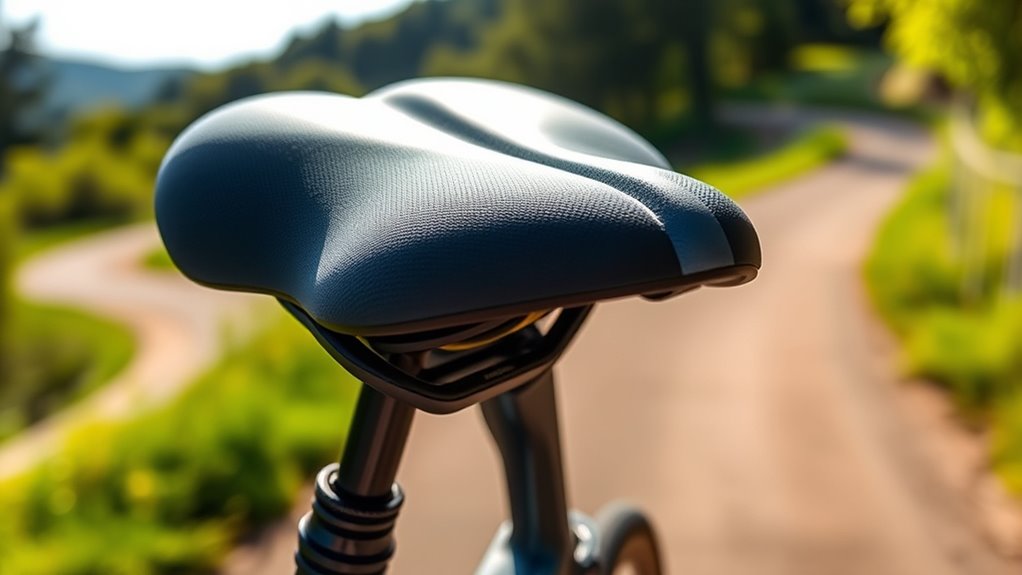
Choosing the right saddle for your body is essential to prevent saddle soreness and guarantee a comfortable ride. You should look for a saddle with appropriate foam padding that cushions your sit bones without feeling too soft or too firm. The foam padding helps absorb shocks and reduces pressure points, making longer rides more comfortable. Additionally, pay attention to the saddle shape; a design that matches your anatomy ensures proper weight distribution and minimizes chafing. A saddle that’s too narrow or too wide can cause discomfort and soreness, so try different shapes to find what fits best. Remember, the right saddle aligns with your body’s contours, supporting your riding position and preventing unnecessary strain. Being aware of saddle fit is also crucial, as it directly influences comfort and soreness prevention during your rides. Incorporating ergonomic design principles can further enhance saddle comfort by supporting natural riding posture and reducing strain. Evaluating pressure distribution through proper saddle selection can significantly reduce the risk of soreness and improve overall comfort. Additionally, understanding anatomical considerations can help in choosing a saddle that best suits your unique body structure. Moreover, understanding body biomechanics can guide you toward a saddle that promotes efficient pedaling and reduces fatigue.
As an affiliate, we earn on qualifying purchases.
Proper Bike Fitting Techniques
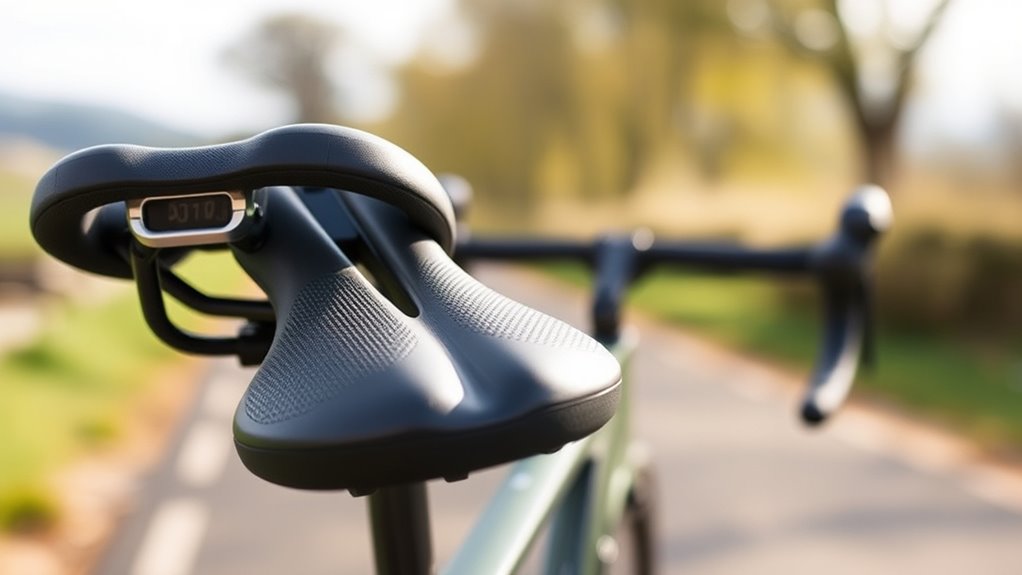
To prevent saddle soreness, getting a proper bike fit is essential, as an ill-fitting bike can cause unnecessary pressure and discomfort. Ensure your saddle height allows for a slight bend in your knee at the bottom of each pedal stroke. Your reach should keep your back flat without overstretching, promoting better cycling nutrition and reducing strain. Regular bike maintenance, like checking tire pressure and drivetrain, supports ideal comfort. Use this guideline:
| Fit Aspect | Key Point |
|---|---|
| Saddle Height | Knees slightly bent at the bottom of pedal stroke |
| Reach | Comfortable arm extension without overstretch |
| Saddle Position | Level or slightly tilted for pressure distribution |
| Handlebar Height | Slightly higher for relaxed posture |
Proper bike fitting minimizes saddle pressure and enhances comfort.
As an affiliate, we earn on qualifying purchases.
Adjusting Your Riding Position for Comfort
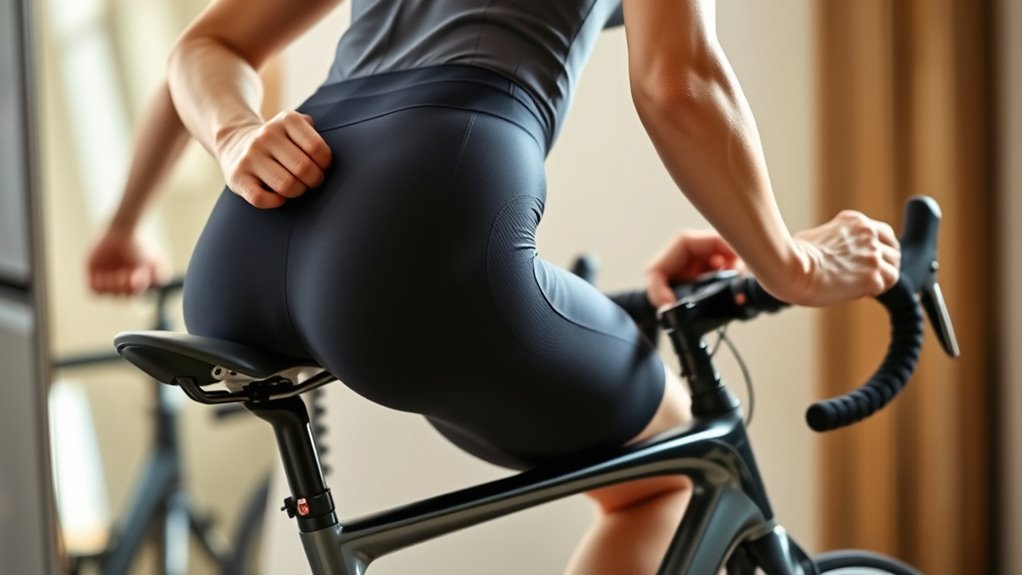
Adjusting your riding position can make a significant difference in preventing saddle soreness. Proper saddle padding and correct riding posture help distribute pressure evenly and reduce friction. Start by ensuring your saddle height allows a slight bend in your knee at the bottom of the pedal stroke. Adjust your saddle tilt so it’s level or slightly tilted forward to avoid unnecessary pressure on sensitive areas. Focus on maintaining a relaxed riding posture, keeping your core engaged, and shoulders down. Small tweaks can improve comfort and prevent soreness over long rides. Incorporating a high contrast ratio in your bike setup can also help you better detect and respond to changes in terrain, reducing the need for abrupt adjustments that may cause discomfort. Additionally, paying attention to ergonomic bike fit can further optimize your riding position for comfort and reduce saddle-related issues. Regularly checking your bike components ensures that your setup remains optimal and can help prevent discomfort caused by worn or misaligned parts. Being aware of proper padding materials can also enhance overall riding comfort and prevent soreness. Moreover, understanding pressure distribution can help you identify areas where adjustments may be necessary to avoid soreness.
As an affiliate, we earn on qualifying purchases.
Wearing Appropriate Cycling Apparel
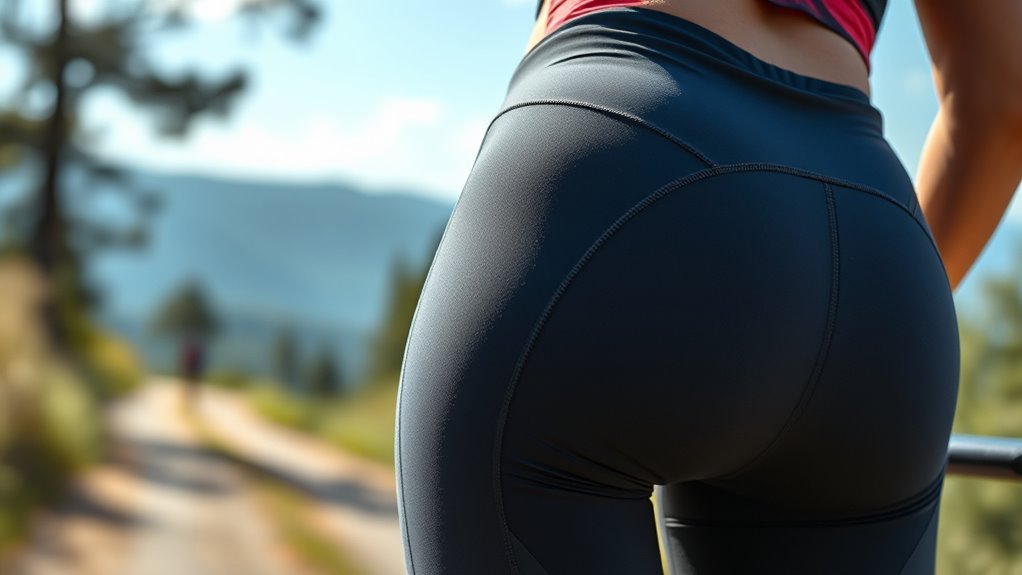
Wearing the right cycling apparel plays a crucial role in preventing saddle soreness by reducing friction and chafing. Opt for padded shorts made from moisture-wicking fabric to keep you comfortable and dry during rides. Proper apparel minimizes skin irritation and helps distribute pressure evenly. Remember, good bike maintenance ensures your saddle stays in excellent condition, preventing unnecessary discomfort. Your cycling nutrition also affects your overall comfort; staying well-hydrated and fueled reduces fatigue that can worsen soreness. Avoid cotton apparel, which traps sweat and causes chafing, and choose technical fabrics designed for cycling. Additionally, Free Floating landscapes can influence saddle comfort by providing smoother terrains that lessen impact and vibrations. Regularly checking for piercing care and hygiene practices can prevent skin irritation and discomfort while cycling. Maintaining good saddle hygiene is essential for preventing infections and irritation. By wearing appropriate gear, maintaining your bike, and fueling properly, you create a supportive environment that minimizes saddle soreness and enhances your riding experience. Incorporating ergonomic saddle design can further improve comfort by aligning with your body’s natural movement and reducing pressure points. Paying attention to proper saddle adjustment ensures optimal positioning, which can significantly decrease discomfort during longer rides.
Incorporating Regular Breaks During Rides
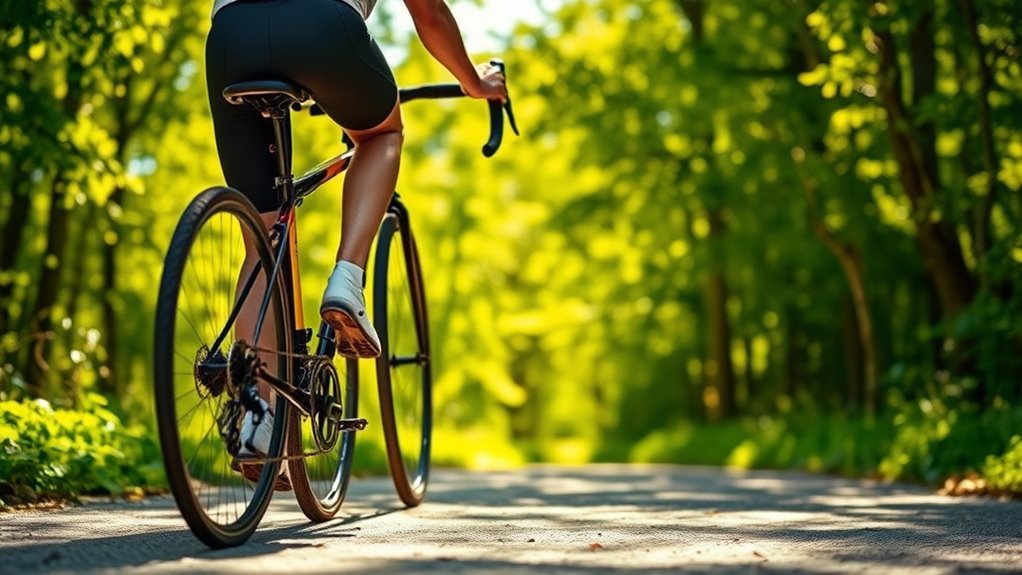
Taking regular breaks during your ride helps prevent saddle soreness by giving your muscles and your skin a chance to recover. During these pauses, focus on hydration strategies to stay hydrated and maintain energy levels. Proper hydration helps reduce muscle fatigue and skin irritation, lowering soreness risk. Use breaks to incorporate nutritional tips, like consuming light snacks or electrolyte drinks, which support muscle recovery. Consider the following to maximize your break effectiveness:
- Stretch your lower back and hips to reduce tension
- Adjust your saddle or clothing if discomfort persists
- Rehydrate and refuel with easily digestible foods
- Incorporate preventive maintenance to keep your bike in optimal condition, reducing unnecessary discomfort and ensuring smoother rides. Additionally, paying attention to your cycling posture during breaks can help prevent strain and soreness. Ensuring proper bike fit can also significantly impact your comfort and reduce the likelihood of soreness. Breaking up long rides not only lessens saddle soreness but also keeps you energized and comfortable, making your cycling experience more enjoyable and sustainable over time. Regularly reviewing your bike setup and equipment maintenance can further enhance comfort and help prevent soreness.
Strengthening Pelvic and Core Muscles

Building strong pelvic and core muscles is essential for reducing saddle soreness because these muscles support your posture and stabilize your hips during cycling. When your pelvic stability improves, you experience less strain on sensitive areas, reducing discomfort and soreness. Focus on core activation exercises like planks, bridges, and pelvic tilts to strengthen these muscles effectively. A stable core keeps your pelvis properly aligned, which helps distribute pressure evenly and prevents unnecessary friction. Incorporate targeted workouts into your routine a few times a week to enhance pelvic stability and core strength. As your muscles become more resilient, they’ll better support your riding position, minimize saddle pressure, and decrease soreness over time. Consistent strengthening is key to more comfortable, pain-free cycling. Additionally, understanding how muscle support plays a crucial role can motivate you to stay committed to your strengthening routine.
Using Protective and Supportive Accessories

Using protective and supportive accessories can considerably reduce saddle soreness by providing extra cushioning and stability where you need it most. Investing in quality bike accessories, like padded shorts with built-in saddle padding, helps absorb shocks and reduce friction. These accessories can improve comfort during long rides and prevent soreness from developing. Look for saddle pads designed to fit your bike seat snugly, offering targeted support. Additionally, adjustable bike accessories, such as seat height and angle modifications, help optimize your position for less pressure on sensitive areas. Proper support reduces strain and improves overall ride comfort, making soreness less likely. Incorporating unique textures and attention to detail in your gear selection can further enhance comfort and prevent saddle soreness. For example, exploring different cushioning materials can help you find the best combination of comfort and durability. Being aware of common causes of saddle discomfort can guide you in choosing the most effective accessories and adjustments. A proper fit is essential for preventing saddle soreness, so regularly checking and adjusting your bike setup can make a significant difference. Incorporate these accessories into your cycling routine to enhance comfort and reduce the risk of saddle soreness effectively.
Managing Soreness With Immediate Care Methods

When you start to feel saddle soreness during or after a ride, prompt immediate care can make a significant difference in reducing discomfort and preventing further injury. The first step is to adjust your saddle padding if needed, ensuring it offers proper cushioning and support. Applying a soothing, skin-protective ointment or balm can help reduce irritation and keep your skin healthy. If soreness is mild, take a break from riding to allow your skin to recover. Consider using cold packs or ice wrapped in a cloth to reduce swelling and numb pain. Wearing breathable, moisture-wicking clothing also helps protect your skin from chafing and excess moisture. Acting quickly and effectively can alleviate discomfort and set the stage for healing.
When to Seek Professional Help for Persistent Pain
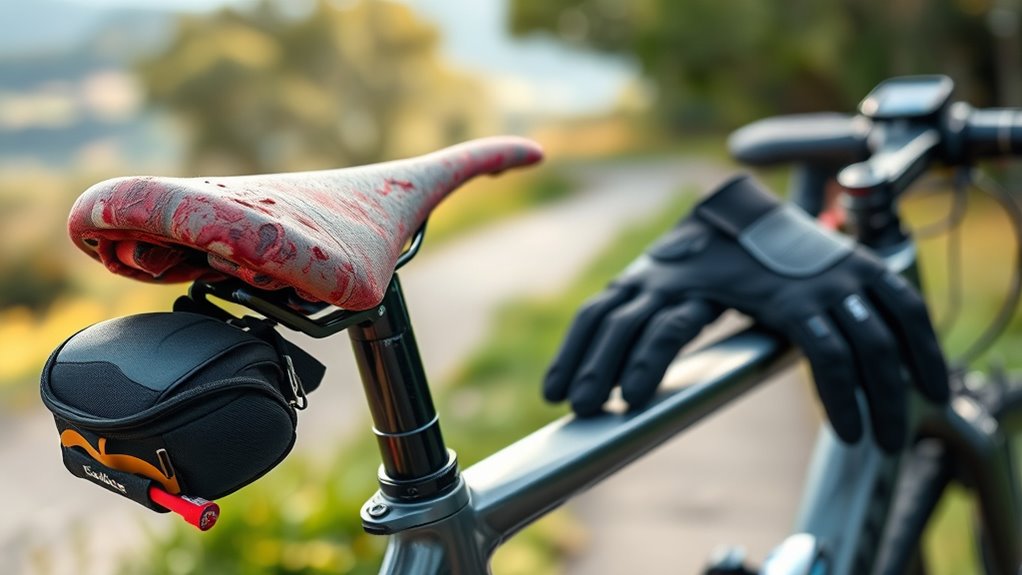
If your saddle soreness persists beyond a few days or worsens despite home treatments, it’s time to see a professional. Persistent pain that affects your daily activities or causes discomfort even after rest indicates you should seek help. Don’t wait too long—consult a healthcare provider when soreness becomes ongoing or disruptive.
Persistent Pain Indicators
Persistent pain that lingers despite rest and adjustments isn’t normal and signals that you should seek professional help. If you experience ongoing soreness, numbness, or tingling, it’s a sign your saddle setup or riding technique may need attention. Pay attention to indicators like persistent numbness in the groin or genitals, which could signal nerve issues. Proper numbness prevention often involves adjusting saddle height, tilt, or using appropriate saddle padding. Also, if pain worsens or doesn’t improve after a few days of rest, don’t ignore it. Recognizing these signs early can prevent long-term damage. Remember, persistent pain isn’t just discomfort—it’s your body warning you that professional assessment and tailored solutions are necessary for safe, comfortable cycling.
Impact on Daily Activities
Since persistent saddle soreness can interfere with your daily routine, it’s important to recognize when the discomfort goes beyond temporary fatigue. If pain persists despite adjusting your cycling nutrition and ensuring proper bike maintenance, it may be time to seek professional help. Ongoing soreness can hinder your ability to work, perform daily tasks, or even rest comfortably. Ignoring persistent pain might lead to longer recovery times or worsening conditions. Pay attention to how soreness affects your mobility and comfort outside of cycling. If the pain doesn’t improve after a few days of rest, or if it worsens, consult a healthcare provider. Addressing issues early can prevent chronic problems and help you get back to your routine faster and pain-free.
Professional Consultation Timing
Knowing when to seek professional help is key to preventing long-term damage from saddle soreness. If pain persists beyond a few days despite adjusting your cycling shoe fit or trying different saddle padding options, it’s time to consult a specialist. Don’t ignore persistent discomfort, as it may indicate underlying issues like saddle misalignment or nerve irritation. Consider seeking help if you notice symptoms such as numbness, tingling, or increasing pain during or after rides. A professional can assess your bike fit, analyze your saddle setup, and recommend personalized solutions. They might suggest specific saddle padding options or adjustments to improve comfort. Addressing these issues early helps prevent chronic problems and ensures a safer, more comfortable cycling experience.
Frequently Asked Questions
Can Saddle Soreness Be a Sign of Underlying Health Issues?
Yes, saddle soreness can sometimes signal underlying health issues, especially if it persists despite proper saddle fit and adjustments. If you notice ongoing soreness, it’s wise to check for underlying health concerns like nerve issues, circulation problems, or skin conditions. Pay attention to your body and consult a healthcare professional if soreness continues or worsens, as it might indicate an underlying health issue needing attention beyond saddle fit adjustments.
Are There Specific Nutritional Tips to Reduce Cycling Soreness?
To reduce cycling soreness, prioritize nutrition strategies that fuel recovery and minimize discomfort. Focus on consuming anti-inflammatory foods, staying hydrated with hydration tips like drinking plenty of water before, during, and after rides, and replenishing lost electrolytes. Incorporate nutrient-rich meals with healthy fats, lean proteins, and complex carbs. By fueling your body properly, hydrating consistently, and maintaining a balanced diet, you’ll enhance recovery, reduce soreness, and enjoy smoother, more comfortable rides.
How Does Weather Impact Saddle Comfort and Soreness?
Weather substantially impacts your saddle comfort and soreness. Hot, humid conditions can cause sweat buildup, leading to chafing, so wear moisture-wicking clothing and adjust your clothing layers for better airflow. Cold weather can stiffen your muscles, increasing discomfort, so choose saddles with softer materials and padding. Rain and wet conditions make your saddle slippery and less comfortable, so consider saddle covers or waterproof materials to maintain comfort and reduce soreness.
Can Certain Medications Help Alleviate Saddle Soreness?
Did you know that over 30% of cyclists experience saddle soreness? Medications for pain, like over-the-counter pain relievers, can help, but anti-inflammatory drugs are often more effective in reducing swelling and discomfort. However, you should always consult a healthcare professional before starting any medication, as they can advise on proper use and potential side effects. Combining medication with proper saddle fit and rest is your best bet for relief.
What Are the Long-Term Effects of Repeated Saddle Soreness?
Repeated saddle soreness can lead to long-term effects like persistent discomfort, skin issues, or nerve damage if you ignore proper cycling posture and saddle materials. Over time, improper posture strains your pelvis, while poor saddle choices can increase friction or pressure. To avoid these issues, make certain you use suitable saddle materials and maintain good posture, which helps prevent ongoing soreness and potential nerve or tissue damage, keeping your cycling enjoyable and safe.
Conclusion
Remember, saddle soreness isn’t a badge of honor—you’re not training for a bike-pocalypse. Treat your behind like royalty, not a punching bag, and give it the care it deserves. Adjust, support, and take breaks, or you might find yourself hobbling like a rusty robot after just a few miles. So, pamper your sit spot, or risk turning your cycling adventure into a comedy of aches and squeaks. Your butt will thank you.
Fall yard work Picks
leaf blowers
As an affiliate, we earn on qualifying purchases.