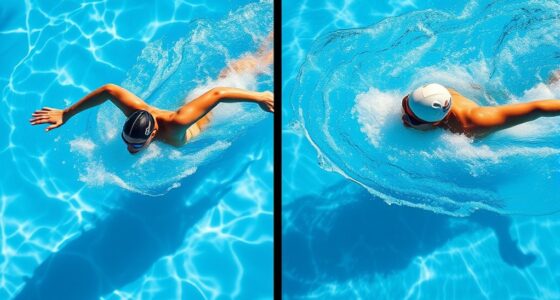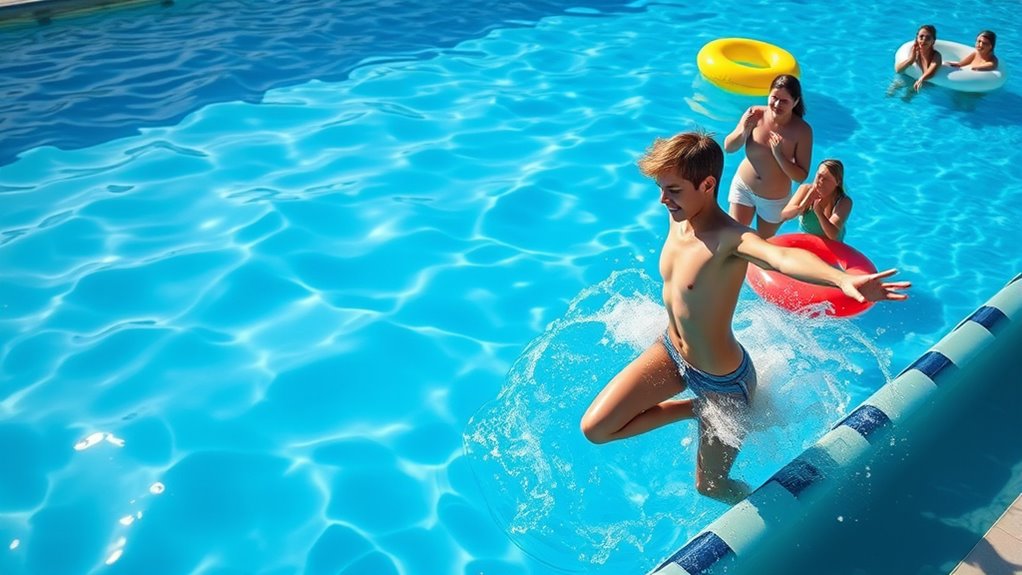

To overcome your fear of water and learn to swim, start by understanding the source of your anxiety. Use controlled breathing techniques to calm yourself and gradually expose yourself to water. Begin by standing near pools, then slowly dip your toes in as you familiarize yourself with the sensations. Consider enrolling in beginner swimming lessons where supportive instructors can guide you. Patience is key, and each step you take builds confidence. Discover more about effective strategies to ease your journey.
Key Takeaways
- Identify the root cause of your fear and acknowledge it to start the healing process.
- Practice controlled breathing techniques to calm anxiety before and during water exposure.
- Gradually expose yourself to water, starting from simply being near it to eventually dipping your toes in.
- Embrace the sensations of water by progressively submerging different body parts as you gain comfort.
- Consider enrolling in beginner swimming lessons with supportive instructors who understand your fear and provide guidance.
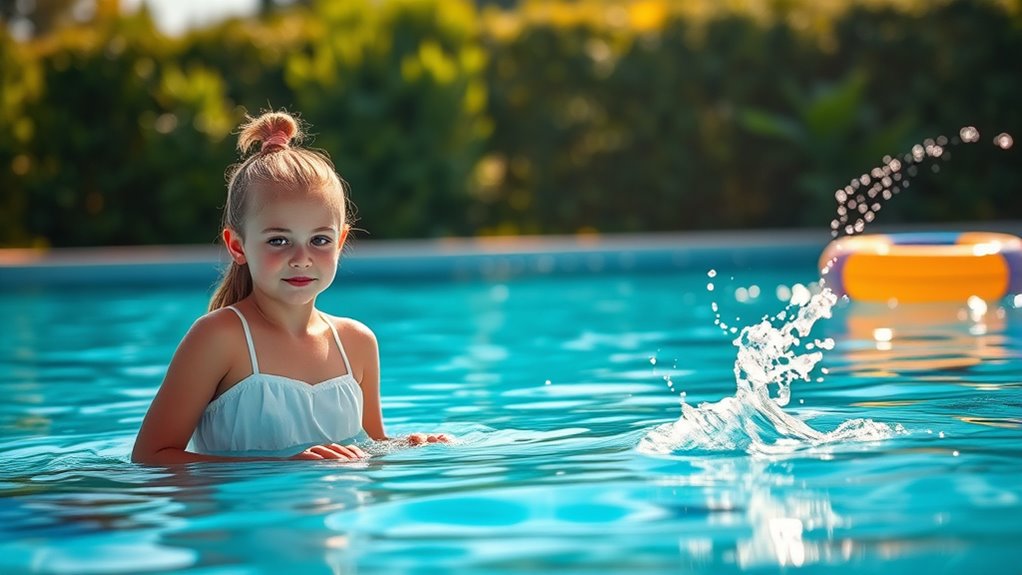
Fear of water, often rooted in past experiences or anxiety, can feel overwhelming. It’s common to feel paralyzed by the thought of stepping into a pool or even standing by the shore. However, you can conquer this fear with the right mindset and techniques. The journey begins with understanding your fear and taking those initial steps toward overcoming it.
Start by practicing breathing techniques. Controlled breathing can help calm your mind and reduce anxiety. Find a quiet space, and take a few moments to inhale deeply through your nose, letting your abdomen expand. Hold the breath for a few seconds, then exhale slowly through your mouth. This exercise can help center you and alleviate panic when you’re near water. You’ll find that focusing on your breath not only calms your nerves but also prepares you mentally for gradual exposure to water.
Practicing controlled breathing can calm your mind and prepare you for gradual exposure to water.
Once you’ve established a routine with your breathing, it’s time to *submerge in* gradual exposure. You don’t need to *plunge into* the deep end right away. Begin by simply standing near a pool or a shallow body of water. Allow yourself to get comfortable with the sight and sound of water without feeling pressured to enter. This initial exposure can *substantially* lessen your fear.
After you feel at ease near the water, you can take the next step: dipping your toes in. Notice how the water feels against your skin. Embrace the sensations rather than shying away from them. If you feel comfortable, gradually submerge your feet, then your ankles, and so on. Each time you take a step, practice your breathing techniques to maintain a sense of calm.
As you progress, consider enrolling in swimming lessons tailored for beginners with a focus on overcoming fear. A qualified instructor can guide you through each step, ensuring you feel safe and supported. They’ll likely incorporate breathing techniques into the lessons, allowing you to practice them in a real-water environment. Additionally, understanding the importance of color accuracy can enhance your overall experience in water-related activities, making them more enjoyable and less intimidating.
Frequently Asked Questions
Can Swimming Lessons Be Taken at Any Age?
Absolutely, swimming lessons can be taken at any age! Whether you’re a child or an adult beginner, it’s never too late to learn. In fact, adult beginners often benefit from focused instruction tailored to their needs. Plus, understanding water safety tips is vital for everyone. You’ll gain confidence in the water while also learning essential skills. So, don’t hesitate – find a class that fits your schedule and start your swimming journey today!
What Should I Wear for My First Swimming Lesson?
For your first swimming lesson, wear a comfortable swimsuit that fits well and allows for easy movement. Don’t forget waterproof accessories like goggles to protect your eyes and a swim cap if you have longer hair. Make sure your swimsuit is made from quick-drying material to keep you comfortable before and after lessons. By choosing the right attire, you’ll feel more relaxed and ready to enjoy your time in the water!
How Long Does It Typically Take to Learn Swimming?
Typically, it takes about a few weeks to several months to learn swimming, depending on your comfort level and practice frequency. You’ll grasp basic swimming techniques faster with consistent lessons. Focusing on water safety is vital; it helps build your confidence and guarantees you’re aware of your surroundings. If you practice regularly and stay committed, you’ll find yourself swimming more comfortably in no time. Just remember, everyone learns at their own pace!
Are There Any Specific Breathing Techniques for Beginners?
You’re diving into a world of relaxation with breathing exercises. Start by inhaling deeply through your nose, feeling your chest expand like a balloon. Hold for a moment, then exhale slowly through your mouth, imagining stress floating away. Incorporating relaxation techniques, like visualizing calm waters, can enhance your focus. Practicing this rhythm on dry land before hitting the water can build your confidence and set the stage for a smoother swimming experience!
What if I Have a Medical Condition Affecting Swimming?
If you have a medical condition affecting swimming, it’s essential to consult your doctor first. They’ll outline any medical considerations you need to keep in mind. Once you get the green light, consider adapted swimming programs that cater to your needs. These programs can help you enjoy the water safely while building your confidence. Always prioritize your health and safety, and don’t hesitate to ask for support from trained instructors.
Conclusion
Conquering your fear of water is like learning to ride a bike: at first, it feels intimidating, but with each small step, you gain confidence. Remember the first time you wobbled on two wheels, terrified of falling? You pushed through, and soon, it felt like second nature. Just like that, with practice and patience, you’ll find yourself gliding through the water, embracing the freedom it brings. So take that leap—every stroke brings you closer to overcoming your fear.